


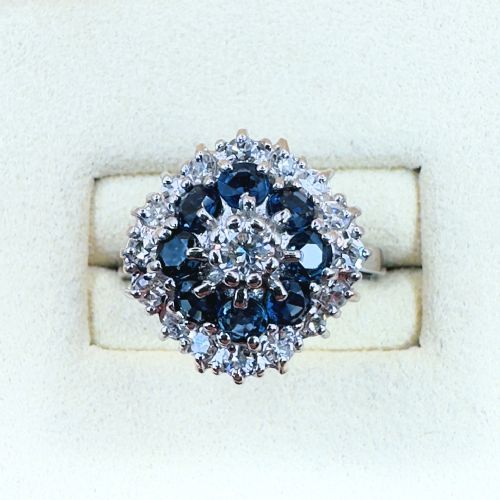


White Gold Target Ring
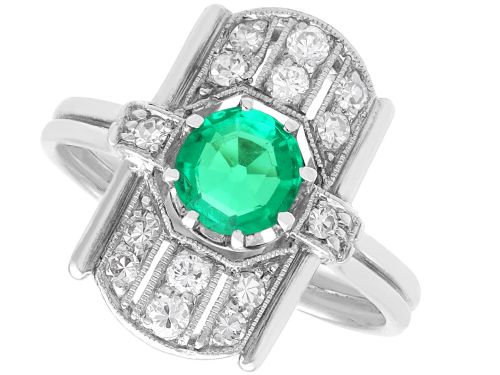
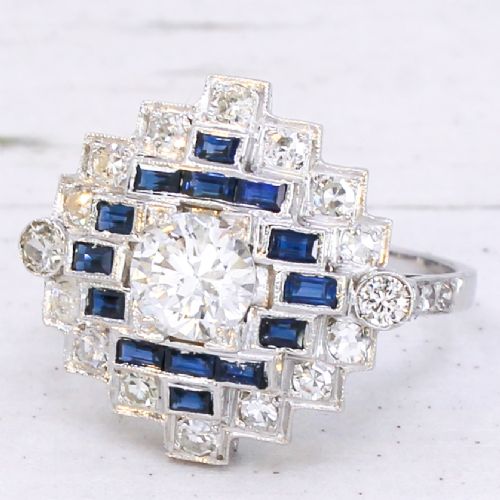
A white gold target ring brings together concentric tiers of gemstones in a geometric design that frames the hand with striking symmetry.
White Gold Target Ring
Most examples found here hail from the Art Deco and Edwardian eras, spanning the early decades of the twentieth century with occasional mid-century revivals.
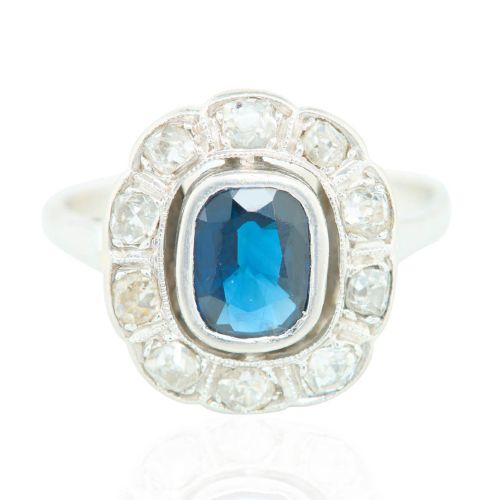
Makers fashioned these dress rings primarily in 18ct white gold or platinum, producing geometric cluster, plaque, and daisy silhouettes that sit low upon the finger.
How they were made
Goldsmiths utilised 18ct white gold and platinum to construct sturdy yet delicate mounts capable of holding numerous small stones securely.
Lapidaries shaped coloured gems such as sapphires, rubies, and emeralds using calibre-cut techniques to fit tightly into geometric borders around central old-cut diamonds.
Setters employed intricate claw, millegrain, and channel techniques to demarcate each concentric tier within the overall target motif.
White Gold Target Ring Retail Price Guide 2026
Typical asking prices for white gold target ring among the pieces listed under this phrase on Sellingantiques today, from the lower quarter to the upper quarter. They describe what is for sale here now, not the wider market.
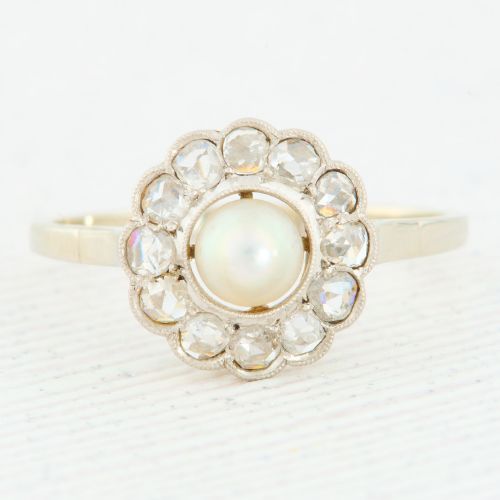
Listings feature white gold and platinum rings predominantly from the Edwardian, Art Deco, and 1940s periods, incorporating diamonds, sapphires, rubies, emeralds, and pearls.
What varies in quality
The precision of the concentric geometry and the matching of the calibre-cut outer stones separate standard production from superior craftsmanship.
Superior pieces display stones with high colour consistency and minimal inclusions, particularly when comparing natural Burmese or Colombian gems against standard commercial grades.
The fineness of the millegrain work and the structural integrity of the white gold or platinum gallery dictate the overall durability and refinement of the mounting.
The White Gold Target Ring Glossary
- Target ring
- A circular cluster ring featuring concentric rings of gemstones resembling a shooting target. This design achieved immense popularity during the Art Deco period.
- Calibre cut
- Gemstones specifically shaped to fit tightly together in geometric rows without visible gaps. This technique defines many Art Deco mounting styles.
- Millegrain
- A decorative technique featuring tiny raised metal beads along the edges of a setting. It adds a soft, textured border to white gold and platinum mounts.
- Old cut
- Diamond cutting styles pre-dating modern brilliant cuts, characterised by high crowns, small tables, and open culets. These stones display a softer, candlelight sparkle.
- Cluster ring
- A ring design where a central stone is surrounded by a group of smaller gems. They maximise visual presence on the hand.
White Gold Target Ring: Frequently Asked Questions
How do I care for a white gold target ring?
Clean your ring gently using warm soapy water and a soft brush, avoiding harsh chemical dips that can damage delicate pearls or softer emeralds.
Have a professional jeweller check the millegrain edges and stone settings periodically to ensure the small surrounding gems remain secure.
Can I wear a target ring every day?
These antique and vintage rings suit daily wear provided you remove them during heavy manual tasks, sports, or gardening.
Platinum and 18ct white gold offer good durability, but the intricate geometric settings require mindful handling to prevent accidental knocks.
How can I tell an Edwardian target ring from Art Deco?
Edwardian examples tend to feature softer, garland-inspired motifs with heavy millegrain and organic curves surrounding old-cut diamonds and pearls.
Art Deco pieces lean towards strict symmetry, bold geometric lines, and sharp calibre-cut sapphires or rubies set in crisp white gold.
What is the difference between a cluster ring and a target ring?
While all target rings are clusters, a true target ring specifically arranges stones in distinct concentric circles around a central focal point.
Standard cluster rings may adopt marquise, floral, or plaque shapes rather than the strict bullseye configuration of a target design.