


White Earthenware Dog Pair
A white earthenware dog pair brings the sturdy charm of nineteenth-century mantelpieces straight into a modern room.
White Earthenware Dog Pair
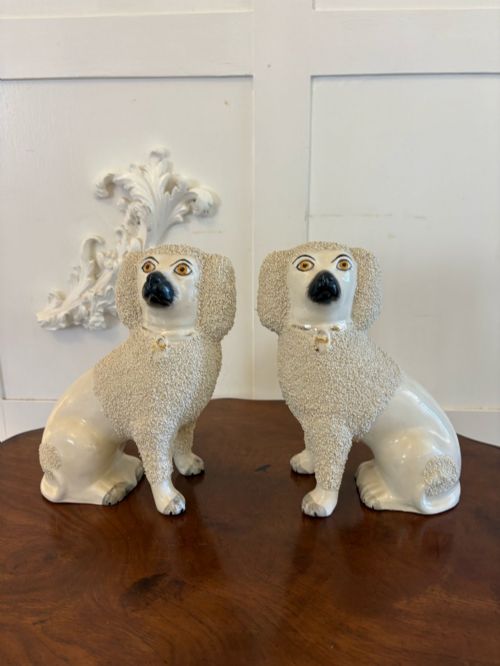
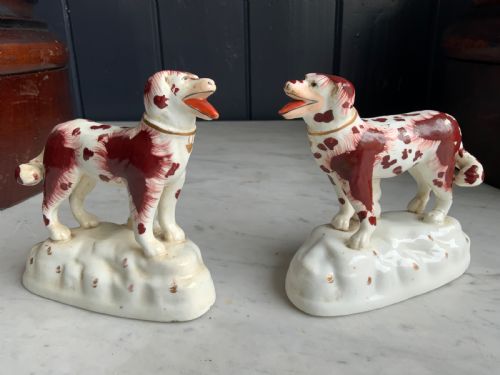
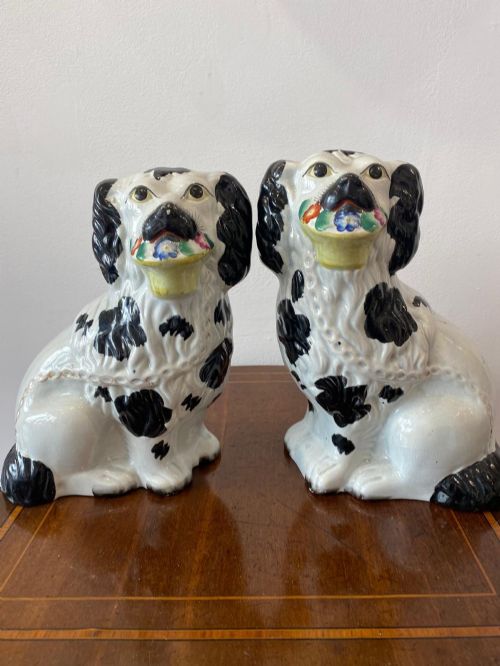
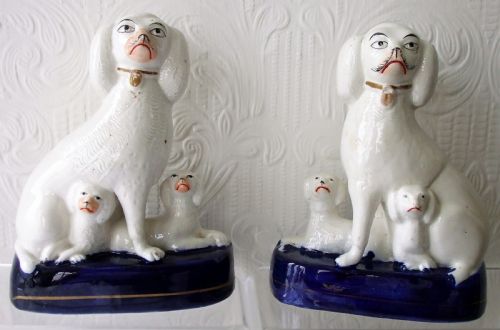
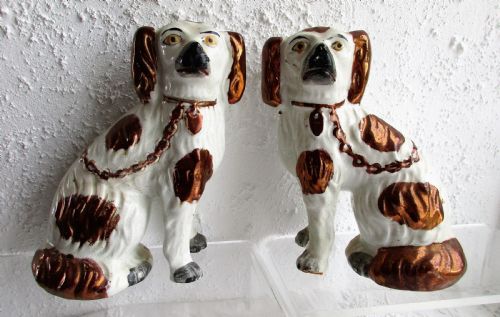
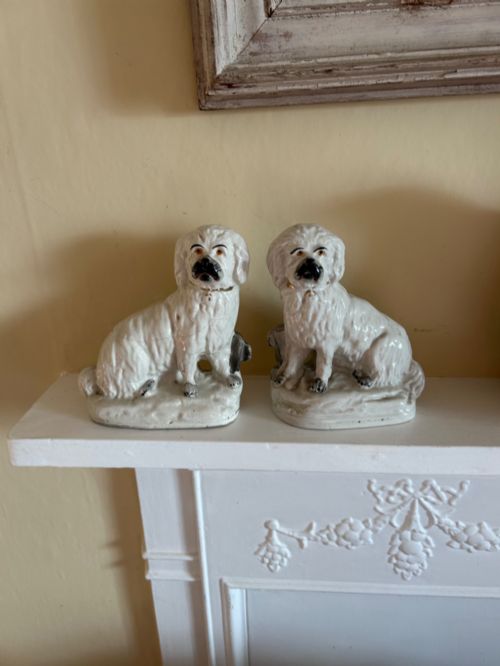
A white earthenware dog pair comprises matching ceramic mantelpiece ornaments modelled as spaniels, poodles, greyhounds, Maltese terriers and comforter spaniels. These figures originate primarily from nineteenth-century Staffordshire potteries, spanning periods from the Regency era through to 1900. Buyers encounter seated spaniels, poodles with pups, quill holders, and greyhounds arranged symmetrically to flank a fireplace or shelf.
The ceramic figures reflect English traditional domestic life during the Victorian period, capturing popular canine companions of the era. Makers produced these pairs in various sizes, ranging from miniature poodles to large seated spaniels decorated with gilt, enamel paint, and gold leaf. Many feature specific details such as blue cushions with encrusting, black and white markings, or red and white patches.
Materials and manufacture
Certain poodles received specialised surface treatments, including woolly textures applied to the clay body to mimic real fur. Firing techniques across the nineteenth century determined the final lustre of the glaze and the durability of the painted enamel details.
Listings feature earthenware, glaze, enamel, and gilt across Victorian periods.
Factors of distinction
Completeness contributes significantly to desirability, especially when dealing with pairs that include matching pups or specialised forms like quill holders. The uniformity of the pairing and the stability of the earthenware body reflect the skill of the original Staffordshire pottery.
Thomas Parr·Beswick
The White Earthenware Dog Pair Glossary
- Earthenware
- A porous pottery body fired at lower temperatures than stoneware or porcelain. It requires a glaze to become impermeable to liquids.
- Comforter Spaniels
- Popular nineteenth-century Staffordshire mantelpiece figures modelled after King Charles spaniels. Owners placed them on hearths to guard the home.
- Enamel Paint
- Vitreous coloured decoration applied over the fired glaze and fixed with a secondary low-temperature firing. It provides the characteristic bright markings on nineteenth-century figures.
- Lead Glaze
- A glossy coating containing lead oxide applied to pottery before firing. It creates a smooth, glass-like finish that seals the white earthenware beneath.
White Earthenware Dog Pair: Frequently Asked Questions
What are white earthenware dog pairs?
These pieces are ceramic mantle ornaments produced by nineteenth-century Staffordshire potteries to resemble popular domestic dogs.
Potters shaped them in matching sets designed to sit symmetrically on either side of a fireplace.
How were these dogs displayed?
Victorian households placed these pairs on mantelpieces, shelves, and tabletops to decorate living spaces.
Some functional versions served as inkwells or quill holders while maintaining their decorative presence.
How do I date a Staffordshire dog pair?
Dating relies on stylistic clues, ceramic bodies, and glaze characteristics from periods spanning the Regency era to 1900.
Earlier examples often feature simpler hand-painted markings, while later Victorian pieces show heavier gilt and varied canine breeds.
What breeds appear in these pairs?
Spaniels dominate the selection, particularly comforter spaniels and seated spaniels with distinct facial expressions.
Potters also modelled poodles, greyhounds, Maltese terriers, and poodles accompanied by small pups.