
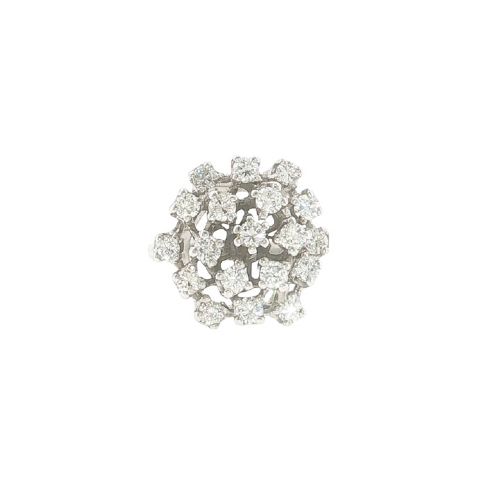
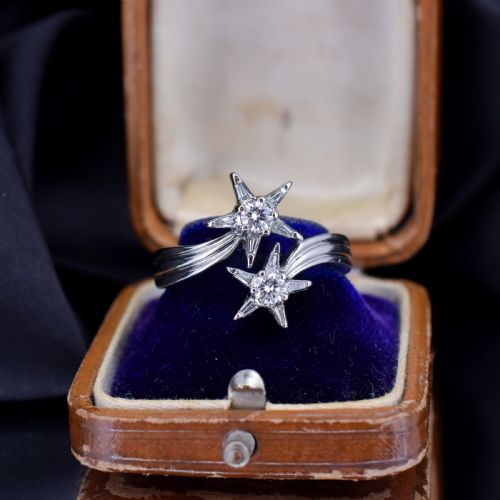
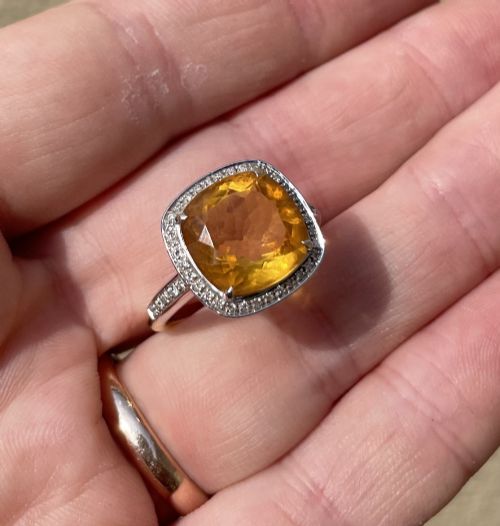
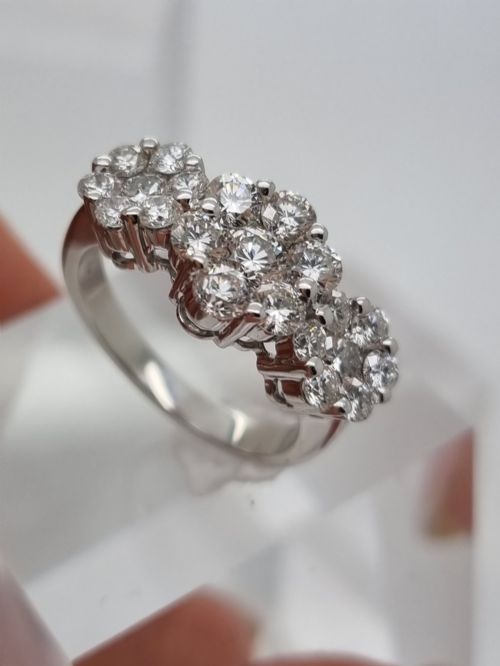
White Diamond Cluster Ring
A white diamond cluster ring brings together central brilliance and surrounding stones in designs spanning the Edwardian era to the mid-twentieth century.
White Diamond Cluster Ring
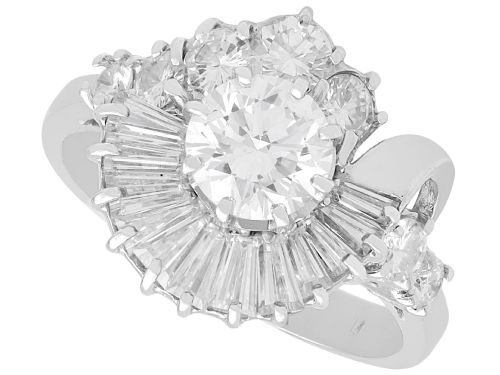
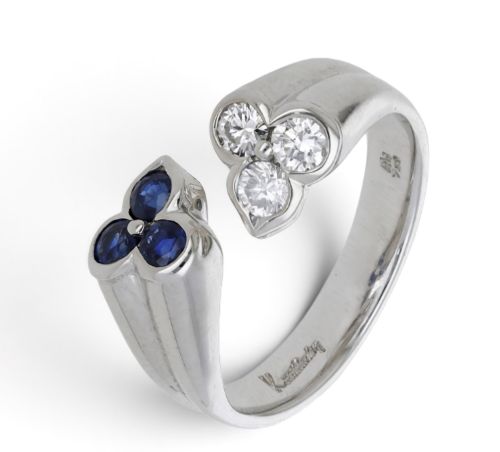
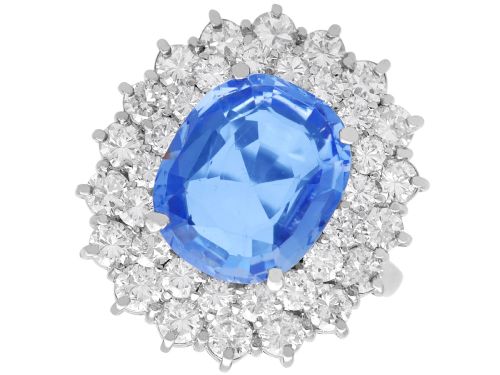
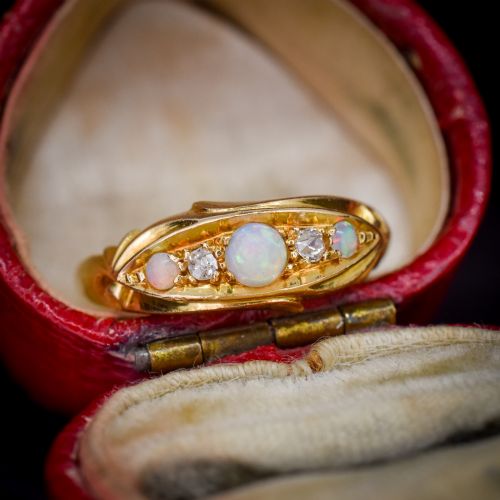
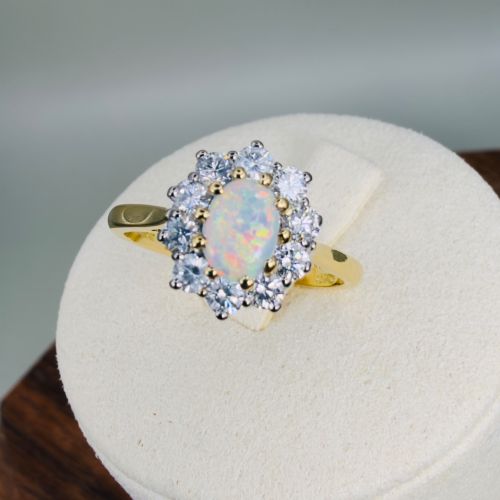
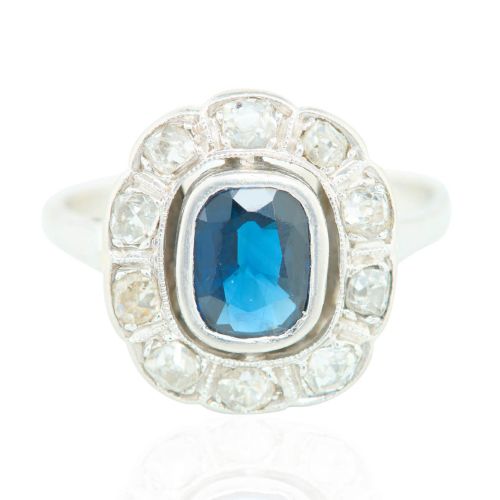
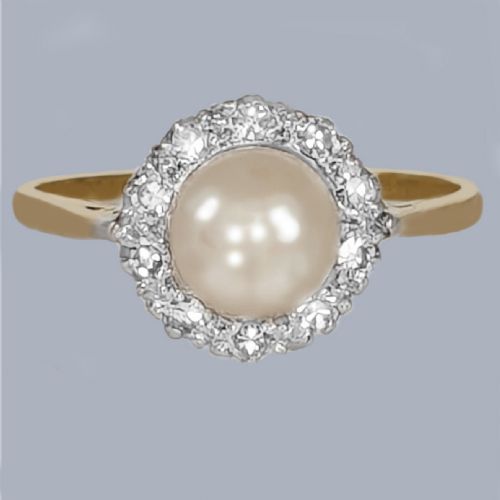
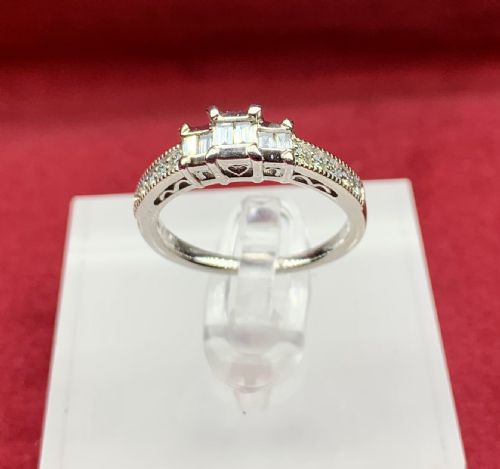
A white diamond cluster ring gathers multiple stones into a focused face, often pairing central diamonds with sapphires, rubies, emeralds, opals, or pearls. These pieces appear frequently as engagement rings, cocktail rings, and traditional cluster formations spanning the Edwardian period through the 1960s and beyond.
Materials and construction
The framework relies heavily on 18ct white gold and platinum, providing a bright, durable foundation that complements colourless diamonds and central gemstones. Yellow gold also underpins several antique and vintage pieces, offering a warmer contrast to the white metal settings.
Gems are secured using traditional techniques such as old cut diamond faceting, calibre cut colour stones, and detailed claw or bezel settings. Master jewellers balanced structural integrity with delicate ornamentation, creating layered floral and geometric profiles.
Some vintage cocktail rings are large enough to command attention from across a crowded room.
Assessing quality and craftsmanship
Quality rests upon the precision of stone matching and the harmony of the overall silhouette, whether the design takes the form of a tight daisy cluster or an elongated navette. Superior pieces display even spacing, secure claw work, and stones chosen for balanced depth and brilliance.
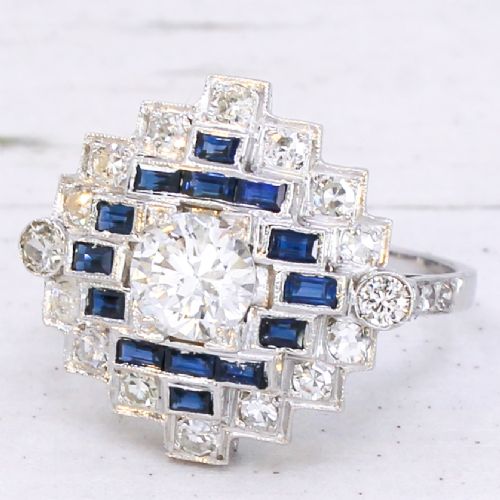
The integration of the central stone with its surrounding border dictates the refinement of the piece. Masterful setting work conceals excess metal, allowing the interplay of diamonds and coloured gems like sapphires, rubies, and emeralds to dominate the visual field.
The White Diamond Cluster Ring Glossary
- Cluster ring
- A ring featuring a central stone encircled by a border of smaller gems. This configuration maximises visual impact and light reflection.
- Old cut
- A historic diamond cutting style characterised by a smaller table, higher crown, and open culet. These stones exhibit a soft, candlelit glow rather than modern brilliant sparkle.
- Navette
- A boat-shaped ring setting that is pointed at both ends and elongated across the finger. This style creates a distinctive, finger-flattering profile.
- Calibre cut
- Gemstones specifically shaped and cut to fit tightly together in geometric rows without visible metal partitions. This technique defines many Art Deco pieces.
- Target ring
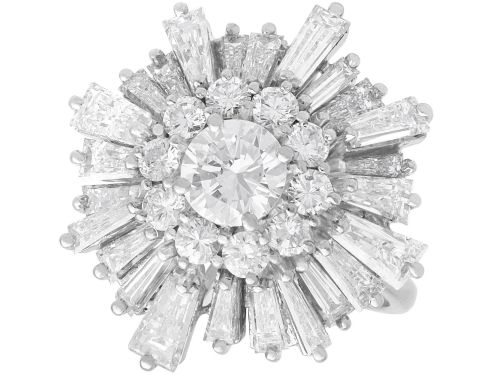
- A concentric cluster design featuring a central gem surrounded by one or more distinct rings of contrasting stones. The concentric layout mimics a bullseye pattern.
White Diamond Cluster Ring: Frequently Asked Questions
What is a cluster ring?
A cluster ring arranges multiple gemstones into a unified face, typically featuring a prominent central diamond surrounded by smaller accent stones.
This arrangement creates a substantial visual presence on the hand while allowing for intricate geometric or floral designs.
How do I date an antique ring?
Dating relies on examining the mounting style, metal types, and cutting techniques of the stones, such as old cut diamonds versus modern cuts. Hallmarks stamped inside the band also provide specific assay office markers and date letters.
Stylistic cues like Edwardian filigree or Art Deco symmetry further narrow down the decade of creation.
Are these rings suitable for daily wear?
Most pieces constructed in 18ct white gold or platinum offer the durability required for regular wear as engagement or dress rings. Proper care ensures the secure settings protect the central diamonds and surrounding coloured gems over time.
Gentle cleaning and periodic professional checks of the claws maintain the structural health of vintage mountings.
What stones accompany the diamonds?
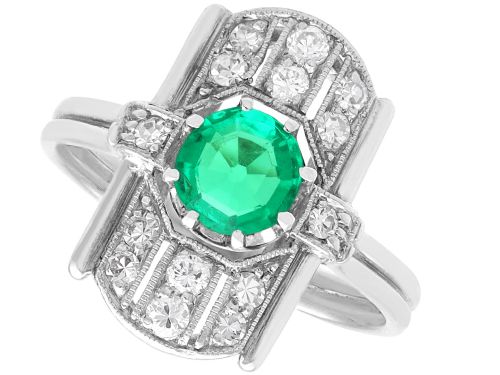
Surrounding stones frequently include blue and cornflower sapphires, natural rubies, emeralds, opals, pearls, and moonstones. These coloured gems provide striking contrast against the white diamonds and metal background.
Each combination reflects the aesthetic preferences of periods ranging from the Edwardian era through the 1960s.