
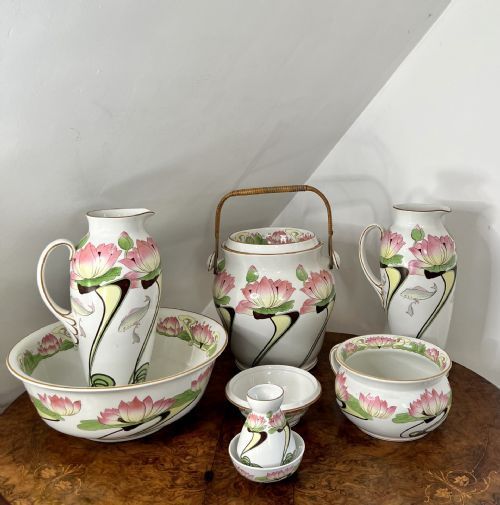
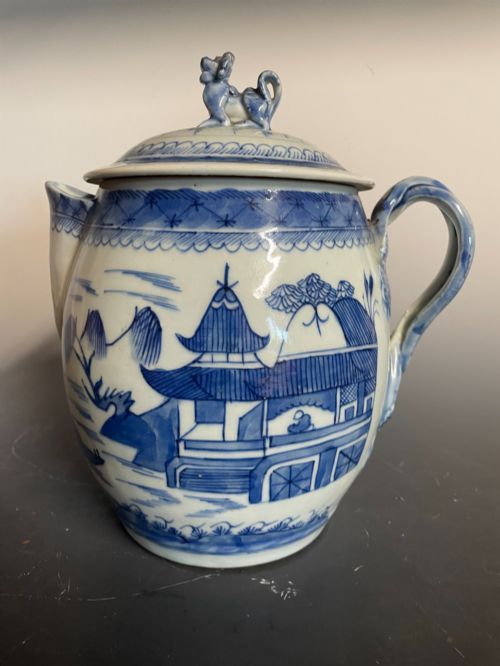


White Ceramic Water Pitcher
A white ceramic water pitcher brings utility and fine form together, spanning centuries of earthenware, porcelain, and pearlware production.
White Ceramic Water Pitcher
When searching for a white ceramic water pitcher, collectors encounter versatile vessels spanning the seventeenth to the twentieth centuries, originating from English potteries, European factories, and Asian export kilns alike.
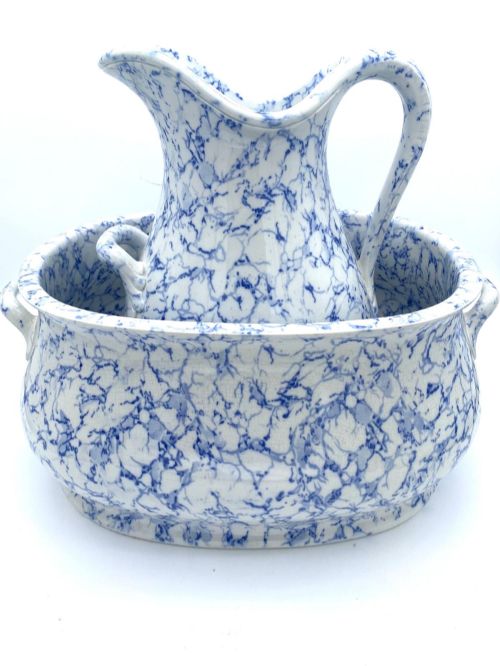
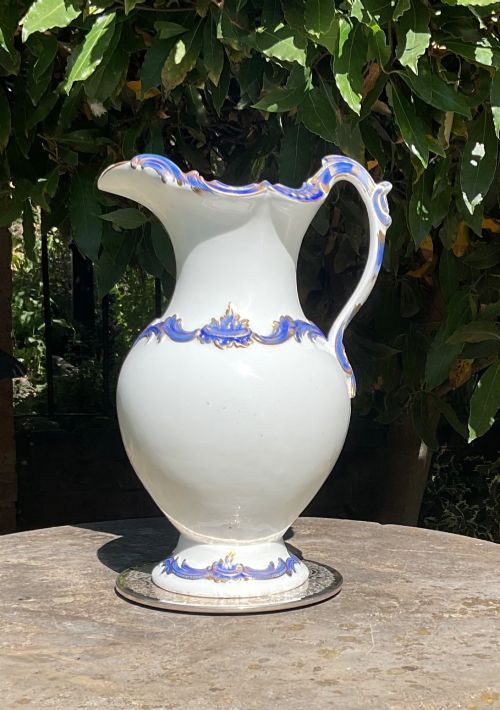
The pieces on this page appear within wider ceramic categories such as jugs, pitchers, ewers, and wash sets, reflecting both utilitarian household use and decorative display.
Examples range from early pearlware and tin-glazed earthenware to later ironstone and porcelain, often decorated with transfer printing, relief moulding, or plain white glazes.
Materials and production methods
Potters shaped these vessels using earthenware, pearlware, ironstone, and porcelain bodies, frequently applying white or tinted glazes to seal the porous clay underneath.
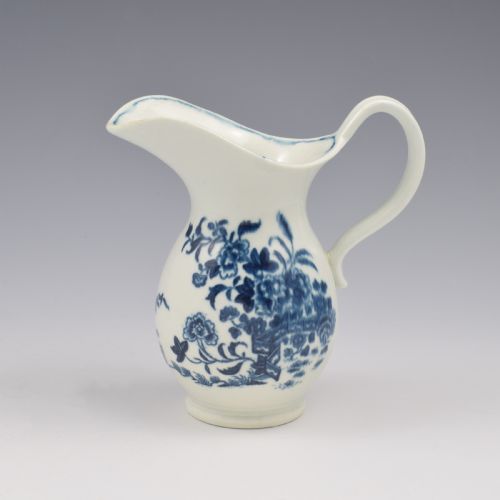
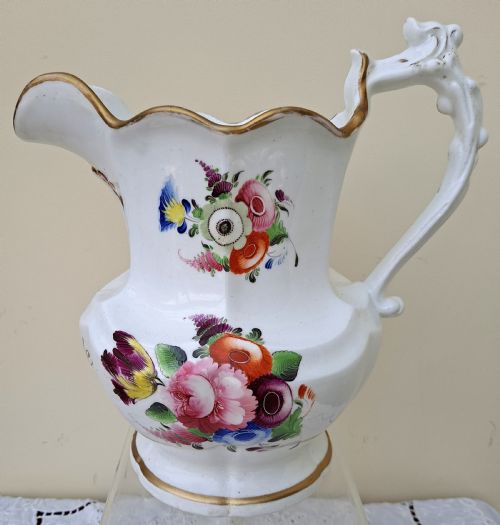
Decoration techniques recorded in the evidence include underglaze painting, transfer printing in blue, hand-painted details, and complex relief moulding such as cabbage leaf patterns.
Several pitchers on this page depict festive or dramatic subjects, including bacchanalian dances and historical political figures.
Assessing quality in ceramic water pitchers
Quality rests on the crispness of the modelling in relief-moulded pieces and the precision of the glaze application across the body.
The refinement of the ceramic body itself, from heavy earthenware to translucent porcelain, distinguishes standard utilitarian items from finer studio or factory productions.
Minton·Doulton Lambeth·Charles Meigh·Livesley Powell And Co·Jones And Walley·Mason
The White Ceramic Water Pitcher Glossary
- Pearlware
- A refined earthenware developed in the eighteenth century, featuring a slight bluish tint in the glaze where it pools.
- Ironstone
- A durable, heavy type of ceramic patented in the nineteenth century to imitate porcelain while offering greater strength.
- Ewer
- A large jug with a flared spout and curved handle, traditionally used for holding water alongside a basin.
- Relief-moulded
- Decorated with raised designs pressed into the clay body using a mould during the forming process.
White Ceramic Water Pitcher: Frequently Asked Questions
How were water pitchers used historically?
These pitchers served primarily for washing at the bedroom basin or for pouring water at the dining table before indoor plumbing became widespread.
Larger capacity vessels held sufficient water for family wash sets, while smaller ewers formed part of specialised tea and tableware services.
What is the difference between earthenware and porcelain?
Earthenware is a porous, opaque pottery body fired at lower temperatures, whereas porcelain is a dense, vitrified ceramic that becomes white and translucent after high-temperature firing.
Potters often glazed earthenware to ensure water retention, while fine porcelain remained naturally impervious to liquids.
How can I tell the period of a ceramic jug?
Dating relies on stylistic markers such as the shape of the handle, the presence of specific transfer-printed patterns, and the type of ceramic body used.
Earlier eighteenth-century pieces often feature pearlware bodies or hand-painted underglaze decoration, while later nineteenth-century examples frequently show heavy ironstone construction or industrial relief moulding.
Can antique ceramic water pitchers still hold water?
Many antique pitchers remain watertight and structurally sound for daily use, provided they have no hairline cracks or unglazed interior faults.
Collectors generally advise caution with pieces featuring historical repairs or delicate earthenware bodies to prevent staining or further damage.