


White Carved Mirror Frame
A white carved mirror frame offers a luminous focal point that bounces light around a room while bringing period character to a wall.
White Carved Mirror Frame
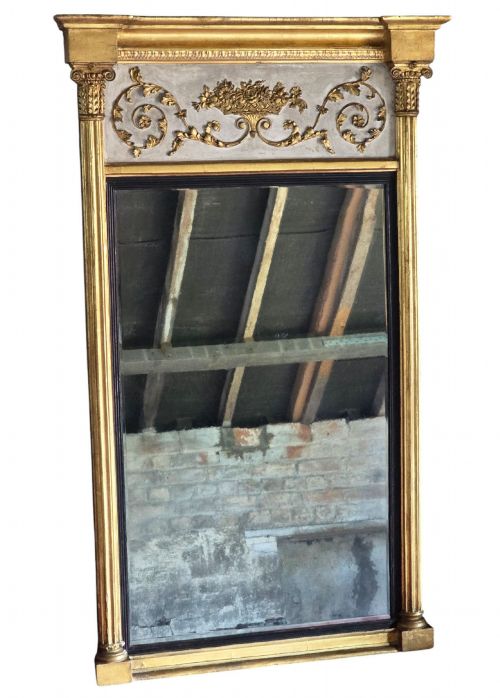
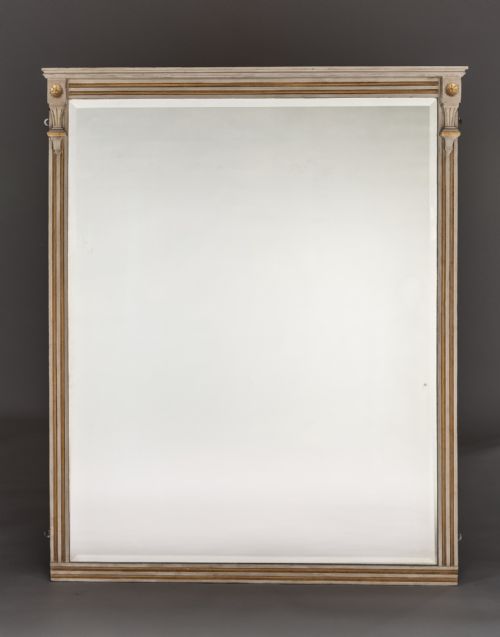
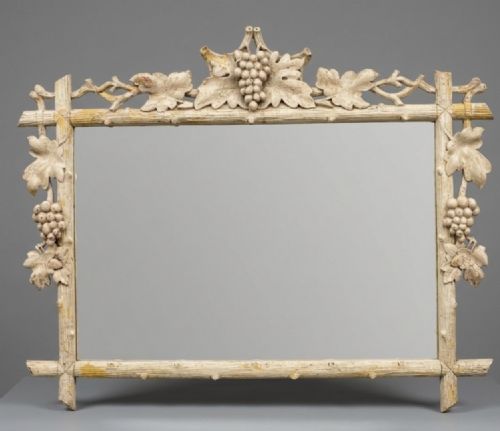
A white carved mirror frame covers large overmantle pieces, wall mirrors, and overpainted architectural looking glasses originating primarily from the nineteenth century and the Edwardian era. These pieces span English and French workshops, with distinct styles ranging from French Provincial and Rococo Revival to Neoclassical and Victorian designs.
The buyer searching for a white carved mirror frame meets substantial overmantle formats, oval hanging mirrors, and architectural trumeau or bistro pieces. Many examples feature arched tops, column frames, or shaped wooden borders finished in layered white paint with hints of underlying gilding.
Origins stretch across nineteenth-century English and French traditions, capturing the shift from ornate Victorian ornamentation to lighter painted finishes. These furnishings function practically as dressing or hall mirrors while serving as prominent statement fixtures in domestic interiors.
Materials and Construction
Artisans built these frames using carved wood, frequently applying a layer of gesso to the timber base to build up intricate relief details, scrolls, and floral motifs before painting. This combination allowed craftsmen to achieve sharp architectural definition on mouldings and arched tops.
Surfaces received multiple coats of white or cream paint, often combined with parcel-gilt highlights where gold leaf peaks through worn areas or accentuates carved edges. Original mirror glass sits within these structures, bearing the subtle imperfections and foxing characteristic of period manufacture.
Listings feature white carved mirror frames spanning the nineteenth century, Edwardian era, and the nineteen-twenties, utilising wood, gesso, paint, and gold leaf.
Distinctions in Quality
The finest examples display deep, crisp hand-carving in the wooden substrate rather than shallow moulding, showing the direct touch of the maker in every acanthus leaf or architectural fluting. Superior pieces retain their original glass and maintain structural integrity across heavy overmantle proportions.
Finishes separate the ordinary from the exceptional, particularly where genuine age has created a soft, distressed patina on the gesso and paint layers. The harmony between the carved wooden frame and its proportions dictates whether a mirror reads as a balanced focal point or a heavy addition to a room.
The White Carved Mirror Frame Glossary
- Gesso
- A plaster-like mixture applied to wood frames to create a smooth surface for painting or to build up low-relief carved details. Artisans sand and shape this compound before applying gold leaf or decorative paint.
- Overmantle
- A large mirror specifically designed to hang on the wall directly above a fireplace mantelpiece. These horizontal formats often dominate the chimney breast in nineteenth-century interiors.
- Parcel-gilt
- A decorative treatment where only specific portions of a carved frame receive gold leaf application, contrasting with the painted white body. This technique highlights raised motifs and architectural mouldings.
- Trumeau
- A decorative wall mirror incorporating a painted panel or artwork directly above the glass within a unified architectural frame. Originating in France, these pieces bring a distinct provincial elegance to a room.
- Cushion mirror
- A looking glass featuring a convex frame profile that slopes outward toward the edges, creating a framed border that catches ambient light from multiple angles.
White Carved Mirror Frame: Frequently Asked Questions
What is a trumeau mirror?
A trumeau mirror is an architectural wall piece that combines a looking glass with a painted panel or decorative carving in a single vertical frame. These French-inspired furnishings were designed to fit neatly between windows or above mantelpieces.
The painted section often depicts pastoral scenes or classical motifs, making the piece function as both artwork and functional glass. Their elongated proportions suit rooms with high ceilings.
How do I clean an antique white painted frame?
Dust the carved wooden surface gently with a soft, dry cloth or a feather duster to remove surface particles without disturbing fragile gesso or aged paint layers. Avoid harsh chemical cleaners or excessive moisture that might soften the historical finish.
For the mirror glass, apply a mild glass cleaner to a cloth rather than spraying directly onto the glass, preventing liquid from seeping behind the plate or damaging the painted wooden rebate.
How can I tell a nineteenth-century frame from a reproduction?
Examine the construction joints, the backing boards, and the nature of the gesso application under magnification for signs of genuine hand-tool work and natural shrinkage. Period pieces exhibit authentic wear patterns in the white paint and subtle foxing within the original mirror glass.
Reproductions often feature uniform distressing or modern fixings that lack the organic integration found in nineteenth-century English and French workshop pieces.