




Welsh Primitive Chair
A welsh primitive chair is a vernacular country seat built by regional makers from local hardwoods, prized for its honest construction and sculptural silhouette.
Welsh Primitive Chair
When you search for a welsh primitive chair, you are looking at utilitarian seating produced across rural Wales during the eighteenth and nineteenth centuries. These pieces were made for everyday use in farmhouses and cottages, relying on straightforward carpentry rather than formal workshop traditions.
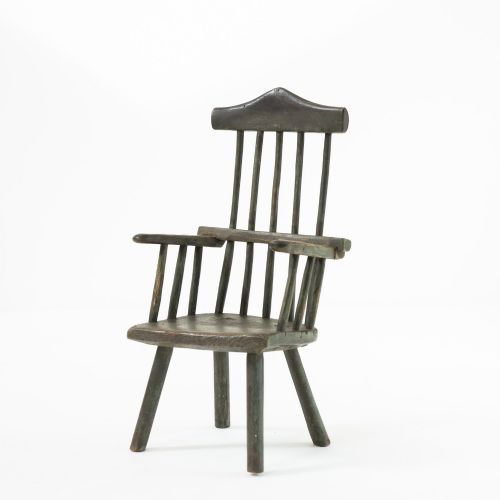
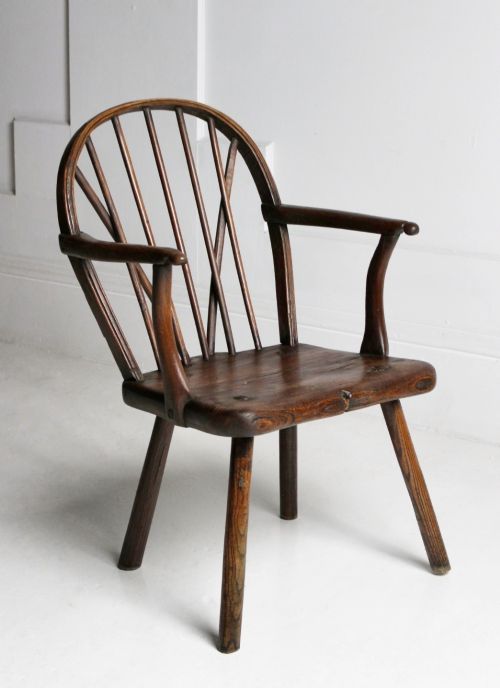
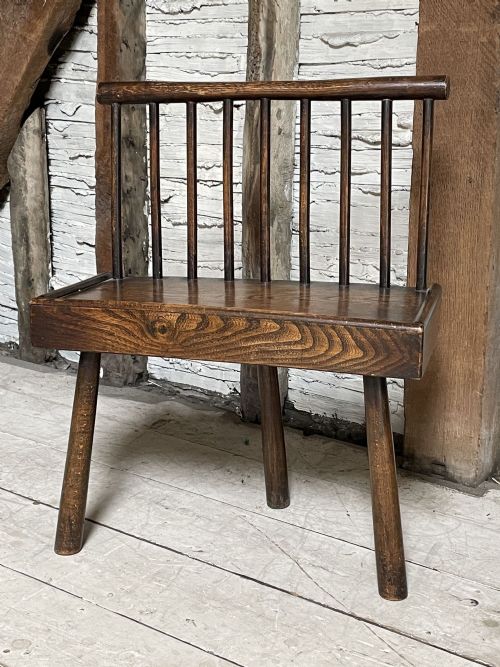
You are most likely to meet stick back armchairs and comb back Windsors on this page, alongside occasional children's chairs and small settles. The designs follow regional vernacular patterns rather than metropolitan fashions, keeping the structural components visible and functional.
The materials and forms reflect the local woods available to the maker, resulting in distinct combinations of ash, elm, and oak. Surviving examples demonstrate how these seats evolved from simple pegged construction into sophisticated variations of the stick chair tradition.
How they were made
Maker construction relied on solid plank seats bored to receive turned legs and slender spindles. Ash and oak provided the rigid framework and undercarriages, while elm supplied stable timber for the thick saddle seats.
Makers shaped the components using drawknives and spokeshaves, bending green timber for the comb backs and armbows. Joints were secured with wedges and pegs rather than metal fastenings, allowing the timber to move naturally over time.
Welsh Primitive Chair Retail Price Guide 2026
Typical asking prices for welsh primitive chair among the pieces listed under this phrase on Sellingantiques today, from the lower quarter to the upper quarter. They describe what is for sale here now, not the wider market.
Object forms span stick backs, comb backs, low backs, and country settles originating from Welsh regions such as Swansea and Carmarthenshire.
What varies in quality
Quality in these pieces rests upon the harmony of the proportions and the expressive character of the timber grain. A well-balanced silhouette with tapered spindles and a deeply sculpted seat distinguishes the finer examples from heavier utility seating.
The integrity of the original construction and the presence of untouched weathered surfaces determine the standing of each piece. Retaining early paint finishes or the original patination on burr elm and ash elevates the physical presence of the chair.
The Welsh Primitive Chair Glossary
- Comb back
- A Windsor chair variation where the vertical spindles of the backrest extend up through a top rail resembling the teeth of a comb.
- Stick back
- A chair construction method where turned or shaved spindles are wedged directly into holes bored through the solid wooden seat.
- Vernacular
- Objects built by local craftsmen following regional traditions and practical needs rather than academic architectural styles.
- Saddle seat
- A thick wooden seat base shaped with an adze or scorper into a concave contour for comfort.
- Burr elm
- Timber featuring distorted grain knots that create complex patterns, utilised for decorative seats.
Welsh Primitive Chair: Frequently Asked Questions
What is a welsh primitive chair?
A welsh primitive chair is a hand-built country seat originating from Welsh rural workshops during the eighteenth and nineteenth centuries. These pieces utilise locally sourced hardwoods and straightforward stick construction.
They were designed for practical domestic use rather than formal display, resulting in honest, unpretentious seating forms that vary by region.
How were these chairs used originally?
These chairs served as everyday seating around farmhouse hearths and cottage tables. Their sturdy construction made them suitable for heavy daily use by working families.
Smaller versions were built specifically for children, reflecting the domestic scale of rural Welsh households.
How do I live with a primitive chair?
Living with these chairs involves placing them in environments with stable humidity to protect the dry historic timber. They function well as accent seating in modern or traditional interiors.
Avoid positioning them near direct heat sources which can cause the old wood and pegged joints to dry out and shrink.
How can I tell different periods apart?
Earlier eighteenth-century examples often feature broader comb backs and deeply sculpted elm seats with distinct regional details. Nineteenth-century versions tend toward simpler stick back configurations and standardised turning.
Examining the tool marks and the method of wedging the spindles helps identify the approximate era of manufacture.