

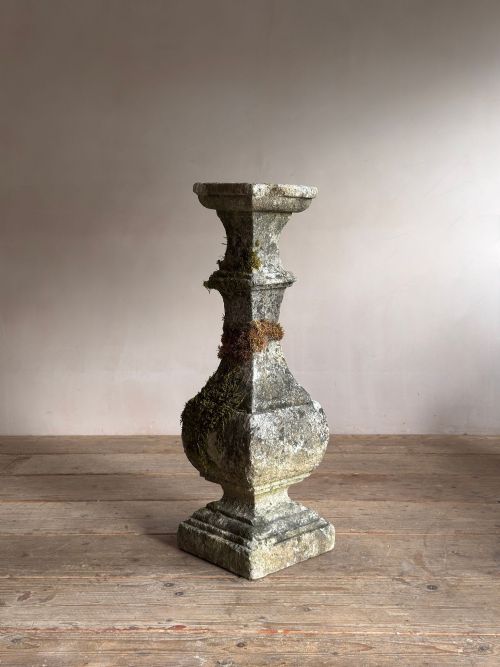
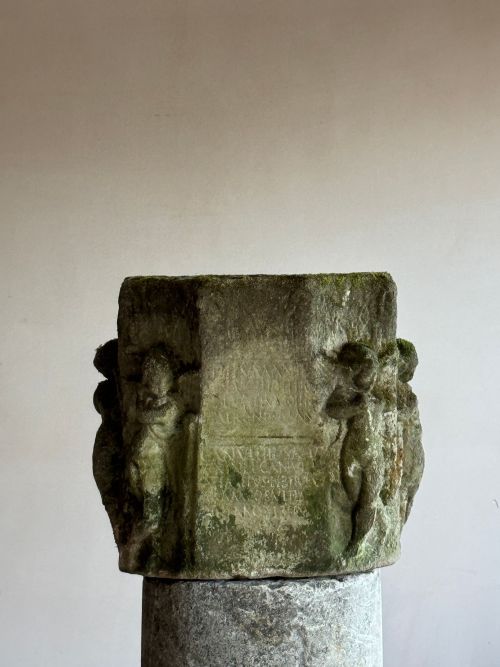
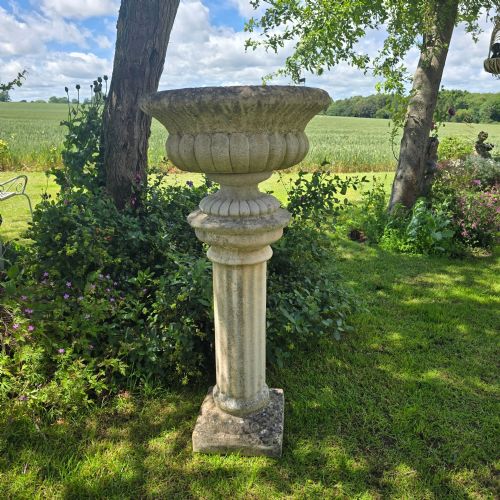
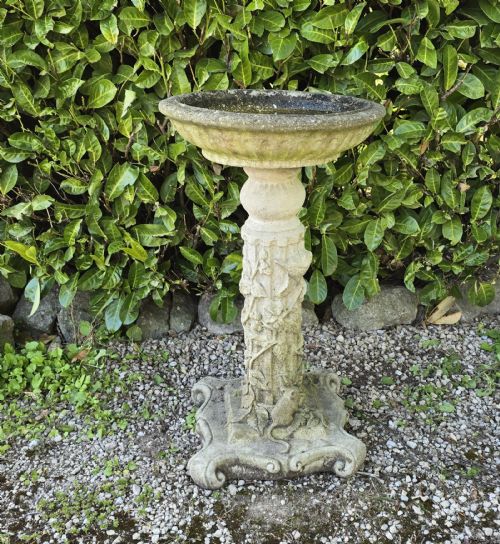

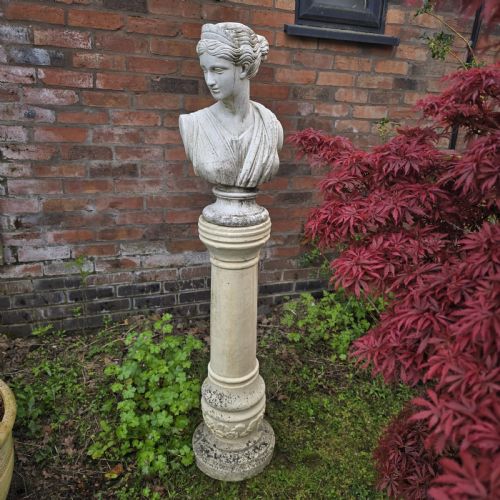


Weathered Stone Pedestal
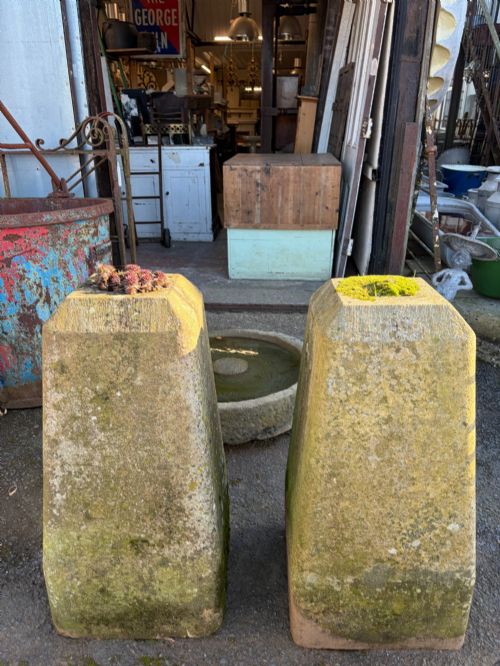
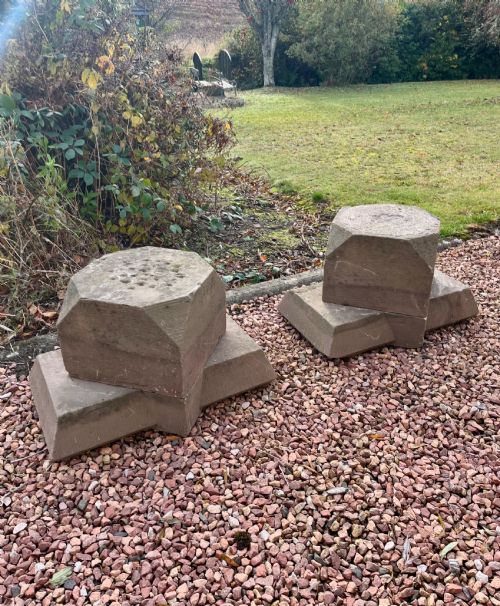
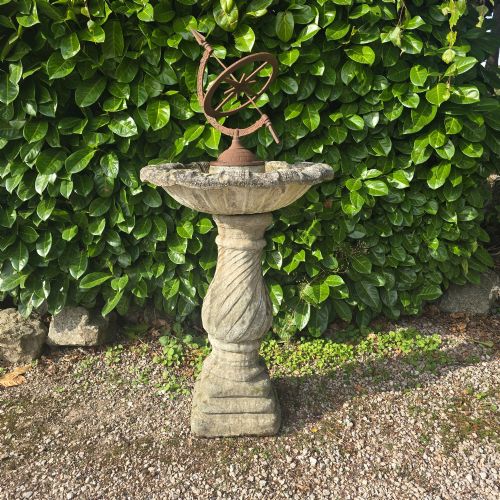
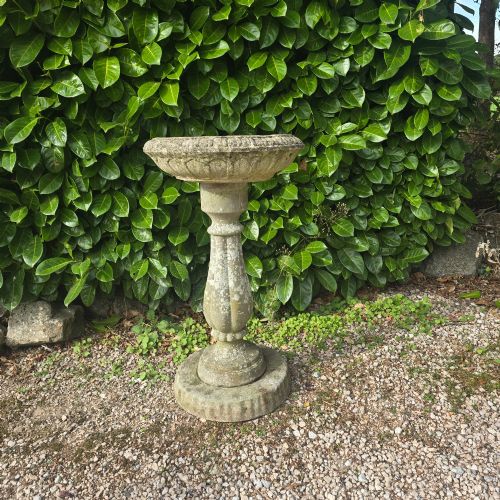
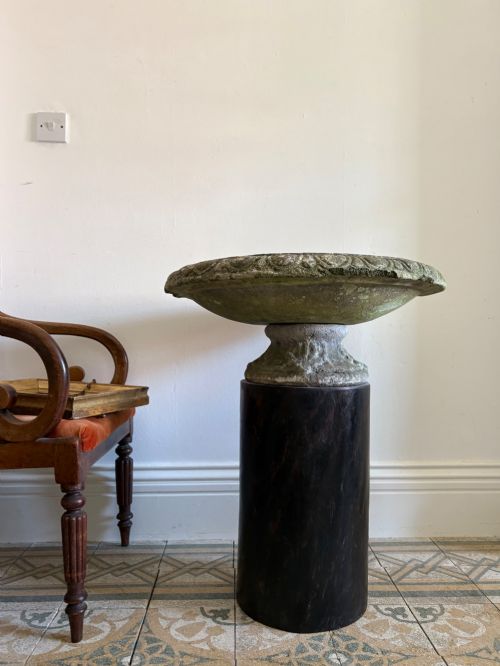
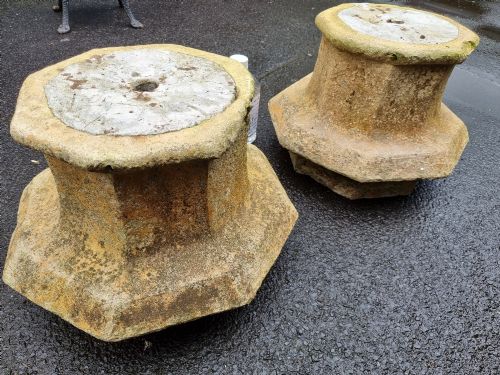
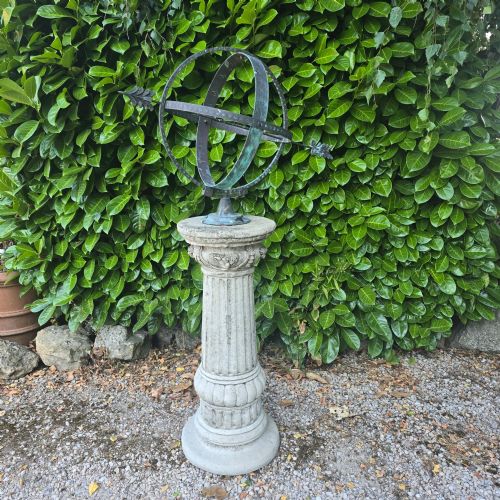
A weathered stone pedestal provides a stable, aged base to elevate garden urns, sundials and busts.
Weathered Stone Pedestal
The selections span multiple eras, drawing from eighteenth-century origins, nineteenth-century examples, and twentieth-century interpretations up to nineteen-fifty. Forms include garden plinths, architectural fragments and dedicated bases designed to hold sculptural works or birdbaths safely above the ground.
Materials vary across traditional and manufactured stone media, showing natural weathering from exposure to the elements over decades or centuries. These supports frequently accompany companion items like campana urns, classical busts or armillary spheres to form complete garden display sets.
How they were made
Masons shaped natural media including limestone, sandstone, purbeck stone and carved stone using traditional hand-cutting and chiselling techniques. These hand-finished pieces often display the distinct tool marks of their period of origin.
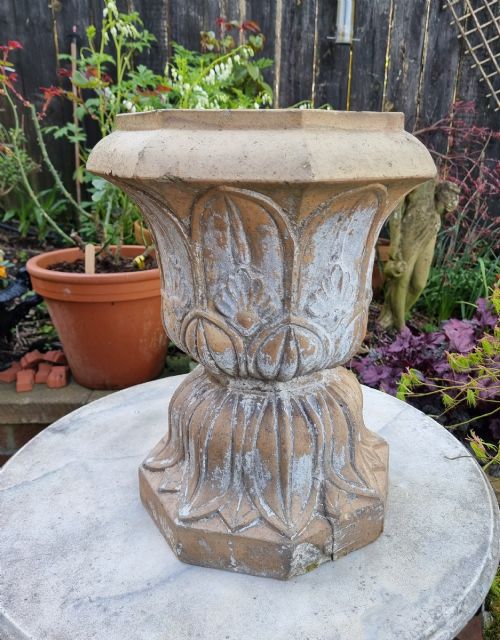
Cast production utilised composite stone, reconstituted stone and terracotta poured into moulds to replicate classical forms with consistent proportions. Artisans combined aggregate materials with binders to produce durable garden ornaments capable of withstanding outdoor conditions.
Weathered Stone Pedestal Retail Price Guide 2026
Typical asking prices for weathered stone pedestal among the pieces listed under this phrase on Sellingantiques today, from the lower quarter to the upper quarter. They describe what is for sale here now, not the wider market.
Several stone pedestals quietly moonlight as year-round perches for very determined local robins.
What varies in quality
Quality depends upon the depth of the carving and the crispness of architectural details such as Corinthian capitals or moulded relief work. Superior examples exhibit balanced proportions and harmonious integration between the support base and its decorative top.
The authenticity and depth of surface weathering significantly influence the character of the stone. Natural patination accumulated over generations distinguishes genuine aged garden elements from modern reproductions.
The Weathered Stone Pedestal Glossary
- Campana urn
- A bell-shaped garden vessel with a flaring rim, frequently mounted upon a pedestal base.
- Plinth
- A heavy rectangular or square block serving as the base for a statue, urn or column.
- Corinthian capital
- The uppermost member of a column featuring carved acanthus leaves and scrollwork.
- Armillary sphere
- An astronomical model composed of rings, often placed on top of a stone sundial pedestal.
- Architectural salvage
- Building elements and masonry fragments recovered from older structures for decorative garden use.
Weathered Stone Pedestal: Frequently Asked Questions
How do I choose the right height?
Consider the scale of the ornament you intend to place on top and the surrounding garden planting.
Taller pedestals suit standalone statues or focal urns, while lower plinths work well for birdbaths and sundials.
Can these pedestals stay outside in winter?
Most stone and reconstituted stone pieces withstand outdoor elements well, having aged through decades of exposure.
Ensure proper drainage beneath the base to prevent cracking during severe frost cycles.
Are these pedestals hollow or solid?
Construction methods vary depending on the material and period, with larger examples often featuring hollow cores to manage weight.
Solid carved stone blocks provide maximum stability without internal cavities.
How do I clean weathered stone?
Gentle brushing with water helps remove loose debris while preserving the accumulated patina of age.
Avoid harsh pressure washing or chemical treatments that strip the weathered surface character.