

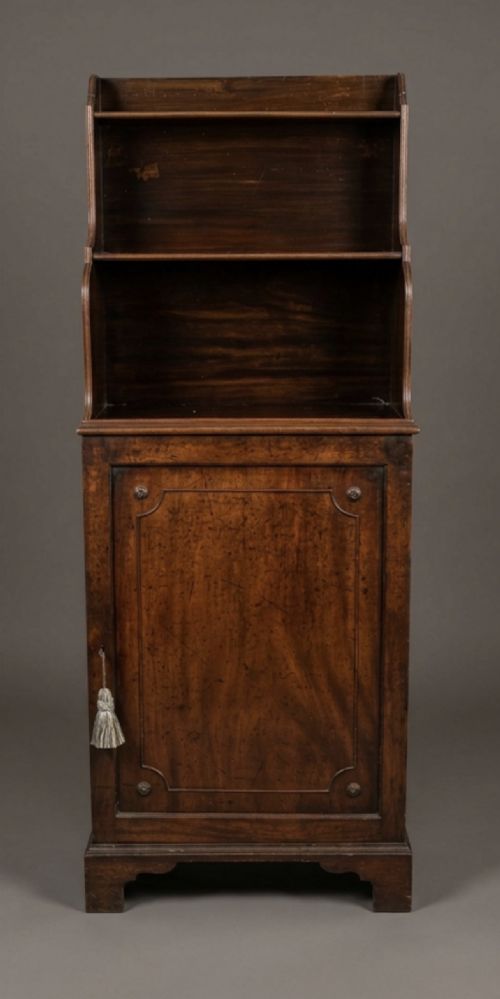
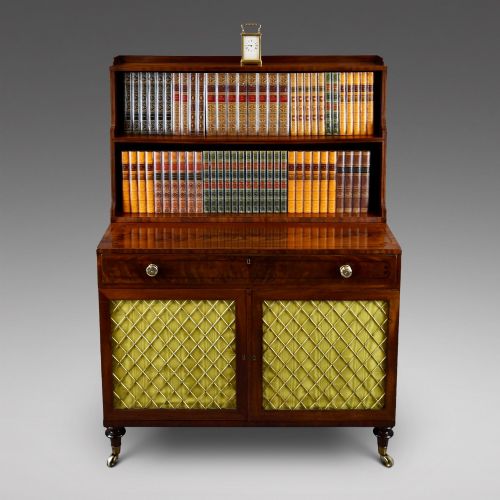
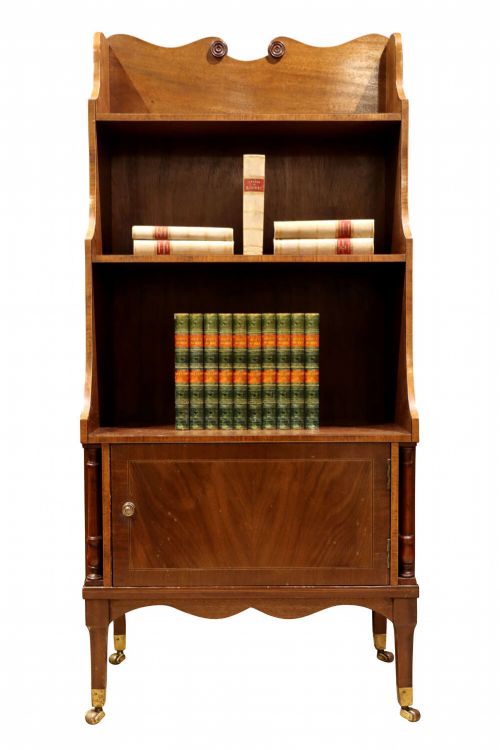


Waterfall Library Shelves
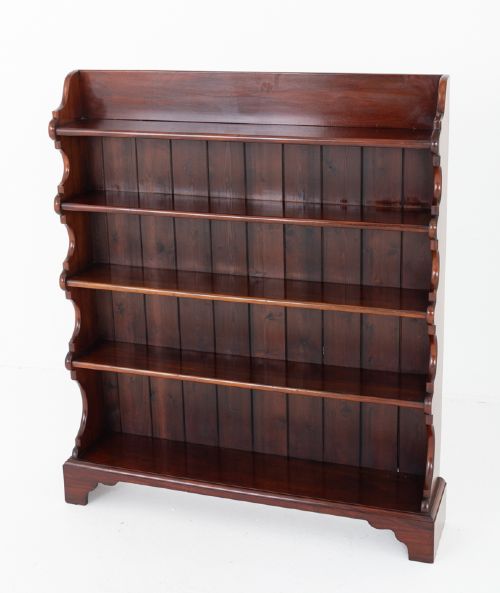
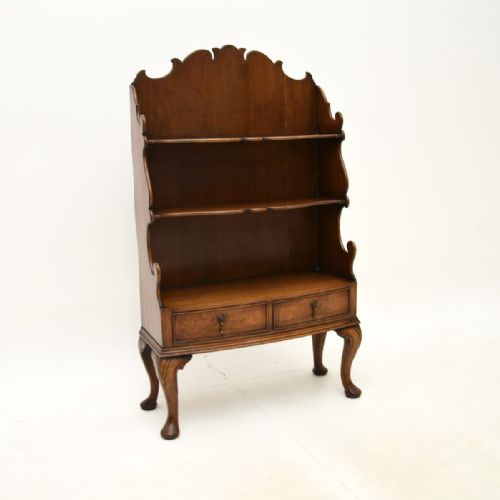
These waterfall library shelves are tiered timber open bookcases designed to keep favourite volumes close at hand with graduated elegance.
Waterfall Library Shelves
When you search for waterfall library shelves, you find tiered open bookcases characterised by descending shelf depths from top to bottom. These pieces emerge in various forms across the Georgian, Regency, William IV, and Victorian periods.
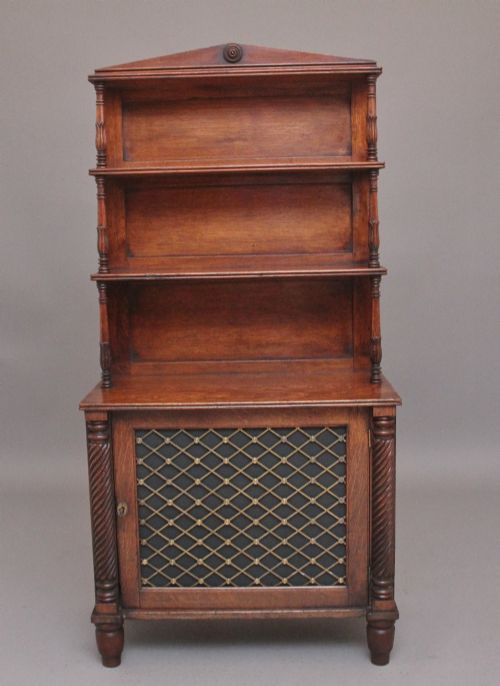
You are most likely to meet mahogany examples on this page, alongside pieces fashioned from burr walnut, satinwood, oak, yew wood, and simulated rosewood. Certain pieces integrate cupboard bases below the graduated tiers, while others remain entirely open.
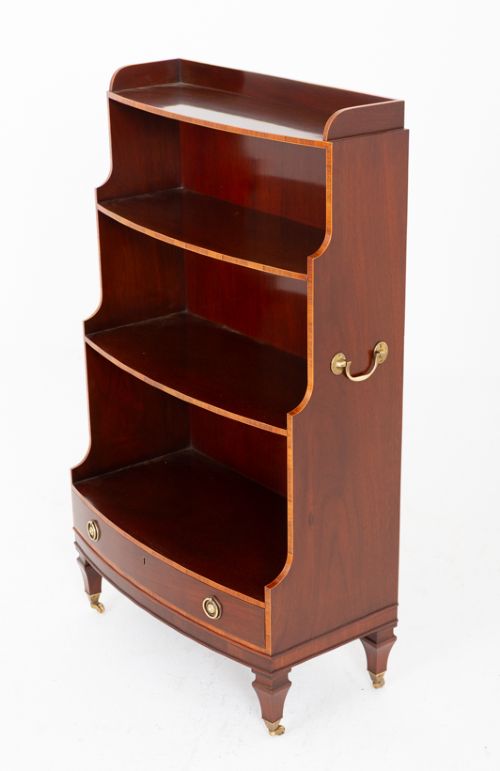
The objects span centuries from the early nineteenth century through the Edwardian era, sometimes appearing as pairs or featuring brass castors and crossbanded details. The overarching design prioritises accessible storage for books in a compact footprint.
Materials and construction
Cabinet makers constructed these tiered bookcases using solid and veneered timbers such as mahogany, satinwood, and burr walnut, often applying contrasting crossbanding and boxwood stringing to define the edges.
Structural elements include graduated open shelves supported by shaped sides, sometimes incorporating brass castors on the feet and low cupboard enclosures fitted with doors beneath the open tiers.
Waterfall Library Shelves Retail Price Guide 2026
Typical asking prices for waterfall library shelves among the pieces listed under this phrase on Sellingantiques today, from the lower quarter to the upper quarter. They describe what is for sale here now, not the wider market.
Several pieces manage to look perpetually ready for an academic emergency, even when loaded entirely with novels about murder.
Judging the execution
Quality rests in the selection of timber figures, such as the rich grain of burr walnut or the warmth of polished mahogany, alongside the precision of crossbanding and stringing. The graduation of the tier depths and the stability of the vertical supports dictate the structural success.
Refinements like integrated cupboard bases, open gallery rails, and original brass castors elevate certain examples above simpler open shelf configurations.
The Waterfall Library Shelves Glossary
- Crossbanding
- A strip of veneer applied to the border of a shelf or top panel so that the grain runs perpendicular to the main surface. This decorative technique frames the timber effectively.
- Stringing
- A narrow inlaid line of contrasting wood, such as boxwood, used to outline panels and shelves. It provides a sharp visual boundary on cabinet pieces.
- Graduated
- Describing shelves that decrease in depth from the bottom tier to the top. This proportion defines the profile of the piece.
- Breakfront
- A piece of furniture where the central section projects forward from the flanking sides. This layout adds architectural depth to larger library furniture.
- Castors
- Small wheel attachments fitted to the base of furniture legs to assist movement. They appear frequently on heavier nineteenth-century library pieces.
Waterfall Library Shelves: Frequently Asked Questions
How were these bookcases used?
Owners placed them beside reading chairs or against library walls to keep frequently consulted books accessible. The stepped shelves allowed titles of varying heights to be organised clearly.
Some versions included lower cupboards to conceal papers or smaller items while keeping working volumes on the upper tiers.
How do I style them at home?
Position them against flat walls in studies, living rooms, or hallways where their graduated sides can be viewed without obstruction. They coordinate naturally with traditional interiors and wood-panelled rooms.
Use the open shelves for books and small decorative objects, ensuring the weight is balanced across the tiers.
How do I date these pieces?
Dating relies on observing timber choices, secondary woods, and decorative flourishes like stringing or crossbanding. Earlier Georgian and Regency examples typically show dense mahogany and restrained lines.
Later Victorian and Edwardian interpretations introduce lighter woods like satinwood and yew, alongside revived styles and inlaid details.