



Watercolour Bridge Painting
These watercolour bridge painting works capture spans from Durham to Venice in pigment on paper, offering subtle topographical records for any wall.
Watercolour Bridge Painting
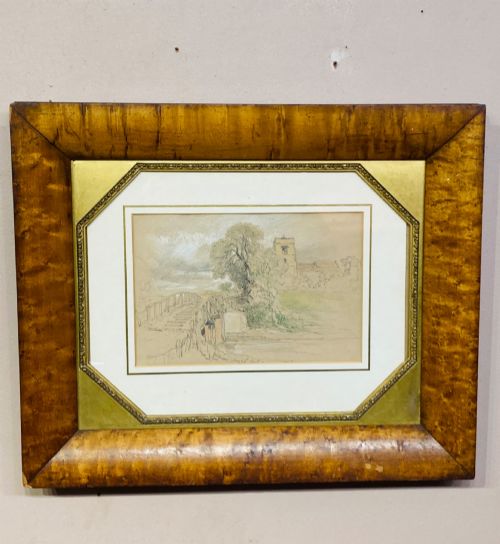
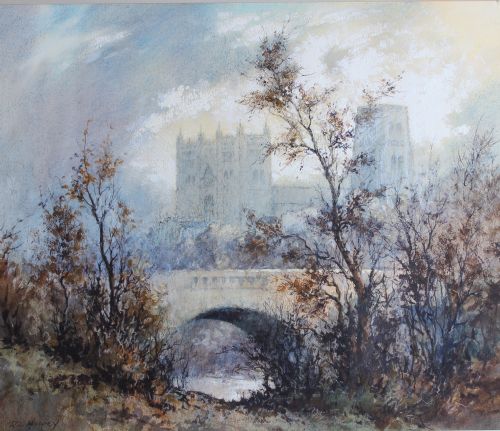
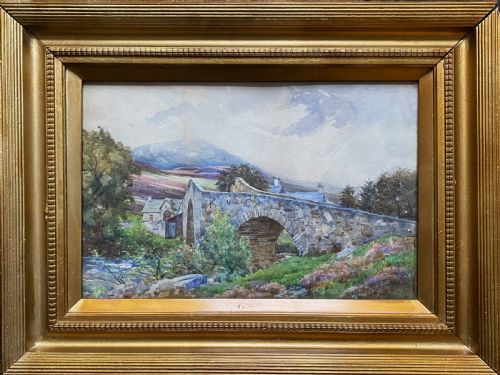
When you search for a watercolour bridge painting, you find original works executed on paper using watercolour paint and pigment, often framed behind glass in wood or gilt wood moulding. The subjects range from urban river crossings in London and Paris to rural stone arches in Yorkshire and picturesque Italian waterways.
The pieces span periods from the nineteenth century through the Edwardian era into the mid-twentieth century, encompassing British Impressionism, Victorian styles, and mid-century British topographical art. You encounter pastoral landscapes alongside bustling cityscapes, each depicting a specific bridge or span within its broader regional context.
Most examples originate from British artists working locally or travelling across Europe, capturing architectural details and river atmospheres in fluid pigment. These original artworks function primarily as wall art, preserved in varied antique frames that reflect their period of origin.
Materials and Technique
Artists apply watercolour paint and pigment directly onto paper sheets, sometimes utilising pencil or ink underdrawing to establish the architectural lines of the bridge and surrounding buildings. The translucent nature of the pigment allows the white of the paper to provide luminosity for skies and water surfaces.
Finished paintings are typically mounted behind glass to protect the delicate water-soluble pigments from moisture and atmospheric dust. Contemporary or period framing in wood or gilt wood supports the paper securely within the display format.
Watercolour Bridge Painting Retail Price Guide 2026
Typical asking prices for watercolour bridge painting among the pieces listed under this phrase on Sellingantiques today, from the lower quarter to the upper quarter. They describe what is for sale here now, not the wider market.
The inventory records bridge scenes from both British landscapes and European destinations including Venice and Paris.
Quality and Execution
Quality rests upon the artist's handling of perspective, light, and fluid pigment to render stone arches, reflections, and atmospheric conditions convincingly. Stronger works demonstrate confident brushwork and precise architectural draughtsmanship rather than mechanical or timid application.
The condition of the paper and the vibrancy of the original pigment heavily influence the overall standard of a piece. Well-preserved works retain their tonal contrast without excessive fading or discoloration from light exposure.
Robert Leslie Howey·Percy Lancaster·Vittore Zanetti Zilla·Thomas Lound·James H Hulse·Jack Merriott·Fred Stead·Noel Harry Leaver·Frederick Tully Lott·Claude Muncaster·Fred Lawson·William A Macdonald·Herbert John Finn·Frank William Scarbrough·George Graham·Helen Donald Smith
The Watercolour Bridge Painting Glossary
- Watercolour
- A paint consisting of colour suspended in a water-soluble binder, used for painting on paper. It allows for translucent washes and delicate layering.
- Gilt Wood
- Wood carved and coated with a thin layer of gold leaf or metallic gilt finish. It appears frequently on traditional picture frames.
- Topographical
- Representing a specific actual place with descriptive accuracy. These views record historical bridges and surrounding landscapes as they appeared.
- Impressionism
- A style of painting that focuses on capturing the momentary feel or light of a scene. British practitioners applied these principles to local rivers and architecture.
Watercolour Bridge Painting: Frequently Asked Questions
What periods do these bridge paintings cover?
The available selection spans from the nineteenth century through the Edwardian period to the mid-twentieth century. Artists worked across Victorian, British Impressionist, and mid-century British traditions.
Specific dates within titles point to the active years of creation, ranging from the eighteen-fifties to the nineteen-fifties.
How should I frame and display them?
These works on paper require protection behind glass to prevent atmospheric damage to the pigment. Many arrive in their original wood or gilt wood frames.
Keep them away from direct sunlight to protect the watercolour pigments from fading over time.
Are these works original or reproductions?
The listings consist entirely of original hand-painted waterworks executed directly on paper. Each piece represents a unique artistic creation by the named painter.
Signatures, dates, and inscriptions on the paintings or mounts confirm their status as original art.
Where do the depicted bridge scenes come from?
The views include British locations such as London, York, Durham, and various Yorkshire rivers. European destinations like Venice and Paris also feature prominently.
Artists often travelled to record specific architectural landmarks and rural crossings during their working lives.