



Washstand Water Jug
These washstand water jug pieces bring tactile ceramic charm and period utility to any room, offering a functional slice of historical daily life.
Washstand Water Jug
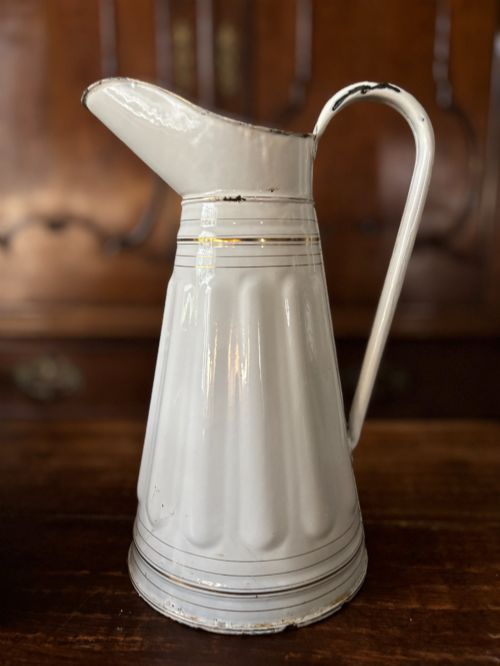
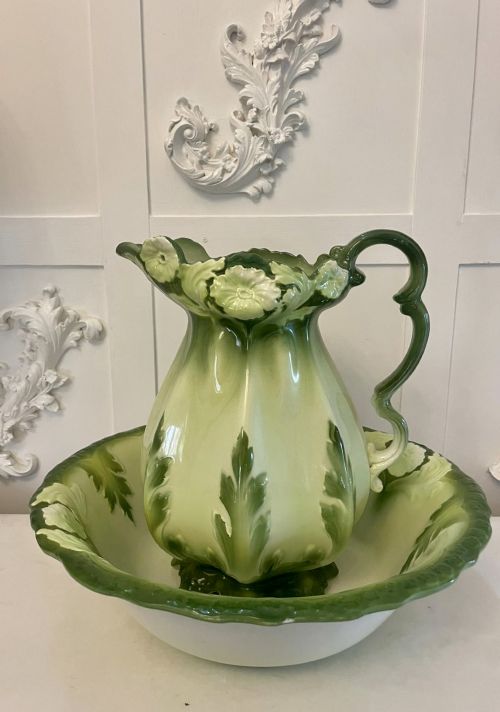
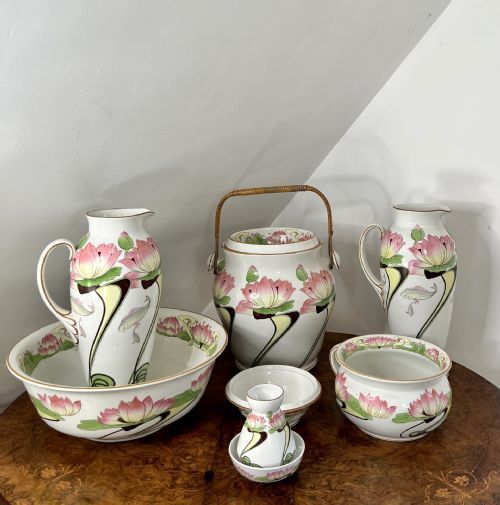
A washstand water jug provides the central vessel for historical bedroom washing routines, often appearing within larger sets that include matching basins and chambers. These functional items surface from periods spanning the nineteenth century through to the early twentieth century, carrying the decorative styles of their era.
Makers produced these utilitarian objects for daily grooming before indoor plumbing altered domestic habits, leaving behind durable ceramic and enamel survivors. Today, collectors utilise them as decorative statements, flower vases, or period room accents rather than for their original washing purpose.
How they were made
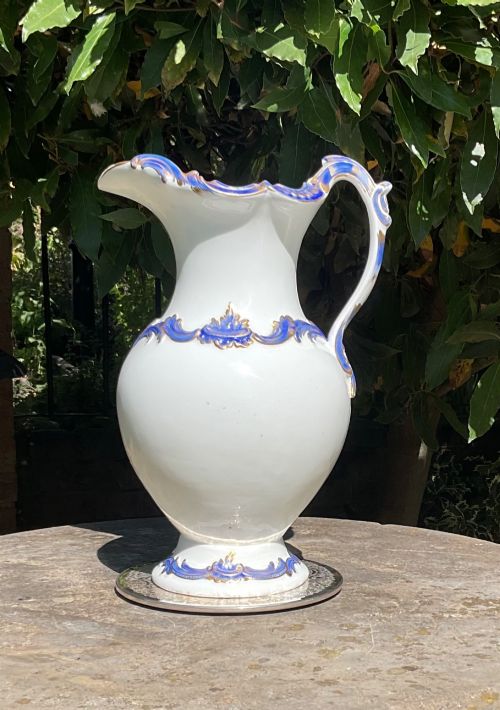
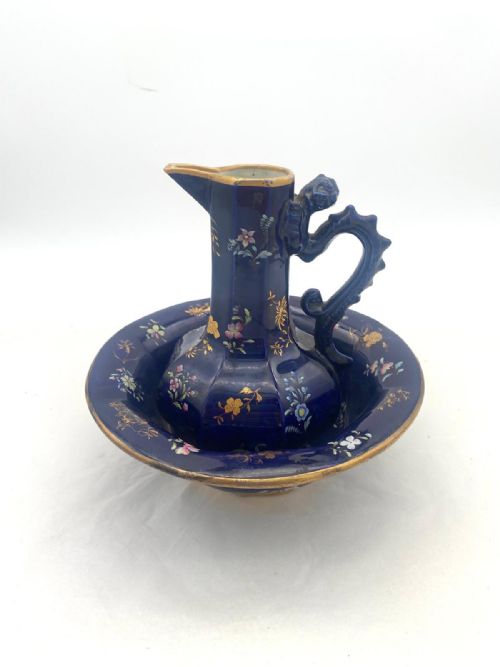
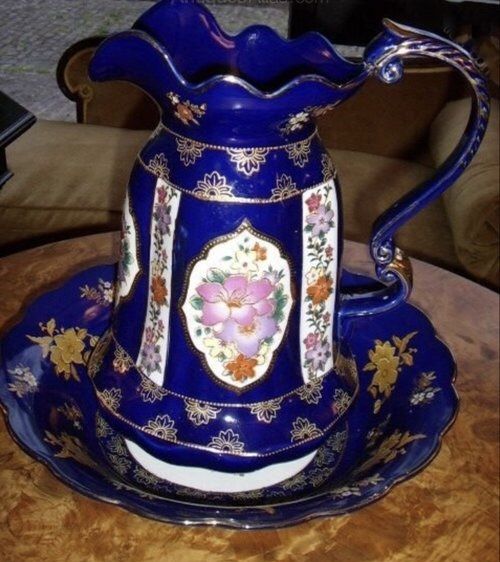
Potters shaped these ceramics from earthenware, porcelain, and ironstone bodies, applying liquid glazes to seal the porous clay before kiln firing. Workshops then decorated the surfaces using transfer printing, hand-painted floral motifs, or cobalt blue glazes, sometimes incorporating enamel and gold leaf accents.
Makers such as Doulton Burslem and Mason utilised specialised moulding techniques to achieve octagonal shapes, bulbous bodies, and sturdy handles capable of holding heavy water volumes. Glass examples also appear, formed through blowing and moulding processes to create matching bowls and jugs for nineteenth-century chambers.
Washstand Water Jug Retail Price Guide 2026
Typical asking prices for washstand water jug among the pieces listed under this phrase on Sellingantiques today, from the lower quarter to the upper quarter. They describe what is for sale here now, not the wider market.
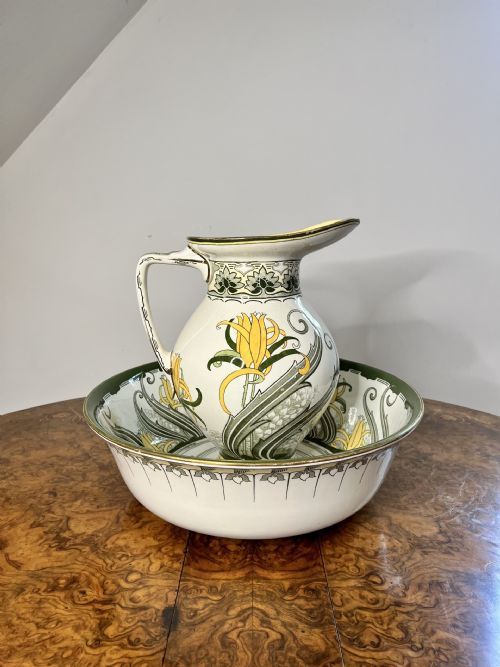
Design styles span from French Country and Regency Chinoiserie to distinct Art Nouveau curves.
What varies in quality
Quality rests upon the crispness of the transfer print, the depth of the cobalt blue glaze, and the precision of any hand-painted details. Early nineteenth-century pieces from established potteries demonstrate finer body refinement compared to simpler utilitarian wares.
The presence of supplementary gilding, enamel work, or complex octagonal moulding separates standard utility items from higher-grade exhibition pieces. Preservation of the original glaze shine and the absence of heavy wear on decorative surfaces dictate the overall desirability of the set.
Doulton Burslem·Mason·Minton
The Washstand Water Jug Glossary
- Earthenware
- A porous type of pottery fired at lower temperatures, requiring an impermeable glaze to hold water effectively. This material forms the body of many utilitarian bedroom jugs.
- Ironstone
- A durable, heavy ceramic developed in the nineteenth century to imitate porcelain while offering greater strength for daily use. It frequently serves as the base material for decorated washbasins and pitchers.
- Transfer printing
- A decoration technique where a design is engraved on a copper plate, inked, transferred to paper, and then applied to the ceramic surface before firing. This method allowed intricate patterns to be produced consistently.
- Cobalt blue
- A deep, stable blue pigment derived from cobalt oxide, capable of withstanding high kiln temperatures. Potters used it extensively for rich underglaze decoration on nineteenth-century ceramics.
Washstand Water Jug: Frequently Asked Questions
What were washstand water jugs used for?
These jugs held water for morning and evening washing routines in the bedroom before the widespread adoption of indoor plumbing.
Servants filled them from kitchen supplies so residents could wash their faces and hands at a washstand basin.
How do I date a washstand water jug?
Dating relies on identifying the pottery mark stamped on the base, stylistic clues like Art Nouveau curves, and the material type.
Nineteenth-century examples often feature transfer-printed registry marks or distinct ironstone bodies that help narrow down their production era.
Can I use these jugs for fresh flowers?
Most ceramic and glass jugs hold water safely, making them suitable containers for large floral arrangements.
Users should check the interior for hairline cracks or historical repairs before filling them with liquid.
Are jugs usually found with their bowls?
Many pieces survive as matched pairs, though breakage over the decades frequently separated jugs from their original basins.
Complete sets combining both the water jug and the washbasin remain highly sought after by collectors.