

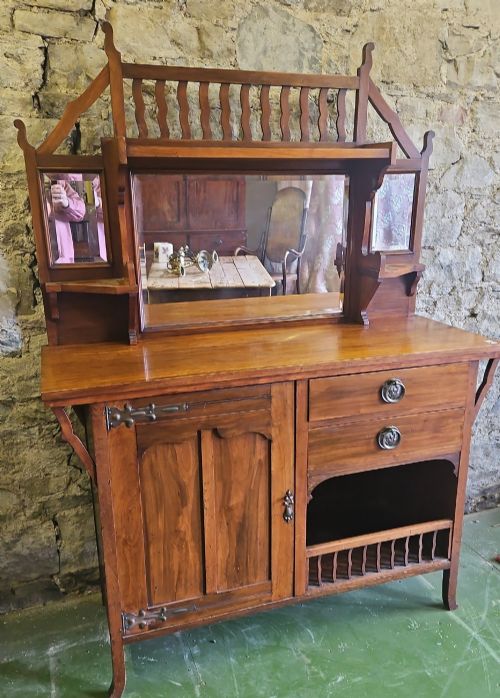
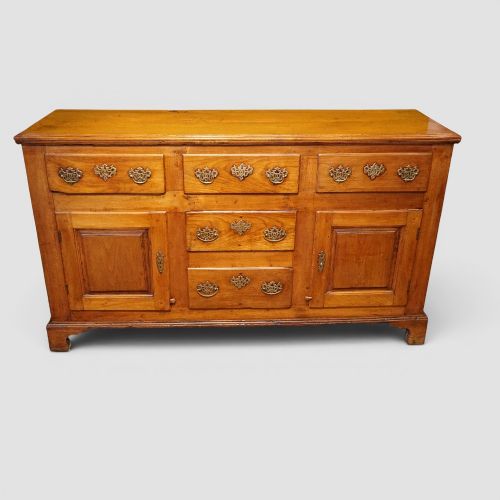
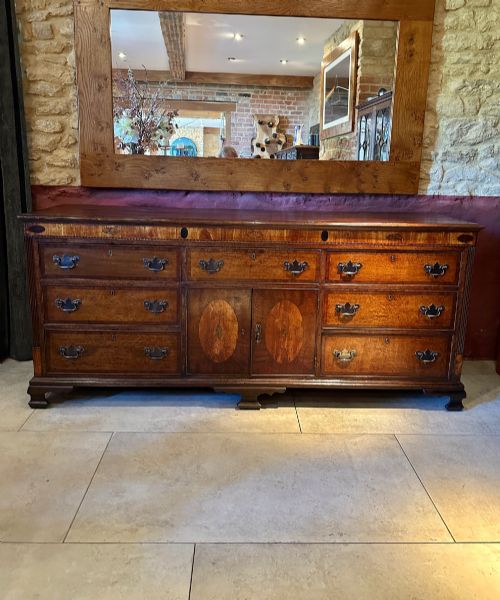


Warm Oak Server Cabinet
A warm oak server cabinet brings robust timber and centuries of utility into a room, offering both surface space and deep storage.
Warm Oak Server Cabinet
When buyers search for a warm oak server cabinet, they encounter sturdy wooden forms designed for storage and display, most frequently taking the shape of sideboards, dresser bases, and house maid cupboards. These functional pieces emerge from diverse eras including the Georgian period, the Victorian era, and the Arts and Crafts movement.
The versions most commonly met on this page span centuries of British and continental design, ranging from early eighteenth-century Queen Anne and George II dresser bases to late nineteenth-century Arts and Crafts cupboards. Each item displays the characteristic grain and natural tones of oak, occasionally complemented by fruitwood or pollard oak.
Makers and makers' marks occasionally appear, such as Maple and Co and T Simpson and Son, alongside unlabelled provincial works. Whether encountered as a large Lancashire dresser base or a carved two-door cabinet, every example provides a tangible link to historical domestic interiors.
Materials and construction
Construction relies heavily on solid oak timbers, chosen for strength and durability, frequently paired with secondary woods like fruitwood or ornamental pollard oak veneers. Cabinetmakers shaped these materials using traditional joinery techniques to build heavy-duty frameworks capable of supporting everyday household use.
Warm Oak Server Cabinet Retail Price Guide 2026
Typical asking prices for warm oak server cabinet among the pieces listed under this phrase on Sellingantiques today, from the lower quarter to the upper quarter. They describe what is for sale here now, not the wider market.
House maids of the nineteenth century trusted these deep cupboards to keep the silver polished and the lintels free of dust.
Evaluating craftsmanship and condition
Quality separates through the selection of timber and the depth of carving, where pieces utilising figured pollard oak or carefully matched fruitwood demonstrate superior ambition. The crispness of hand-carved details and the integration of original brass or iron hardware elevate an item above simpler utilitarian builds.
Proportion and structural integrity define the higher end of the range, visible in balanced George II and George III proportions versus heavier, less refined regional builds. The integration of mirrors, panelled doors, and secondary timbers reflects the original maker's skill and the intended status of the furniture.
Maple and Co·T Simpson and Son
The Warm Oak Server Cabinet Glossary
- Dresser base
- A low wooden storage unit featuring drawers and cupboards, traditionally used in kitchens or dining rooms for food preparation and serving.
- Pollard oak
- Timber taken from a tree that has been pollarded, producing a richly textured and highly figured grain pattern prized for decorative cabinet fronts.
- Fruitwood
- Dense hardwood gathered from fruit-bearing trees such as pear or apple, utilised for contrasting details or secondary structural elements.
- Mirrorback
- A sideboard or cabinet featuring an integrated wooden frame holding a glass mirror above the main surface.
- House maid cupboard
- A tall storage piece traditionally utilised in large domestic properties for housing cleaning equipment and linens.
Warm Oak Server Cabinet: Frequently Asked Questions
What is a warm oak server cabinet?
It is a heavy timber storage piece encompassing sideboards, dresser bases, and cupboards designed for domestic utility.
These items utilise solid oak and related woods to provide surface space and enclosed storage within dining areas or halls.
How were these cabinets used originally?
They served as practical furniture for storing tableware, linens, and food provisions in large houses and provincial homes alike.
Dresser bases provided a sturdy surface for food preparation, while cupboards kept household goods securely out of sight.
How do I care for antique oak furniture?
Maintain the timber by keeping it away from direct heat sources and sudden humidity changes to prevent wood splitting.
Apply traditional beeswax occasionally to nourish the grain and preserve the natural lustre of the oak.
How do I identify different periods?
Examine the construction methods, handle styles, and decorative carving patterns to distinguish between Georgian, Victorian, and Edwardian examples.
Early pieces often display hand-cut joinery and simpler provincial forms, whereas later Victorian and Arts and Crafts items showcase heavier relief carving.