
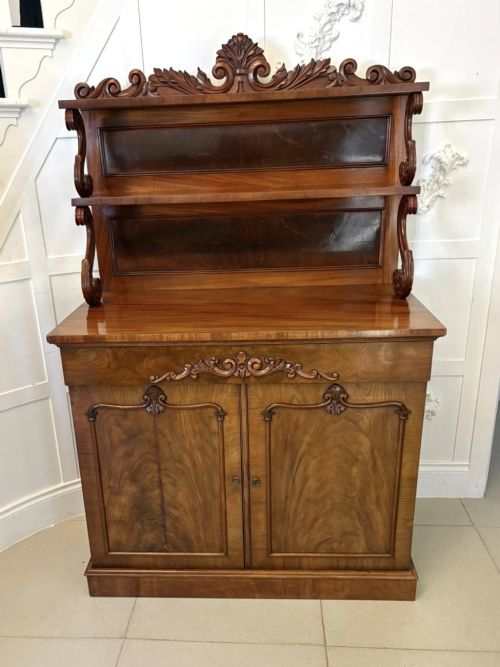
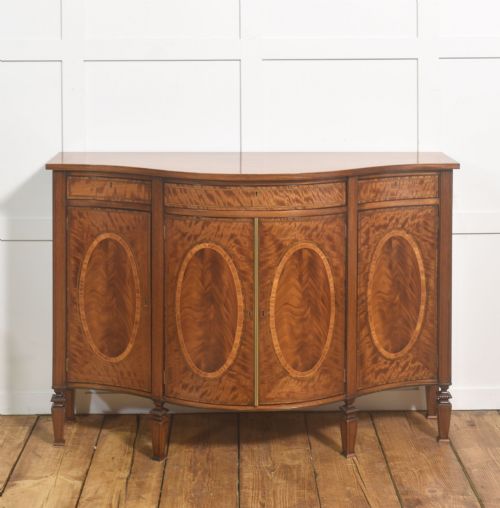
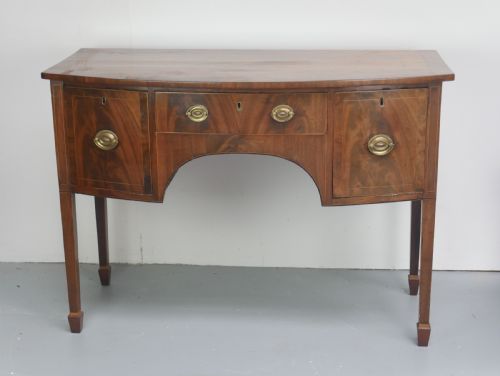
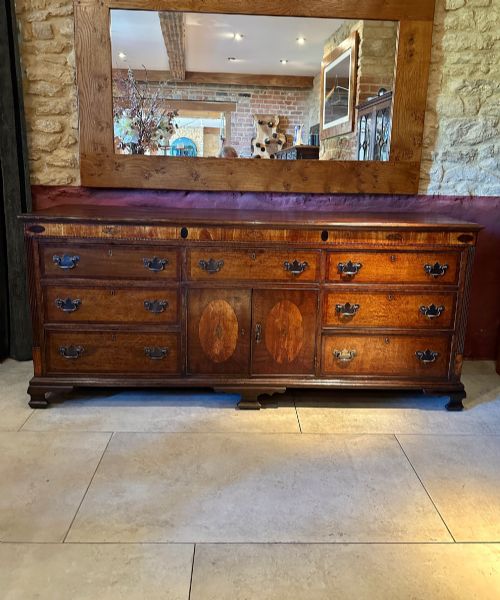


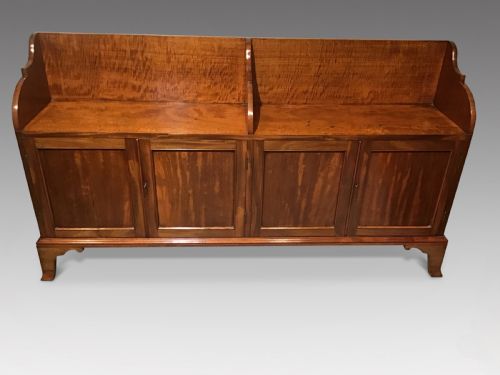


Warm Mahogany Sideboard Server
These pieces for warm mahogany sideboard server search bring substantial dining room storage in rich timber.
Warm Mahogany Sideboard Server
A warm mahogany sideboard server provides practical dining room storage while bringing rich timber tone and period presence into a home. When people search for a warm mahogany sideboard server, they encounter formal serving tables, bowfront storage units, and tiered chiffoniers from past centuries.
The selection ranges from eighteenth-century Georgian forms to Victorian and Edwardian interpretations, including Sheraton Revival designs and Edwardian Art Nouveau pieces. Oak Lancashire dresser bases also appear alongside mahogany side cabinets and larger breakfront servers.
Smaller Georgian bowfront pieces and Edwardian inlaid examples dominate the middle ground, offering functional proportions for contemporary dining spaces. Larger breakfront configurations and three-tier buffets cater to grander rooms requiring significant presence.
How they were made
Cabinet makers built these pieces primarily using solid mahogany and flame mahogany veneer applied to sturdy secondary woods such as oak. Timber selection prioritised rich grain patterns, often enhanced through French polishing to achieve a warm lustre.
Decorative detailing relied on contrasting elements, incorporating satinwood and boxwood inlay alongside brass hardware for handles and drawer pulls. Construction techniques combined traditional joinery with figured veneers to create curved bowfront and serpentine profiles.
The listings on this site span the eighteenth, nineteenth, and early twentieth centuries, featuring Georgian, Victorian, and Edwardian periods.
What varies in quality
The distinction between standard utility items and finer examples rests upon the selection of timber and the precision of decorative inlay. Finely figured flame mahogany veneer and crisp satinwood banding elevate a piece beyond basic workshop production.
Proportion and execution of form define the upper tier, where serpentine and bowfront profiles require exceptional carpentry skill. Original brass hardware and well-preserved surface patination indicate superior preservation and original craftsmanship.
The Warm Mahogany Sideboard Server Glossary
- Bowfront
- A curved cabinet front that swells outward in the centre, common in late eighteenth and nineteenth-century dining furniture. This shape softens the room and provides deeper storage in the middle.
- Chiffonier
- A low sideboard or cabinet featuring shelves or a tiered superstructure above the main storage surface. Victorian examples often incorporate enclosed cupboards and mirrored backs.
- Satinwood
- A pale, lustrous timber native to India and Sri Lanka, frequently used for contrasting stringing and decorative inlay work. It brings a bright golden contrast to darker mahogany surfaces.
- Serpentine
- A front profile characterised by a convex central section flanked by concave curves. This intricate shape demands advanced woodworking skill and indicates a higher grade of manufacture.
- Breakfront
- A large cabinet design where the central section projects forward from the flanking outer wings. This architectural arrangement creates depth and visual rhythm in formal dining rooms.
Warm Mahogany Sideboard Server: Frequently Asked Questions
How do I clean a mahogany sideboard?
Dust regularly with a soft, dry cloth to prevent particle accumulation on the polished surface. Apply natural beeswax periodically to nourish the timber and maintain its warm lustre without building up heavy chemical layers.
Avoid placing these items in direct sunlight or near heat sources to prevent timber shrinkage and veneer lifting. Use coasters and mats to protect the top from moisture and heat rings.
What is the difference between a sideboard and a buffet?
Sideboards traditionally feature cupboards and drawers designed specifically for storing dining linen, cutlery, and serving dishes. They often include flat top surfaces suited for displaying serving platters during meals.
Buffets generally offer tiered or open shelving structures alongside enclosed storage, originally intended for presenting food before service. In practice, historical terminology often overlaps between the two forms.
Can I use a sideboard in a hallway?
Lower or shallower sideboards fit narrow corridors and entrance halls effectively, providing convenient surface space for keys and post. Bowfront and compact Georgian variations work well in domestic transitional spaces without obstructing movement.
Ensure you measure hallway clearances carefully against the depth of the cabinet before placement. Smaller side cabinets and narrow servers offer practical hallway alternatives to larger dining room pieces.
How do I date an antique mahogany sideboard?
Examine the construction methods of the drawer linings and backboards for hand-cut joints and tool marks. Timber choice and hardware styles also offer clear indicators of period manufacture.
Georgian pieces display different proportions and inlay motifs compared to Victorian or Edwardian revivals. Comparing the secondary woods and veneer thickness helps confirm the era of production.