

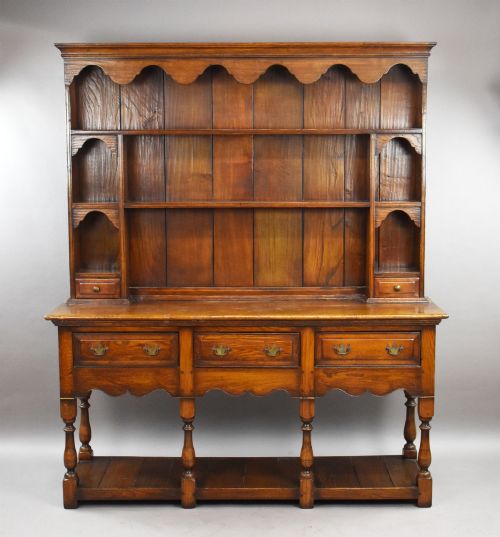
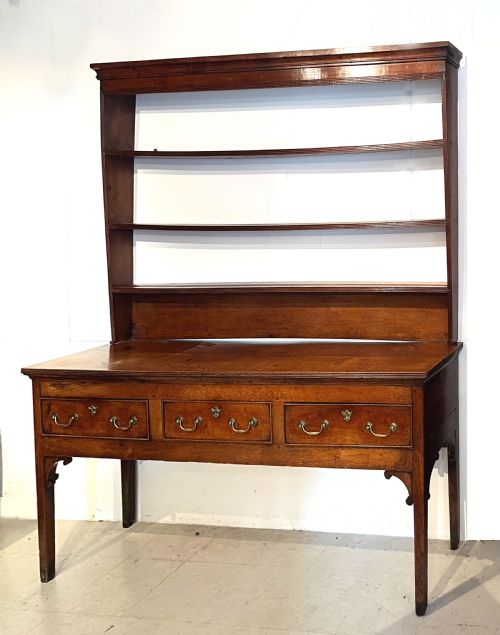


Warm Brown Wooden Hutch
These warm brown wooden hutch pieces offer honest storage and display, bringing characterful timber grain to a kitchen or dining space.
Warm Brown Wooden Hutch
When you search for a warm brown wooden hutch, you are looking at sturdy kitchen dressers, buffet vaisseliers, and dresser racks designed for storage and display. These items combine a lower base of cupboards or drawers with an upper plate rack.
The versions you are most likely to meet on this page span the eighteenth and nineteenth centuries, featuring regional styles like Georgian Country, English Country, French Provincial, and Victorian Country. They draw on utilitarian domestic traditions where timber surfaces took heavy daily use.
Makers utilised robust domestic hardwoods to build pieces that held tableware, pantry goods, and household provisions. The resulting forms range from large two-part dressers to vernacular regional formats.
How they were made
Construction relies heavily on solid oak, walnut, and cherrywood, chosen for durability and deep warm colour. These timbers were worked by hand using traditional joinery methods suited to heavy domestic furniture.
Metalwork details typically involve brass and iron for hinges, handles, and structural braces. Ceramic and glass elements occasionally appear through hardware or accompanying display items recorded in the listings.
Surface treatments remained practical, allowing the natural grain of the wood to develop patina through age and everyday use rather than heavy varnishing.
Warm Brown Wooden Hutch Retail Price Guide 2026
Typical asking prices for warm brown wooden hutch among the pieces listed under this phrase on Sellingantiques today, from the lower quarter to the upper quarter. They describe what is for sale here now, not the wider market.
Listings span multiple periods including the 18th Century, Georgian era, 1880, and 1920.
What varies in quality
The distinction between standard examples and finer pieces lies in the selection of timber and regional execution. Richly figured walnut or well-chosen oak display superior grain movement across the main panels and drawer fronts.
Proportion and architectural detail separate simpler vernacular items from more considered regional workshop production. Subtle moulding choices and integrated plate racks demonstrate greater care in construction.
The Warm Brown Wooden Hutch Glossary
- Hutch
- A piece of furniture consisting of a set of shelves or a rack placed on top of a lower storage base. They serve primarily for storing and displaying kitchenware.
- Buffet vaisselier
- A French regional term for a two-part dresser combining a lower sideboard storage unit with an upper plate rack. These examples often display distinct provincial moulding details.
- Vernacular
- Furniture built by local tradesmen to regional traditions rather than following metropolitan pattern books. These pieces reflect the specific domestic needs of areas such as Snowdonia or rural France.
- Dresser rack
- The upper shelving section attached to or hung above a dresser base, specifically slotted or grooved to display plates upright. They form an integral part of traditional kitchen furniture.
Warm Brown Wooden Hutch: Frequently Asked Questions
What is a warm brown wooden hutch used for?
These pieces serve as practical storage and display units for dining rooms and kitchens. They hold everyday tableware, serving dishes, and decorative ceramics.
The upper rack keeps plates visible and accessible, while the lower cupboards and drawers conceal larger kitchen items and provisions.
How do I identify an eighteenth century piece?
Eighteenth century examples display hand-cut joinery, pegged framing, and timber surfaces with deep natural patina. The construction methods reflect manual woodworking techniques before industrial standardisation.
Secondary woods used in the interiors and backboards often provide clues regarding the regional workshop origin.
What is the difference between regional styles?
Regional styles vary according to local building traditions and available timber resources. French Provincial pieces utilise walnut with softer curves, while Welsh or English Country examples favour robust oak construction.
These local variations dictate the overall proportion, cornice design, and foot configuration of each dresser.
How do I care for antique timber furniture?
Antique timber requires stable room humidity and protection from direct heat sources to prevent wood movement. Regular dusting with a dry cloth maintains the surface without stripping the accumulated patina.
Avoid synthetic polishes and instead use traditional beeswax sparingly when the timber appears dry.