



Walnut Wood Pistol
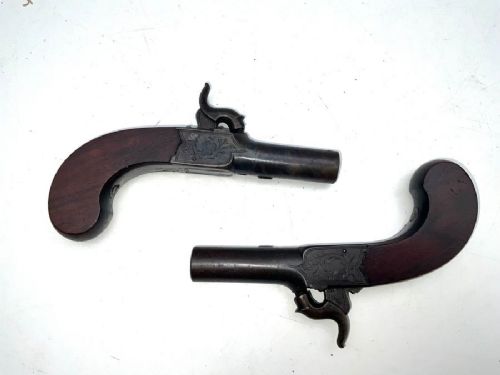
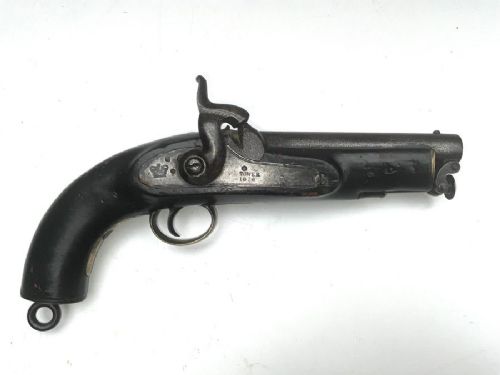
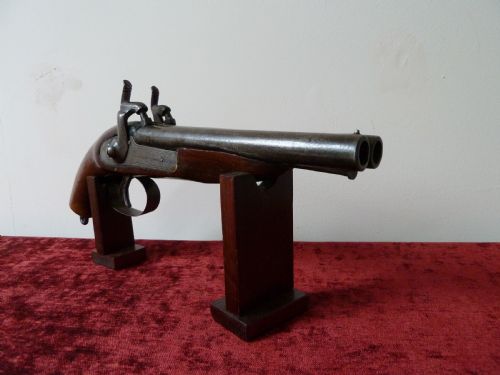
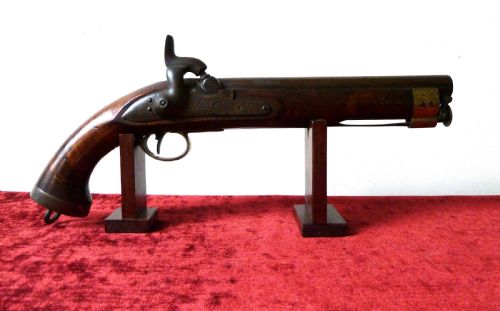
A walnut wood pistol is a historic firearm stock handled by collectors, showing the rich grain and sturdy form of Georgian and Victorian eras.

Walnut Wood Pistol
When you search for a walnut wood pistol, you encounter military and civilian firearms spanning the eighteenth and nineteenth centuries. These pieces encompass flintlock and percussion systems utilised by armies, navies, and officers.
The most common examples on this page date from the Victorian period and the nineteenth century, featuring percussion mechanisms and sturdy stocks. Military forms range from cavalry holster pistols to belt and pocket variants.
Earlier pieces from the eighteenth century, including Georgian and Ottoman examples, demonstrate flintlock ignition and decorative brass or mother-of-pearl mounts. Each specimen reflects the specific service requirements and domestic or European traditions of its origin.
How they were made
Makers shaped stocks from dense walnut wood, pairing the timber with forged steel barrels and iron lockplates. Brass furniture and mountings frequently reinforced the structure and added ornamental detail.
Lock mechanisms relied on precise metalworking, employing flintlock or percussion ignition systems. Some specialised grips incorporated mother-of-pearl inlay alongside traditional wooden checkering.
Listings feature walnut wood pistol examples spanning the eighteenth and nineteenth centuries, including Victorian military and Georgian styles.
What varies in quality
Quality depends on the crispness of maker stamps, London proof marks, and military ordnance markings on the metalwork. Maker attribution to figures like T. Potts, Dutton, or George Sherwood elevates historical interest.
The preservation of the walnut wood stock, retaining sharp lines and original surface texture without excessive sanding, distinguishes superior examples. Fine brass furniture, decorative carving, and intact lock mechanisms also define the higher tier.
T. Potts·Dutton·George Sherwood
The Walnut Wood Pistol Glossary
- Percussion
- An ignition system utilising a hammer that strikes a percussion cap to detonate the powder charge. This replaced the earlier flintlock mechanism during the nineteenth century.
- Flintlock
- A firing mechanism that creates a spark by striking a piece of flint against a steel frizzen. This system dominated military and civilian firearms throughout the eighteenth century.
- Holster pistol
- A large firearm designed to be carried in a saddle holster by cavalry troopers or officers. These pieces typically feature full-length walnut stocks and large caliber smoothbore barrels.
- Proof marks
- Official stamps applied to the metal barrel indicating that the firearm passed testing for pressure and safety. London proof marks appear on British military and civilian arms.
- Smoothbore
- A barrel lacking internal rifling grooves, designed to fire lead balls or shot. Most military holster and sea service pistols of this era utilised smoothbore barrels.
Walnut Wood Pistol: Frequently Asked Questions
What is a sea service pistol?
A sea service pistol is a robust firearm issued to naval personnel and marines for close-quarters combat aboard ships. These pieces required durable walnut stocks and corrosion-resistant brass furniture to withstand maritime environments.
They often feature captive ramrods and heavy-duty percussion or flintlock mechanisms designed for reliability in harsh conditions.
How were officer pistols different?
Officer pistols were privately purchased sidearms rather than standard government-issue weapons, allowing for finer craftsmanship and superior materials. Makers incorporated decorative brass furniture, finely checkered walnut grips, and refined lock mechanisms.
These pieces reflect the personal status and preferences of military officers during campaigns.
How should I display them?
Display these firearms in a stable environment away from direct sunlight and excessive humidity to protect the walnut wood stock and metal components. Wall mounting brackets or secure cabinet display stands allow the piece to be viewed safely.
Ensure the room maintains a consistent temperature to prevent wood shrinkage and metal oxidation.