

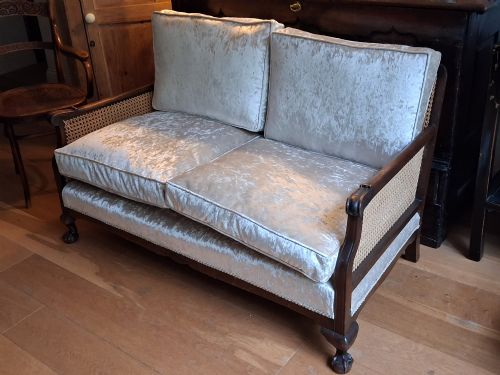


Walnut Wood Loveseat
A walnut wood loveseat offers compact seating for two, combining warm timber frames with historic upholstery and carving.
Walnut Wood Loveseat
A walnut wood loveseat brings together two-seater upholstered forms and solid timber construction spanning the nineteenth and early twentieth centuries. These pieces appear in forms such as settees, couches, and canapés, reflecting various historical revivals.
The versions most commonly met on this page include nineteenth-century Victorian and Rococo Revival pieces, alongside French provincial styles from later decades. Makers worked within established historical idioms to produce seating designed for intimate drawing rooms and parlours.
Examples range from mid-nineteenth-century carved walnut frames to early twentieth-century French bergère sofas. Each piece demonstrates the enduring appeal of walnut timber combined with textile or cane seating surfaces.
How walnut wood loveseats were made
Frames are constructed from solid walnut, often featuring carved ornamentation executed by hand. This timber provides both structural stability and a rich grain that takes decorative carving effectively.
Working methods incorporate traditional joinery to support curving arms, exposed wooden crests, and cabriole legs. Artisans shaped the timber to match prevailing stylistic revivals before applying upholstery or woven cane panels.
Walnut Wood Loveseat Retail Price Guide 2026
Typical asking prices for walnut wood loveseat among the pieces listed under this phrase on Sellingantiques today, from the lower quarter to the upper quarter. They describe what is for sale here now, not the wider market.
Valentino Panciera Besarel's Venetian bench brings serious nineteenth-century drama to the walnut seating lineup.
What varies in quality
The refinement of the carved woodwork distinguishes standard production from more ambitious workshop output. Deep, crisp relief carving on the crest rail and frame indicates greater artisan skill during manufacture.
The integrity and precision of secondary materials, such as hand-woven cane work or quality textile upholstery, elevate the overall standard of the piece. Well-executed joinery ensures the frame remains rigid under weight.
The Walnut Wood Loveseat Glossary
- Canapé
- An upholstered sofa or settee, typically featuring an exposed wooden frame and French stylistic origins. It provides compact seating for two people.
- Bergère
- An enclosed armchair or small sofa with upholstered sides and a exposed wooden frame, often incorporating cane work. This French form dates back to the eighteenth century and saw revivals later on.
- Rococo Revival
- A nineteenth-century design movement characterised by asymmetrical scrollwork, naturalistic floral carving, and curved serpentine lines. It draws inspiration from earlier French court styles.
- Cane
- Woven rattan or split reed used to form supportive panels for backs and seats. Skilled cane work requires tight, uniform patterns across the frame.
Walnut Wood Loveseat: Frequently Asked Questions
What is a walnut wood loveseat?
A walnut wood loveseat is a small two-seater sofa or settee constructed primarily from walnut timber. These pieces typically feature carved wooden frames combined with upholstered or cane seating surfaces.
They emerged across various historical periods, including the Victorian era and the early twentieth century, reflecting French and revival design influences.
How were these settees used historically?
Historically, these compact seats served in domestic parlours, drawing rooms, and boudoirs where space was at a premium. They provided comfortable seating for two people during formal visits or quiet domestic evenings.
The smaller scale compared to a full-sized sofa made them versatile for placement against walls or beneath windows.
How do I live with one today?
Integrating a historic settee into a modern interior involves placing it as a focal point in a living room, bedroom, or hallway. Its compact dimensions allow it to fit into smaller spaces where a standard sofa would overwhelm the room.
Care involves protecting the walnut frame from direct sunlight and maintaining any historic textiles or cane work with gentle cleaning methods.
How do I tell different periods apart?
Distinguishing periods relies on observing stylistic details and framing characteristics. Mid-nineteenth-century examples often display heavy Victorian carving or Rococo Revival curves, while early twentieth-century pieces may show lighter French provincial influences.
Timber finishes also vary, ranging from traditional dark walnut tones to bleached walnut treatments seen in specific nineteenth-century pieces.