




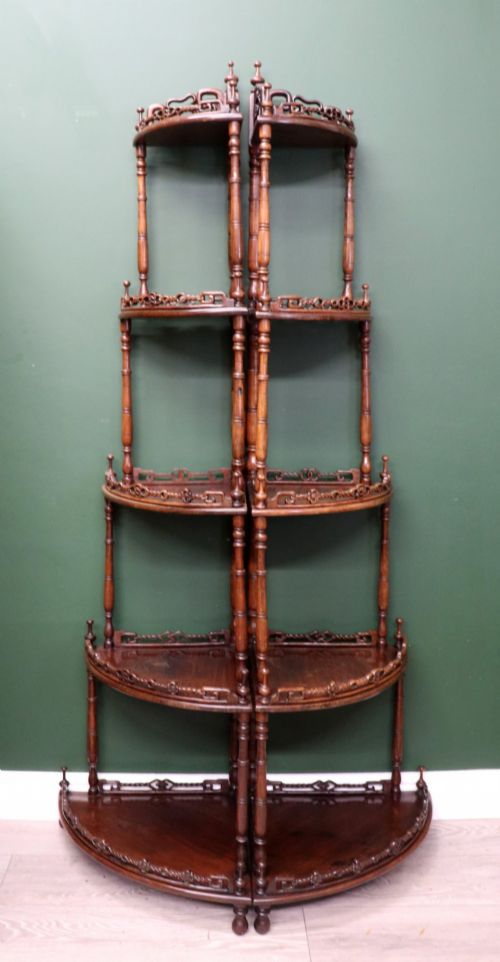


Walnut Whatnot Unit
A walnut whatnot unit brings tiered display and open shelving to a room, rooted firmly in the Victorian era.
Walnut Whatnot Unit
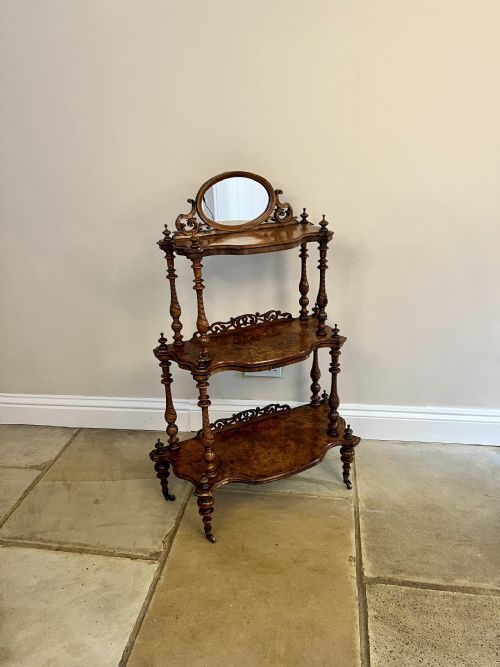
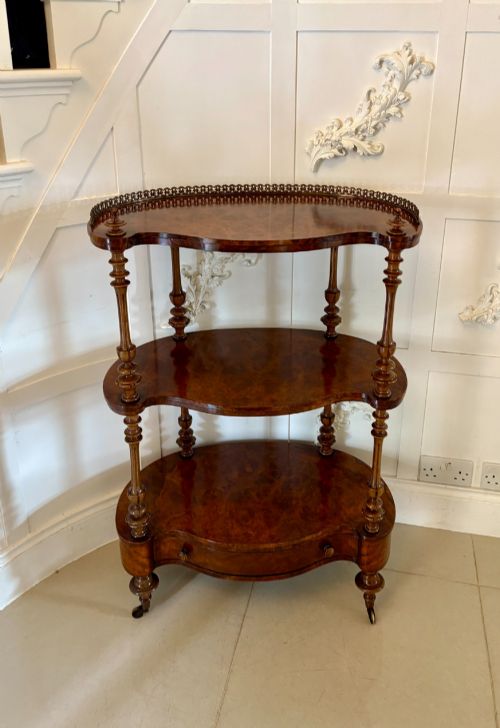
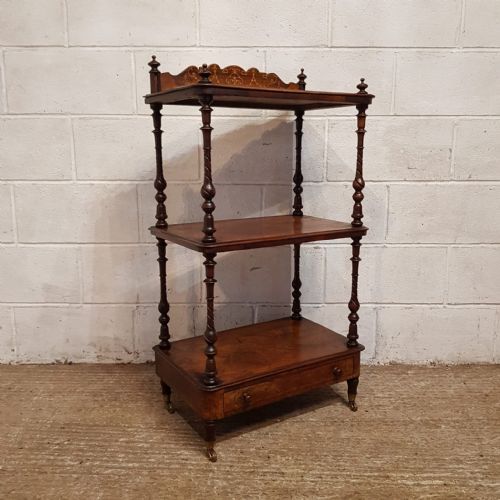
A walnut whatnot unit provides multiple tiers of open shelving designed for display and storage in nineteenth-century interiors. These pieces appear frequently as standing multitiered units, corner stands, demi-lune display console tables, and freestanding étagères.
The pieces on this page span the Victorian and Edwardian periods, stretching from eighteen fifty to eighteen ninety. Most examples emerge from the mid to late nineteenth century, taking the form of tiered shelving units or corner whatnots.
Materials and construction
Makers utilised walnut, burr walnut, and figured walnut as the primary timber, occasionally combining walnut and mahogany. Surfaces often display marquetry inlay alongside brass, glass, porcelain, and mirror glass elements.
Walnut Whatnot Unit Retail Price Guide 2026
Typical asking prices for walnut whatnot unit among the pieces listed under this phrase on Sellingantiques today, from the lower quarter to the upper quarter. They describe what is for sale here now, not the wider market.
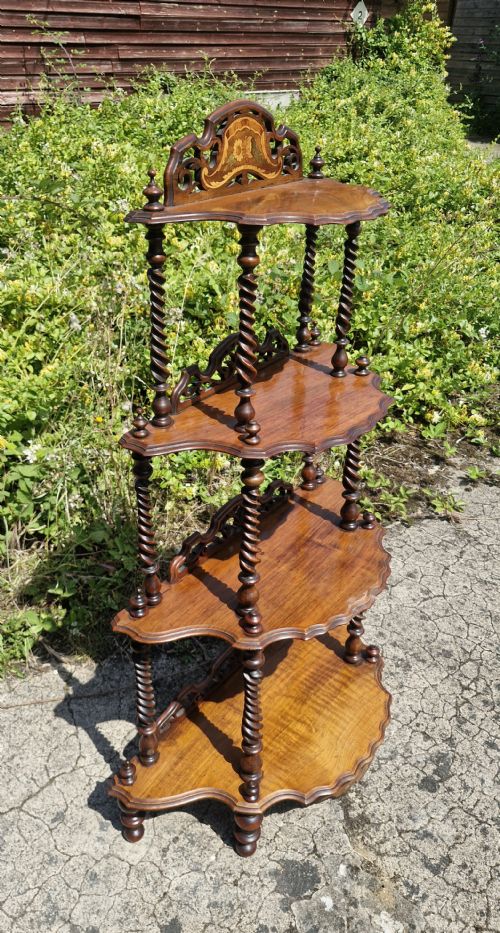
Hollow barley twist supports give these Victorian display shelves a wonderfully dizzying vertical spin.
Distinctions in quality
Quality rests in the selection of figured or burr walnut timbers and the precision of marquetry inlay. Superior examples demonstrate careful attention to shaping, such as serpentine profiles and demi-lune forms.
Construction detail separates standard items from exceptional pieces, visible in turned supports like hollow barley twists and integrated display cabinets. The balance and proportion of multiple tiers dictate the overall success of the piece.
The Walnut Whatnot Unit Glossary
- Whatnot
- A multitiered piece of freestanding furniture designed for displaying ornaments, books, and objects. These units gained popularity during the Victorian period.
- Etagere
- A set of open shelves for displaying small objects or china. This French term is frequently used interchangeably with whatnot.
- Burr Walnut
- Timber taken from a walnut tree outgrowth, producing intricate, swirling grain patterns. Makers utilised this veneer on prominent display surfaces.
- Marquetry Inlay
- Decorative patterns formed by fitting contrasting pieces of wood veneer into a primary surface. This technique appears across many nineteenth-century pieces.
- Demi-Lune
- A half-moon shape used for console tables and corner fittings. This profile allows the furniture to sit flush against a wall.
Walnut Whatnot Unit: Frequently Asked Questions
What is a walnut whatnot unit used for?
A walnut whatnot unit serves as an open shelving display stand for ornaments, books, and decorative objects. Nineteenth-century households utilised these tiers in parlours and drawing rooms to exhibit prized possessions.
Today, these tiered stands function similarly in modern homes, providing vertical display space in corners or against living room walls without overwhelming the floor plan.
How do I date a walnut whatnot?
Dating relies on stylistic clues and material choices recorded across the nineteenth century. Most examples date from the Victorian era, spanning from eighteen fifty to eighteen ninety.
Early pieces often feature figured burr walnut and serpentine shapes, while later Edwardian versions introduce distinct inlay work and simpler multitiered framing.
What is the difference between a whatnot and an etagere?
A whatnot and an étagère both describe multitiered shelving units used for display. While the terms often overlap in nineteenth-century descriptions, an étagère frequently emphasises French-influenced open display tiers.
Both forms appear in walnut and mahogany across this page, offering similar structural arrangements for books and ornaments.
Where should I place a corner whatnot?
A corner whatnot fits neatly into the unused angle of a room. These triangular or demi-lune units maximise vertical space while keeping floor areas clear.
Victorian homes relied on corner stands to display ceramics and small curiosities in tighter spaces, a practical placement that works effectively in contemporary rooms.