





Walnut Veneer Tallboy
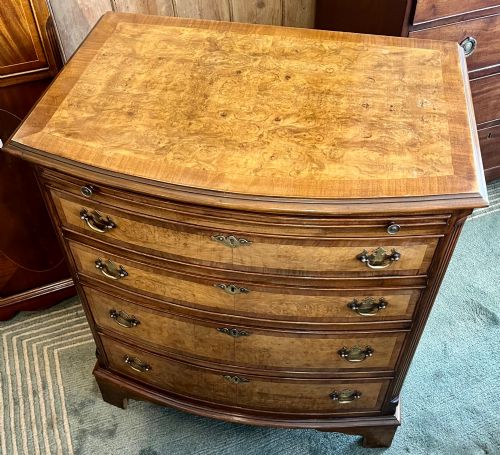
A walnut veneer tallboy delivers soaring vertical presence alongside rich, figured grain patterns that anchor a room.
Walnut Veneer Tallboy
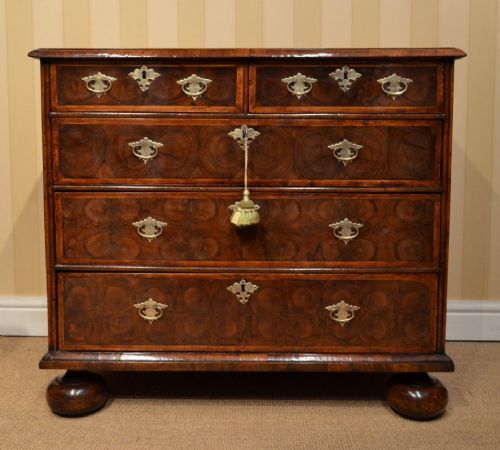
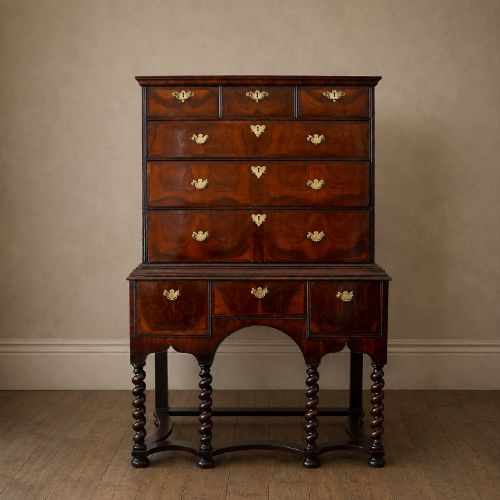
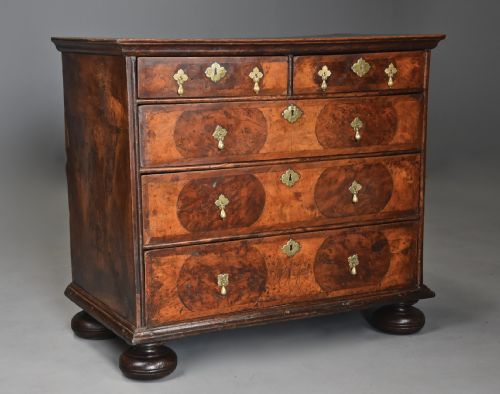
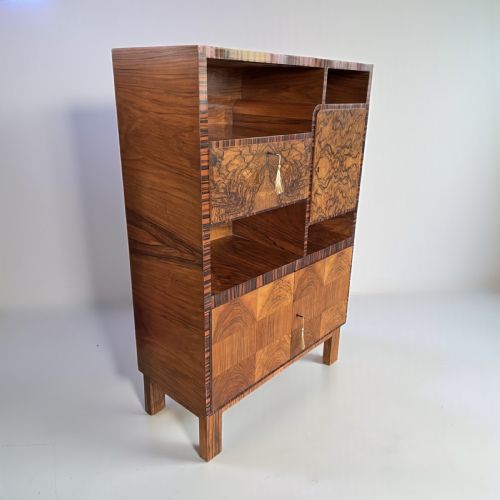
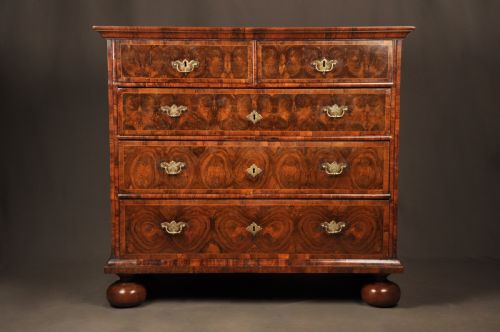
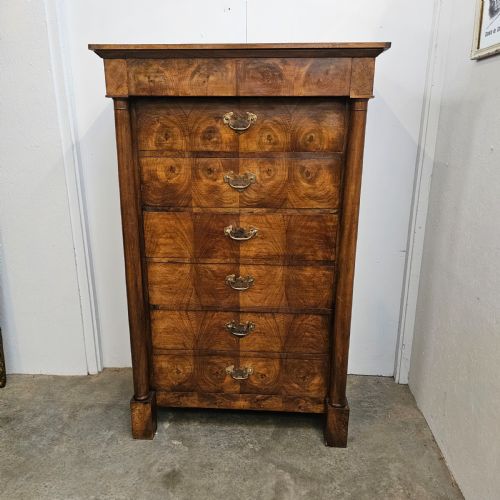
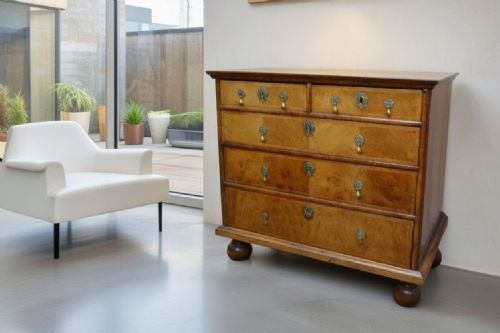
A walnut veneer tallboy offers generous vertical storage by stacking multiple drawers within a single case or dividing them across a chest on stand. These pieces emerge across the 17th Century, 18th Century, 19th Century, and 1930 periods, showcasing styles from William & Mary and Queen Anne to Art Deco and French Empire. While the search phrase targets tall forms, listings frequently encompass related chests of drawers, cabinets, and chests on stands.
The materials span standard walnut and walnut veneer alongside burr walnut, oak, boxwood, oyster veneer, yew wood, and brass hardware. Dating ranges from 1700 through Georgian and Victorian eras up to 1910 and 1930 modern interpretations. Buyers encounter everything from early oyster-cut patterns to geometric parquetry and dramatic bookmatched facades.
Materials and construction methods
Cabinetmakers applied thin slices of walnut veneer, burr walnut, or circular oyster cuts onto robust secondary timbers like oak. This technique allowed workshops to display intricate grain patterns across large surfaces that solid timber would warp or split under.
Detailing often involved contrasting stringing lines in boxwood and structural reinforcement using brass handles and escutcheons. Finished surfaces relied on traditional polishes that enhanced the natural warmth and depth of the timber.
Walnut Veneer Tallboy Retail Price Guide 2026
Typical asking prices for walnut veneer tallboy among the pieces listed under this phrase on Sellingantiques today, from the lower quarter to the upper quarter. They describe what is for sale here now, not the wider market.
Listings span eight distinct periods, stretching from the 17th Century and William & Mary era through to 1930 Art Deco designs.
Distinctions in craftsmanship
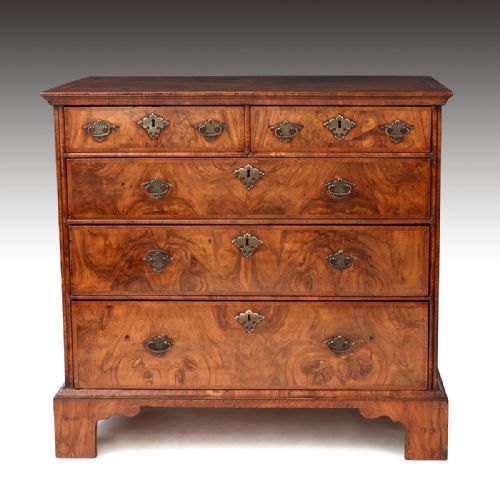
The hierarchy of quality rests primarily on the selection and symmetry of the veneer work. Master craftsmen aligned grain patterns meticulously across drawer fronts, whereas simpler examples used random cuts with less visual continuity.
The integrity of the underlying carcase and the preservation of original brass hardware and surface patination dictate the standing of a piece. Finer examples retain their early finishes and undisturbed timber movement over centuries.
The Walnut Veneer Tallboy Glossary
- Oyster veneer
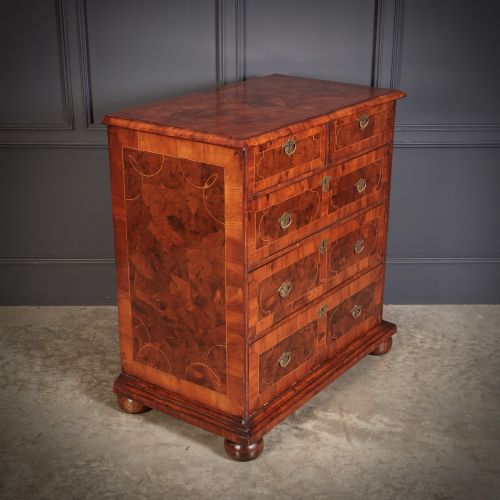
- Circular slices cut transversely across small branches or roots to create repeating roundel patterns. This technique appeared frequently on late 17th-century pieces.
- Burr walnut
- Wood harvested from walnut tree growths that produces highly swirled, knotted grain patterns. Cabinetmakers prized these sections for principal display surfaces.
- Chest on stand
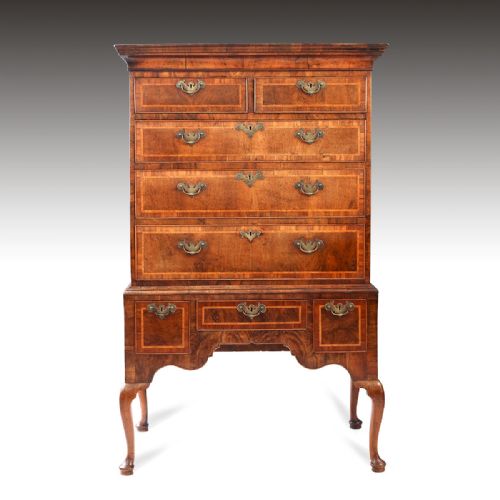
- A two-part form featuring an upper case of drawers raised on a separate frame with legs. This configuration lightened the visual weight of tall storage.
- Bookmatched
- A method of arranging veneer pairs side by side so that the grain mirrors itself. This creates symmetrical patterns across drawer fronts or cabinet doors.
Walnut Veneer Tallboy: Frequently Asked Questions
How do I care for walnut veneer furniture?
Keep these pieces away from direct sunlight and dramatic temperature fluctuations to prevent the delicate veneer from lifting or cracking over time. Regular dusting with a soft, dry cloth maintains the finish without introducing moisture.
Avoid silicone-based polishes which can penetrate historic finishes and damage the timber. Occasional application of a traditional wax helps nourish the wood and preserve its natural sheen.
Where should I place a tallboy?
A tallboy requires adequate vertical clearance and a stable wall space to support its height safely. Bedrooms and dressing rooms remain traditional locations where their deep drawer capacity serves practical storage needs.
Living rooms and hallways also accommodate these pieces well, serving as focal points that display decorative objects on their upper surfaces. Ensure the floor level is even so the tall structure sits firmly without strain on the joints.
How do I identify a William and Mary period piece?
William and Mary pieces often feature geometric oyster veneer patterns, inverted cup turning on stands, and bun feet. The proportions tend to be upright and architectural with distinct crossbanding details.
Hardware typically consists of drop handles mounted on engraved brass backplates. Examination of the drawer linings and internal construction confirms the early 1700 or 17th-century methods.
What distinguishes Art Deco examples?
Art Deco tallboys emphasise sleek vertical lines, smooth surfaces, and streamlined forms free of excessive ornamentation. They frequently utilise bold bookmatched walnut veneers to create striking geometric fronts.
These 1930 pieces prioritize functional elegance and modern interior integration. Their construction reflects industrial advancements while maintaining traditional cabinetmaking standards.