

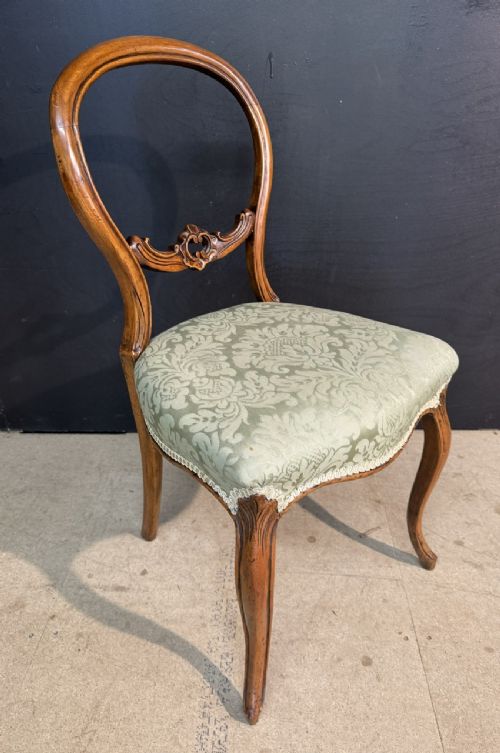


Walnut Vanity Chairs
Walnut vanity chairs are low, compact seats designed for dressing rooms and boudoirs, offering elegance and practical comfort for daily grooming.
Walnut Vanity Chairs
Walnut vanity chairs encompass a varied group of low seating forms, including dressing table stools, bedroom chairs, and music stools designed for personal grooming and domestic use.
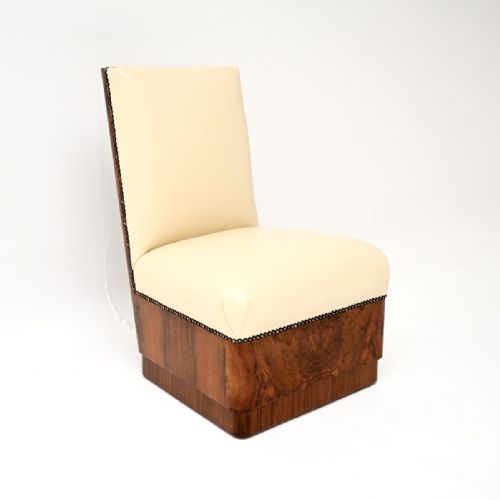
You are most likely to meet Victorian and Art Deco examples on this page, reflecting periods when dedicated dressing furniture was common in the home.
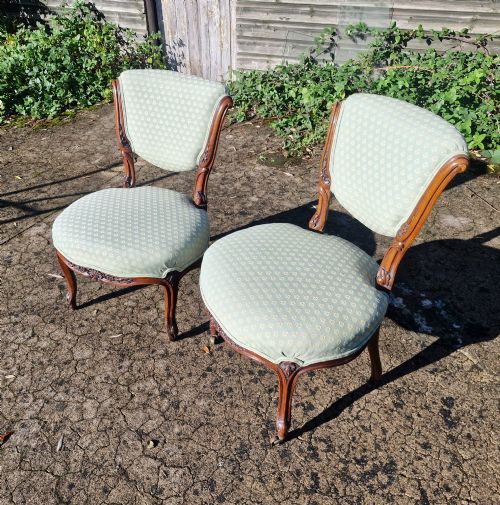
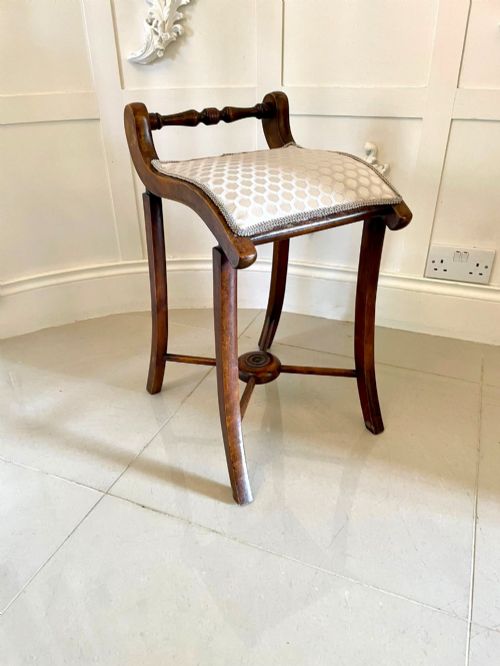
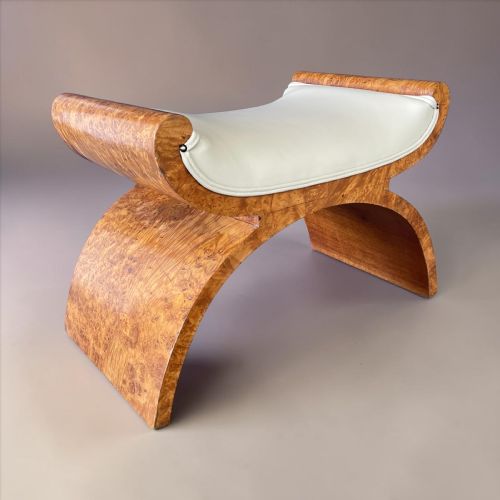
The objects take many shapes, from cabriole-legged stools and side chairs to X-framed seats and adjustable piano stools, often sharing a compact footprint suited to a bedroom or dressing room.
How they were made
Cabinet makers utilised solid walnut and burr walnut veneers, shaping the timber into cabriole legs, carved backs, and twisted rope supports.
Comfort was provided through traditional upholstery techniques, incorporating fabric, needlepoint, leather, and brass detailing to finish the seats.
Walnut Vanity Chairs Retail Price Guide 2026
Typical asking prices for walnut vanity chairs among the pieces listed under this phrase on Sellingantiques today, from the lower quarter to the upper quarter. They describe what is for sale here now, not the wider market.
The listings show walnut vanity chairs spanning the mid-18th century through the Victorian and Edwardian eras up to 1930s Art Deco.
What varies in quality
The standard of carving and timber selection sets pieces apart, distinguishing simple turned supports from deeply hand-carved frames and figured burr walnut.
The integrity of the construction and the fidelity of revival styles, such as Queen Anne or French Louis XV interpretations, dictate the distinction between everyday utility items and finer parlour pieces.
Harry and Lou Epstein
The Walnut Vanity Chairs Glossary
- Cabriole leg
- A furniture leg that curves out and then in, resembling the leg of an animal. This form appears frequently on Victorian and Queen Anne style seating.
- Burr walnut
- A veneer taken from the growth wart of a walnut tree, prized for its swirling grain patterns. It adds distinct visual texture to dressing table stools.
- X-framed stool
- A seat supported by intersecting diagonal legs forming an X shape. This structural design offers robust support with architectural presence.
- Rise and fall stool
- A seat with an adjustable height mechanism operated by a screw or ratchet. These were often used at pianos and dressing tables.
- Needlepoint
- A type of canvas work embroidery used for upholstery. It provides a textured, decorative surface on period seat covers.
Walnut Vanity Chairs: Frequently Asked Questions
How do I date a walnut vanity chair?
Dating relies on observing stylistic details, such as the curved cabriole legs of Victorian pieces, the geometric lines of Art Deco items, or earlier mid-18th-century forms.
Hardware, upholstery methods, and timber finishes also provide clues to whether a piece originates from the nineteenth or early twentieth century.
Were these chairs used only for dressing?
Many dressing stools and vanity chairs shared duties as music stools, piano seats, or occasional bedroom chairs.
Their adjustable heights and compact sizes made them versatile enough to be moved around private rooms for various sitting tasks.
How do I care for antique walnut furniture?
Walnut furniture benefits from being kept away from direct sunlight and sudden temperature changes to protect the timber and any burr veneers.
Applying a suitable wax polish occasionally helps to nourish the wood and maintain its natural finish without harming the surface.