





Walnut Trumpet Box
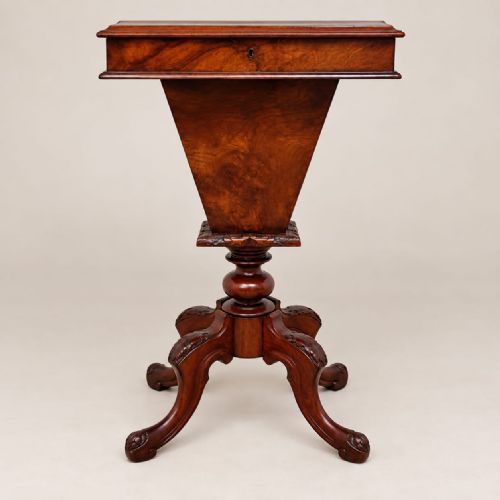
A walnut trumpet box is a Victorian sewing and games table with a flared hexagonal body, prized for storing needlework.
Walnut Trumpet Box
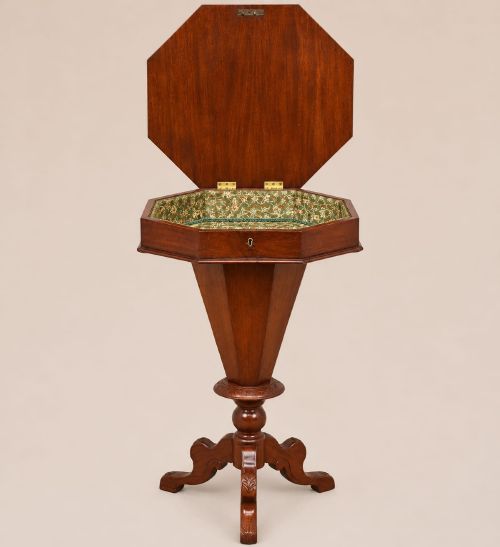
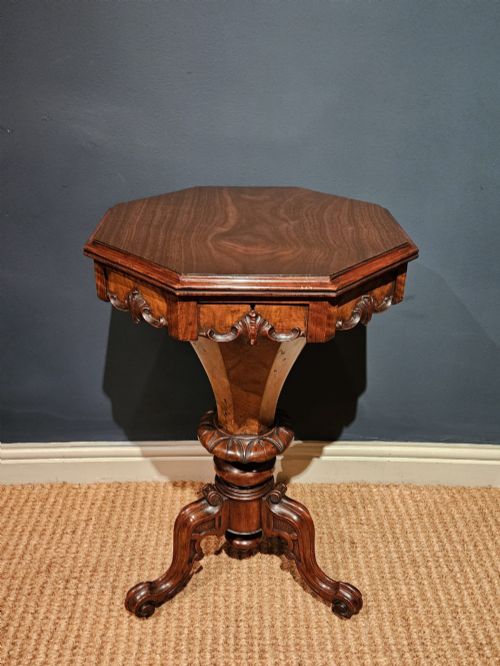
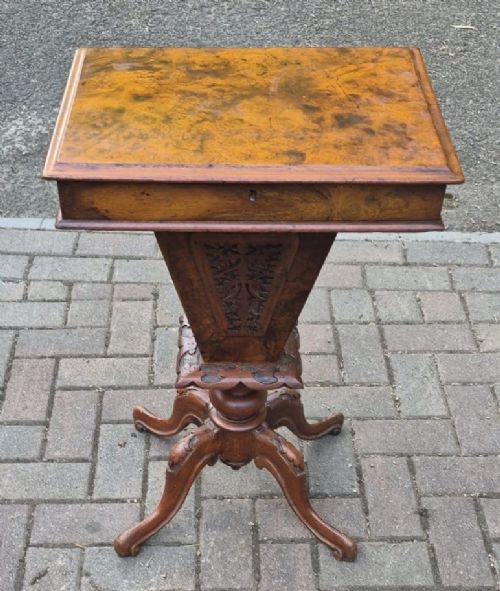
A walnut trumpet box is a distinctive piece of nineteenth-century furniture designed for domestic needlework and small pastimes. The form combines a slender, widening pedestal with a lidded octagonal or hexagonal receptacle on top.
Most examples belong to the Victorian period, spanning the mid to late nineteenth century. The listings on this page show these versatile pieces functioning as sewing tables, work tables, games tables, and occasional lamp tables.
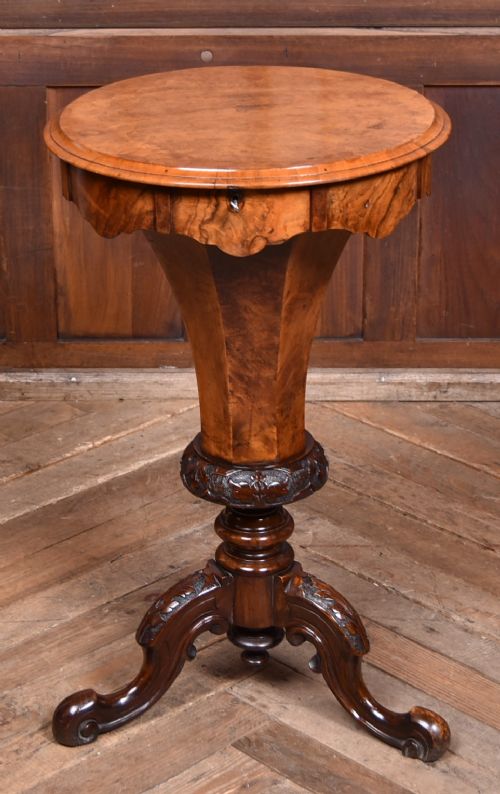
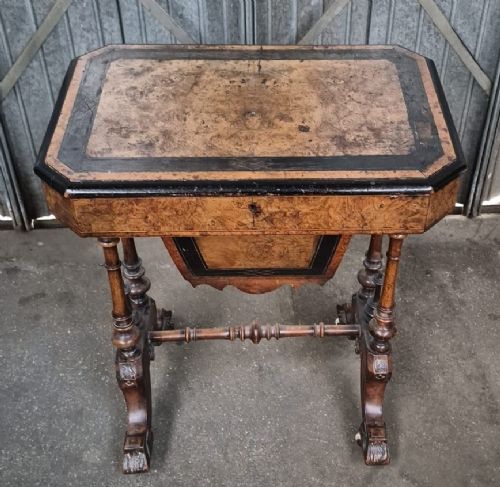
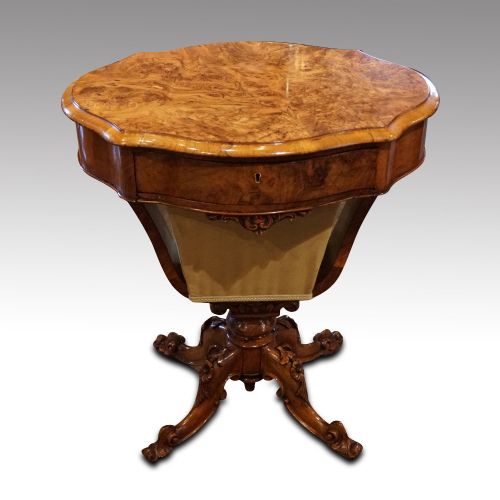
The dominant version encountered here is the burr walnut trumpet workbox, often featuring an inlaid lid and a fitted interior for cotton spools and thimbles. They sit on tripod bases, balancing a substantial lidded top upon three carved or shaped legs.
What Varies in Quality
The visual appeal depends largely on the selection of the burr walnut veneer and the crispness of the wood inlay. Finer pieces display lively, matching grain patterns across the entire lid rather than dull, flat surfaces.
Construction standards show in the complexity of the internal fittings. Simple open wells sit at the basic end, whereas top-tier examples offer fully fitted compartments, original trays, and stable tripod joints that prevent wobble.
Walnut Trumpet Box Retail Price Guide 2026
Typical asking prices for walnut trumpet box among the pieces listed under this phrase on Sellingantiques today, from the lower quarter to the upper quarter. They describe what is for sale here now, not the wider market.
The inventory records pieces dated from eighteen fifty to eighteen eighty, all originating within the broader Victorian period.
The Walnut Trumpet Box Glossary
- Burr walnut
- A prized timber harvested from the irregular growths on walnut trees. It yields richly patterned swirls and eyes that catch the light.
- Trumpet box
- A receptacle named for its characteristic flared silhouette resembling a musical horn. The wider top tapers down toward a slender column and tripod base.
- Marquetry inlay
- Decorative patterns formed by fitting contrasting veneer pieces into a prepared ground. Floral and geometric motifs dominate these Victorian lids.
- Fitted interior
- A compartmented wooden insert beneath the lid designed to organise sewing tools. These trays often lift out to reveal deeper storage space below.
- Tripod base
- A three-legged support structure beneath the central column. This arrangement ensures the table remains steady on uneven Victorian floorboards.
Walnut Trumpet Box: Frequently Asked Questions
What is a trumpet box used for?
These pieces served as specialised work tables for Victorian women engaged in sewing, needlework, and embroidery. The deep lidded receptacle kept threads, needles, and unfinished garments neatly concealed.
Secondary tops often incorporated chess or backgammon boards for evening recreation. Their compact footprint made them practical beside a parlour chair or lamp.
How do I date a walnut trumpet box?
Examine the construction methods, timber selection, and decorative motifs visible on the piece. Most examples date from the Victorian era between eighteen fifty and eighteen eighty.
Heavy burr veneers and intricate boxwood inlay point towards the mid-nineteenth-century height of this furniture form. Simpler turned pedestals and plain walnut typically indicate the later decades.
Are trumpet boxes stable on three legs?
The tripod base provides a surprisingly firm stance on solid floors. The three splayed legs distribute the weight of the flared upper body evenly outward.
Good stability depends on the joints where the legs meet the central column. Original corner blocks and tight glue lines keep the piece upright during daily use.
What is inside the lid?
Lifting the top reveals a compartmented wooden tray designed to hold small sewing implements. These fitted interiors often feature lidded compartments, tiny bone pulls, and pin cushions.
Lifting this removable tray exposes a deeper well tapering down toward the base. This lower space accommodated wools, larger pieces of fabric, and half-finished knitting.