



Walnut Trumeau Mirror
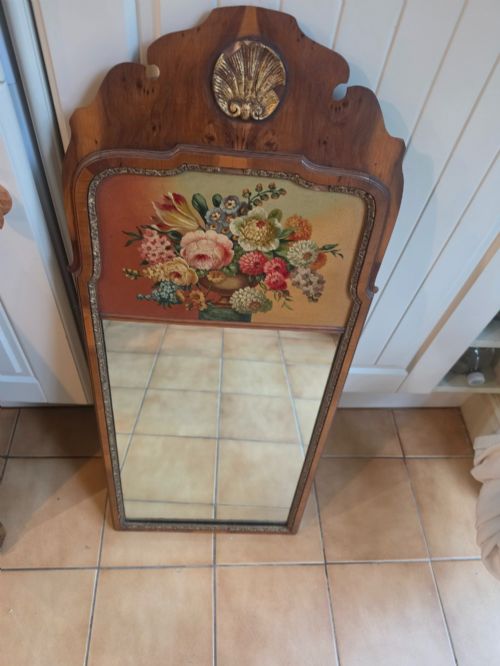
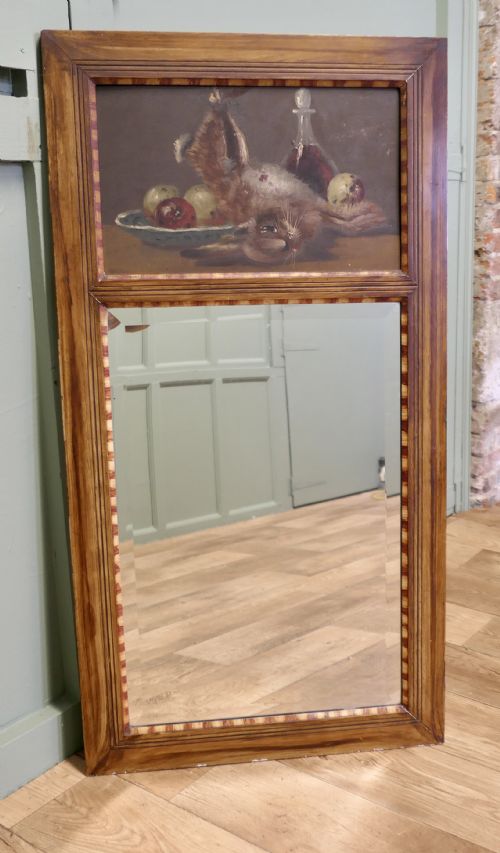
A walnut trumeau mirror combines timber framing with an inset painted panel or canvas, offering a decorative wall piece that anchors a room.
Walnut Trumeau Mirror
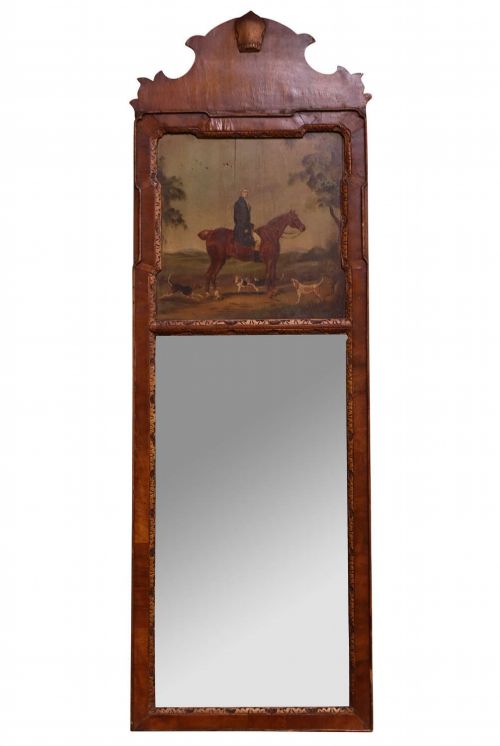
A walnut trumeau mirror is a substantial wall hanging that pairs a vertical glass plate with an upper section containing an oil painting or painted panel. The selections on this page span several centuries, reaching from the eighteenth century through the Victorian era and into the early twentieth century.
The forms vary between tall pier mirrors designed for placement between windows, grand console combinations, and hanging wall mirrors. Styles stretch across Queen Anne Revival, George I and II revivals, French Country, Empire, and Biedermeier interpretations.
Most examples rely on walnut and burr walnut framing, often accented with giltwood, brass, or carved details. The upper pictorial inserts show diverse subjects, from equestrian scenes and foliate panels to religious compositions.
How they were made
Frames are constructed from solid timber and rich veneers like burr walnut, shaped to rectilinear or arched profiles. Cabinetmakers integrated carved enrichment and gilded highlights directly into the wooden mouldings.
The pictorial sections utilise oil paint on canvas or wooden panels, fitted securely above the mirror glass. Traditional silvered glass plates are held within rebated frames behind protective backing boards.
Walnut Trumeau Mirror Retail Price Guide 2026
Typical asking prices for walnut trumeau mirror among the pieces listed under this phrase on Sellingantiques today, from the lower quarter to the upper quarter. They describe what is for sale here now, not the wider market.
Some trumeau mirrors hide unexpected equestrian scenes or religious tableaus right above your reflection.
What varies in quality
Quality rests upon the depth of the timber figuring and the finesse of the carved or gilded ornament. Finely matched burr walnut veneers and crisp, hand-carved mouldings separate the finer workshops from simpler production.
The execution of the inset painting dictates much of the visual weight. An articulate oil painting with detailed brushwork elevates a trumeau mirror above pieces with purely decorative or later painted panels.
The Walnut Trumeau Mirror Glossary
- Trumeau
- An architectural term for the section of wall between windows, which evolved to describe mirrors featuring an upper painted or carved panel.
- Pier glass
- A tall mirror specifically proportioned to hang on the narrow pier of wall between two windows.
- Burr walnut
- Timber taken from walnut tree growths, producing swirling, highly figured grain patterns prized for decorative veneer work.
- Giltwood
- Wood that has been coated with thin gold leaf or gilt powder over a prepared gesso ground.
- Biedermeier
- A Central European style from the nineteenth century prioritising clean lines, utilitarian comfort, and domestic warmth over excessive ornamentation.
Walnut Trumeau Mirror: Frequently Asked Questions
What is a walnut trumeau mirror?
A walnut trumeau mirror is a decorative wall mirror that incorporates an upper section containing an oil painting or painted panel. The combination serves to dress a wall space with both reflective glass and pictorial art.
These pieces function as focal points in reception rooms, halls, and above mantelpieces. Their vertical proportions draw the eye upward and reflect ambient light into the interior.
Where were they originally placed?
Trumeau mirrors were traditionally hung on the expanse of wall between two windows, known as the pier. This placement maximised the reflection of natural daylight across the room.
Over time, makers adapted the form into console combinations and general hanging wall mirrors suitable for various domestic interiors.
How do I tell revival styles apart?
Revival styles draw upon earlier design vocabularies while reflecting the manufacturing methods of their actual period of creation. Queen Anne and George I or II styles feature shaped walnut veneers and restrained classical carving.
Empire and Biedermeier pieces lean towards architectural severity, structural symmetry, and rich wood grains. Comparing the construction techniques and secondary timbers helps clarify the actual age of a revival piece.
How should I care for the painted panels?
The oil paintings inset into these mirrors require stable environmental conditions away from direct sunlight and excessive humidity. Gentle dusting with a soft, dry cloth protects the painted surface without disturbing the varnish.
Avoid liquid cleaners or abrasive cloths near the painted canvas or the gilded sections of the frame to preserve the original finish.