



Walnut Swivel Chair
A walnut swivel chair combines rich timber with a practical revolving mechanism, making it a functional centrepiece for a study or music room.
Walnut Swivel Chair
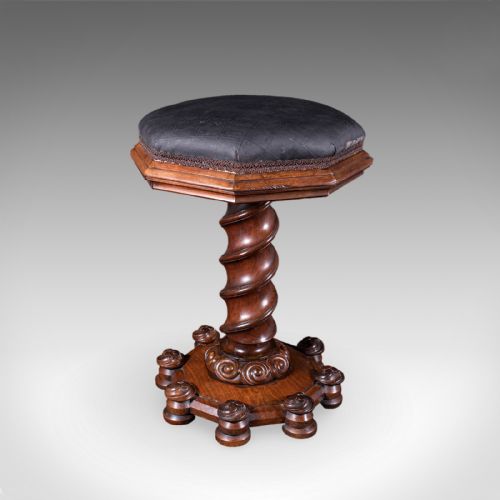
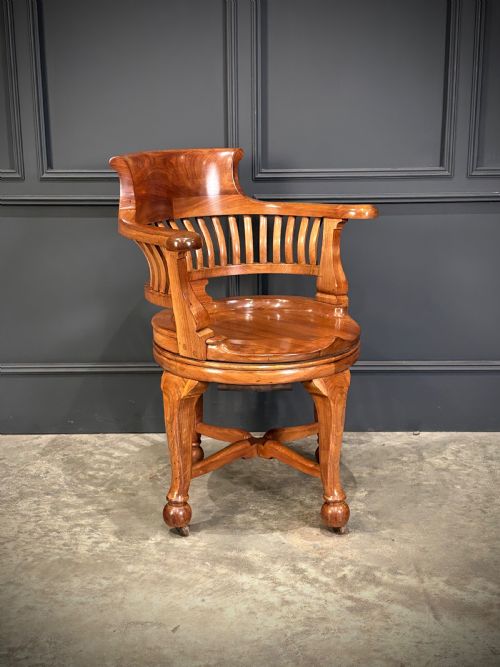
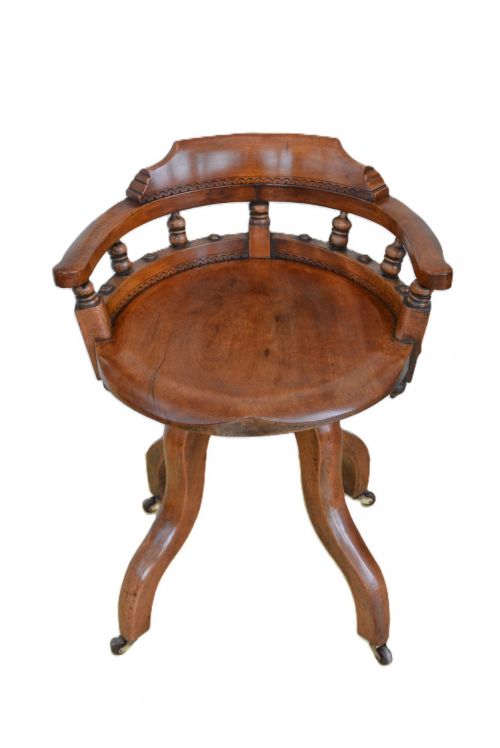
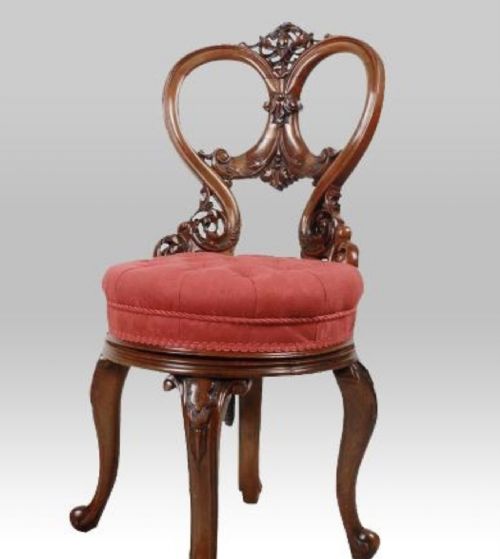
When you search for a walnut swivel chair, you are looking at seating designed to rotate, most frequently found in forms such as desk chairs, office chairs, and piano stools. These pieces cross several periods, appearing across Victorian, Edwardian, and earlier decades.
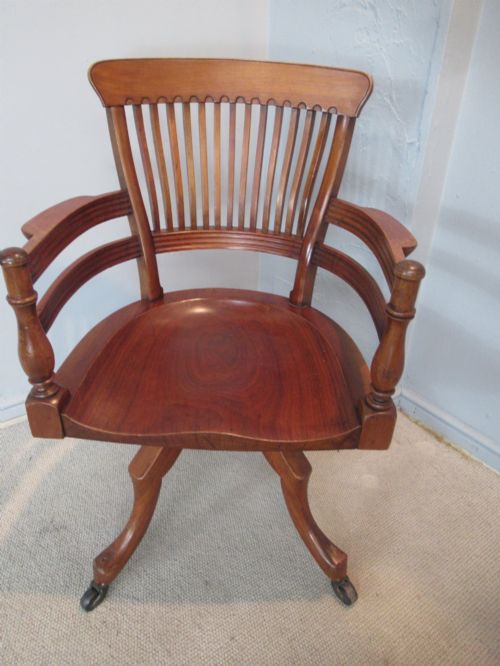
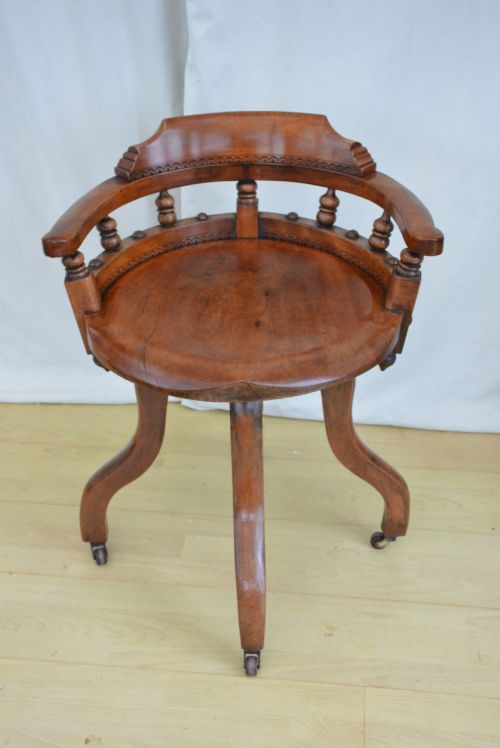
The version you are most likely to meet on this page is a Victorian revolving desk chair or a piano stool in figured walnut. They span various functions, including music seats, dressing stools, and captain's chairs designed for the office.
Makers adapted the swivel mechanism for different rooms, leading to diverse forms from chapel organist stools to Edwardian arts and crafts office seating. Solid walnut and figured veneers provide the primary timber base across these varied styles.
How they were made
Carpenters built these seats using solid walnut and figured walnut veneers over secondary timbers, shaping the wood with carving and turning techniques. Brass and iron components formed the internal swivel mechanisms and height-adjustment screws that allowed the seats to rotate and rise.
Upholstery played a central role in finishing the seats, with workshops covering them in leather, velvet, and various fabrics. Metal brackets and wooden pedestals, sometimes supported on tripod bases, gave the revolving chairs stability during daily use.
Walnut Swivel Chair Retail Price Guide 2026
Typical asking prices for walnut swivel chair among the pieces listed under this phrase on Sellingantiques today, from the lower quarter to the upper quarter. They describe what is for sale here now, not the wider market.
Listings feature walnut swivel chairs spanning the Victorian, Edwardian, and Regency periods, utilising materials like brass, iron, leather, and solid walnut.
What varies in quality
The distinction between standard examples and the finest pieces rests on the choice of timber and the execution of the carving. Figured walnut with rich grain patterns elevates a piece above plain timber versions, while crisp carving on the pedestal or legs marks superior workshop output.
Mechanism design also divides the range, as smooth-operating swivel actions and robust rise-and-fall screws reflect higher manufacturing standards. The integration of quality leather or velvet upholstery further separates everyday seating from exceptional examples.
Whytock and Reid·Angus
The Walnut Swivel Chair Glossary
- Figured walnut
- Timber showing intricate, rippled grain patterns highly prized for cabinet work and decorative seating. It is selected to catch the light on curved surfaces.
- Revolving desk chair
- A rotating seat constructed for office or study use, often featuring arms and a supportive backrest. These items allow movement between different parts of a desk.
- Piano stool
- An adjustable seat designed for musicians, frequently featuring a swivel mechanism to alter height. They appear in pedestal and tripod forms.
- Aesthetic Movement
- A late-nineteenth-century style emphasising visual beauty over narrative content in design and furniture production. Pieces from this movement often display refined lines.
- Rise and fall
- A mechanical function allowing the seat height to be adjusted by turning the top. This mechanism relies on a threaded central iron screw.
Walnut Swivel Chair: Frequently Asked Questions
How do I adjust the height on these chairs?
Many of these pieces utilise a central screw mechanism hidden beneath the seat. Turning the upper portion clockwise or anticlockwise raises or lowers the seating surface.
Some piano stools and desk chairs rely on this mechanical action rather than fixed legs. Checking the smooth movement of the screw helps verify its operation.
What is the difference between a music stool and a desk chair?
Music stools generally lack backrests and arms, as performers require freedom of movement for their arms while playing instruments. They often feature circular upholstered tops supported by pedestals or tripods.
Desk chairs incorporate backrests and occasionally arms to provide support during prolonged periods of sitting at a writing table. Their construction prioritises posture alongside the swivel function.
How do I identify a Victorian walnut swivel chair?
Victorian examples display characteristic dark walnut timber, sometimes with carved pedestals or tripod legs. The joinery often includes turned wooden elements and heavy iron or brass swivel mechanisms underneath.
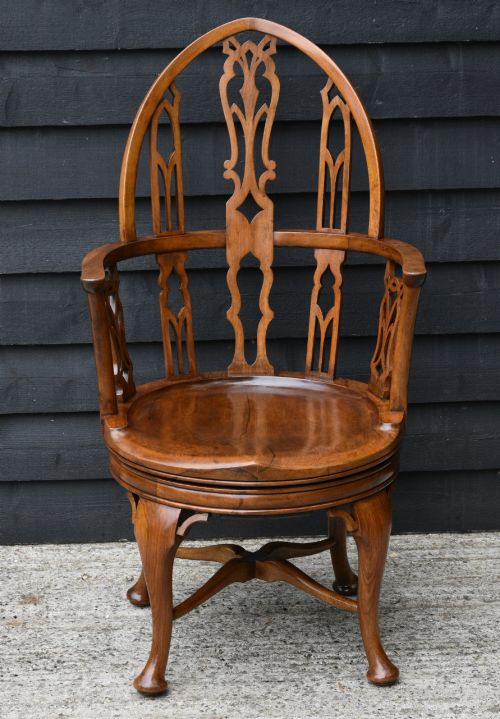
Stylistic cues such as Gothic Revival details or Aesthetic Movement lines help narrow down the specific decade of manufacture within the nineteenth century.
Were these chairs used only in offices?
While many served as office and desk chairs, a significant portion were built for music rooms, dressing tables, and domestic parlours. Piano stools and harpist chairs catered specifically to musical households.
Chapel organist stools and dressing table seats demonstrate the diverse domestic and institutional settings where these revolving chairs found a place.
What type of leather was used on the seats?
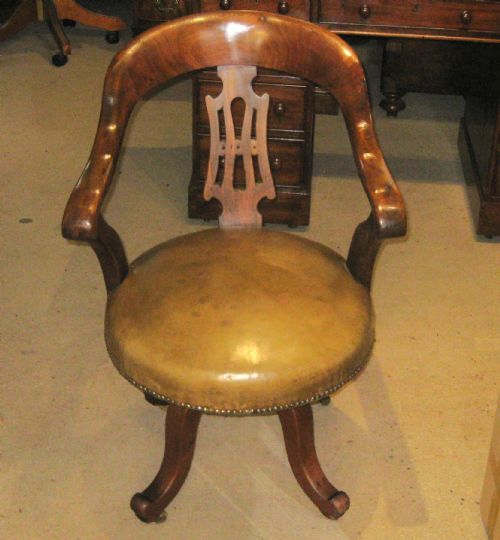
Upholstered desk chairs frequently utilised durable tan or dark leather hides affixed with brass tacks along the edges. This material provided a hard-wearing surface suitable for daily office use.
Alternative coverings included velvet and woven fabrics, particularly on piano stools and decorative music chairs where wear patterns differed from office environments.