






Walnut Sorrento Table
A walnut sorrento table brings intricate Italian marquetry and rich fruitwood inlay into any room as a striking focal point.
Walnut Sorrento Table
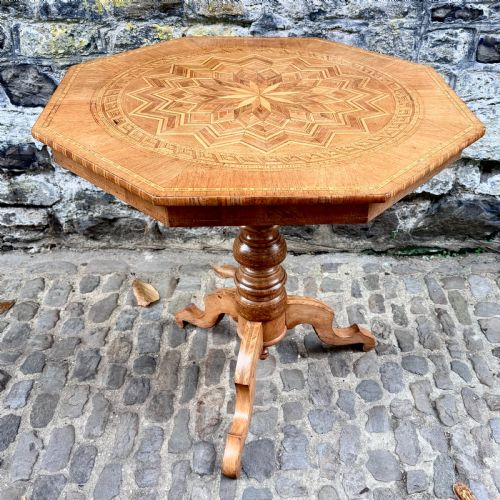
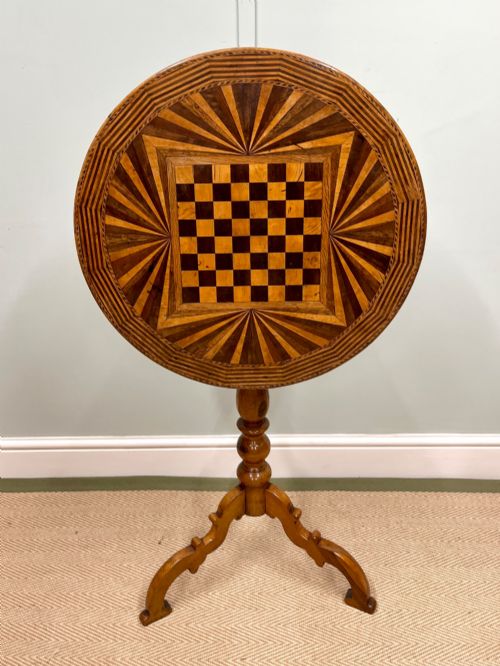
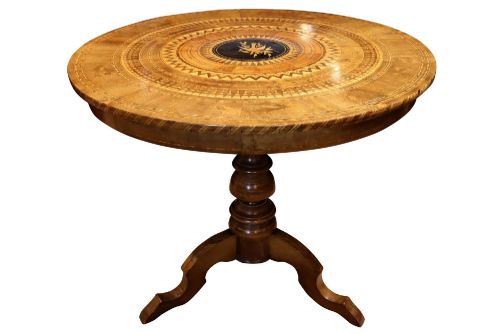
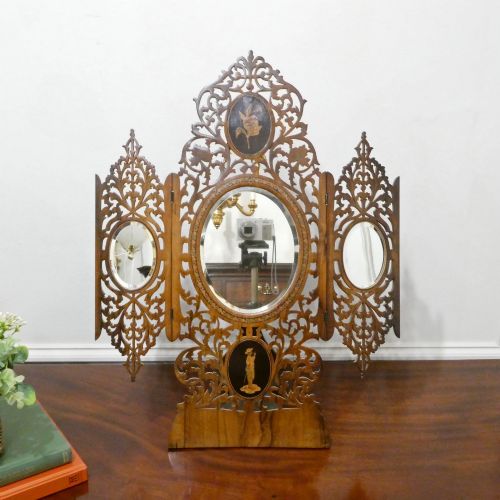
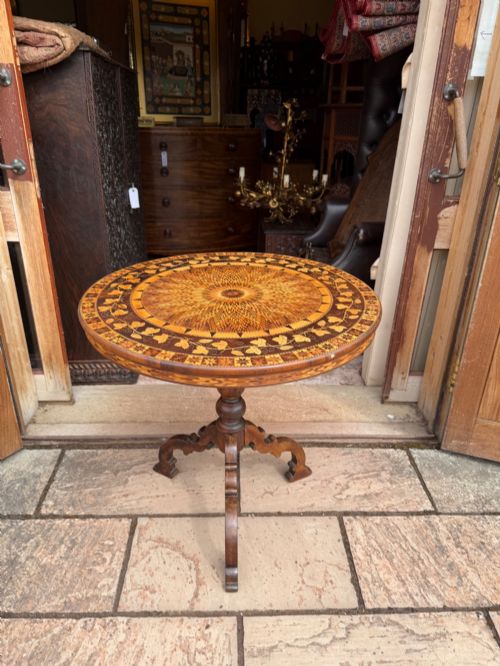
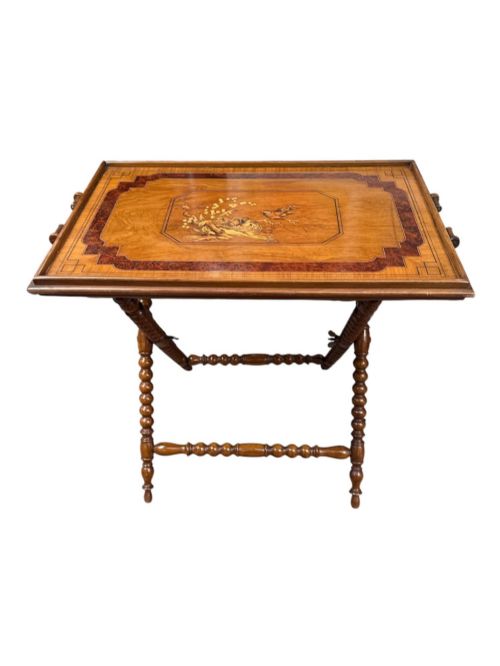
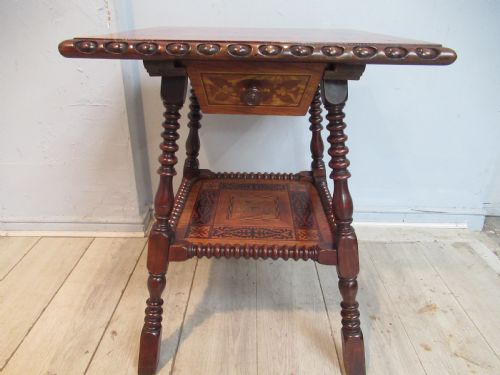
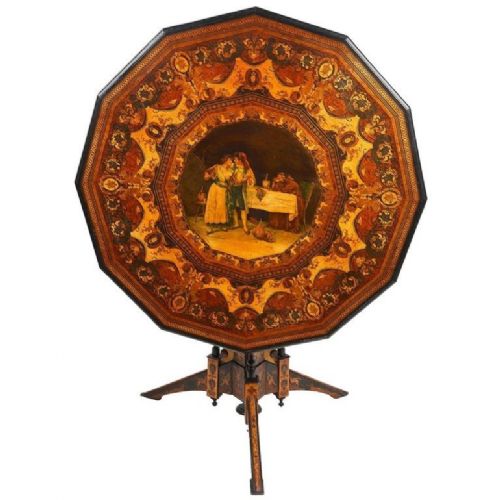
A walnut sorrento table represents the pinnacle of 19th-century Italian decorative woodwork, originating from the coastal town of Sorrento. These pieces typically manifest as occasional tables, side tables, and tilt-top butler's trays.
The most common form encountered on this page is the 19th-century occasional table featuring intricate geometric or pictorial marquetry on the top. Buyers frequently discover pedestal designs alongside low coffee table formats suited to modern interiors.
Originating during the height of the Grand Tour, these tables capture the romantic aesthetic of Victorian Italy. Artisans combined traditional furniture forms with meticulous surface ornamentation designed to appeal to travelling collectors.
Judging quality and craftsmanship
Quality in a walnut sorrento table rests upon the complexity and precision of the marquetry work. Finer examples display immense detail in their pictorial scenes and flawless alignment of geometric parquetry.
The choice of secondary woods and the stability of the walnut veneer foundation dictate longevity. Superior pieces maintain tight joints in their pedestal bases and crisp, unwarped tabletops despite decades of changing humidity.
Walnut Sorrento Table Retail Price Guide 2026
Typical asking prices for walnut sorrento table among the pieces listed under this phrase on Sellingantiques today, from the lower quarter to the upper quarter. They describe what is for sale here now, not the wider market.
Some Victorian examples feature hidden chess boards built straight into the intricate marquetry top.
Almerico Gargiulo
The Walnut Sorrento Table Glossary
- Sorrento Ware
- A style of decorative woodwork originating from Sorrento in southern Italy, famous for micro-mosaic marquetry. It frequently incorporates local themes of landscapes, figures, and floral motifs.
- Marquetry
- The art of applying small pieces of veneer to a structure to form decorative patterns and pictures. Craftsmen use various natural hardwoods to achieve different shades without painting.
- Parquetry
- A geometric mosaic of wood pieces used for decorative floors and tabletops. It relies on repeating angular shapes to create visually striking patterns.
- Grand Tour
- A traditional trip of Europe undertaken by upper-class European young men of the 18th and 19th centuries. Bringing home local decorative art like inlaid tables was a key part of the journey.
- Tilt Top
- A table mechanism allowing the top to pivot into a vertical position when not in use. This clever design saved space in nineteenth-century drawing rooms.
Walnut Sorrento Table: Frequently Asked Questions
What is a walnut sorrento table used for?
These pieces serve primarily as occasional tables, side tables, or display surfaces in living spaces. Their decorative tops make them ideal for holding small lamps or ornaments.
Historically, they functioned as drawing room showpieces for wealthy travellers returning from Italy. Today, they bring historic warmth and intricate artistry into contemporary homes.
How do I care for my table?
Keep the walnut and inlaid surfaces away from direct sunlight and extreme temperature fluctuations to protect the delicate veneers. Regular dusting with a soft, dry cloth preserves the polished finish.
Avoid placing wet items directly on the marquetry top without protective coasters. A gentle application of quality furniture wax occasionally helps nourish the historic timber.
Are these tables sturdy enough for daily use?
Most examples are robust enough to function as everyday side tables or low coffee tables. The solid walnut structures provide a stable foundation for normal domestic objects.
However, the intricate veneered tops require reasonable care to prevent scratching or moisture damage. Treat them with the respect due to 19th-century works of art.
How can I tell the period?
Examine the construction methods, the type of walnut used, and the style of the marquetry inlay. Nineteenth-century pieces often feature hand-cut veneers and traditional joinery specific to Italian workshops.
Compare the specific decorative motifs against known Grand Tour timelines and Victorian design trends. The patination of the fruitwood inlay also offers clues to true antique age.