





Walnut Slope Box
A walnut slope box provides a portable writing surface with fitted interior compartments, uniting practicality and decorative timber work.
Walnut Slope Box
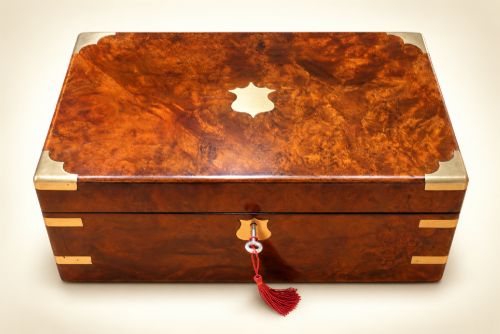
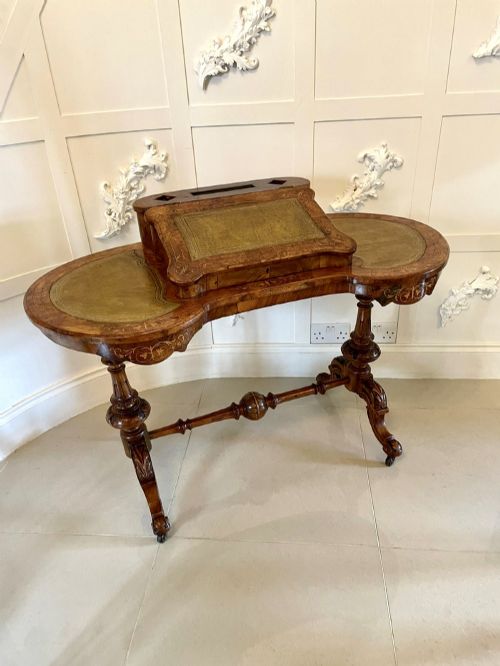
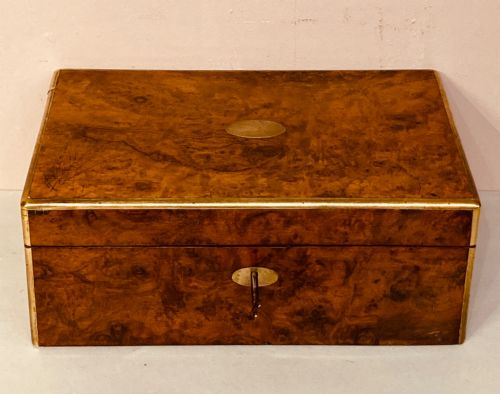
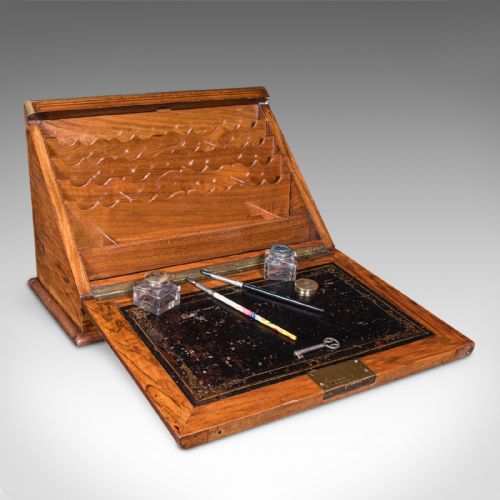
A walnut slope box serves as a portable desk or correspondence case, designed to hold writing paper, inkwells, and pens. These items emerge predominantly from the Georgian, Regency, and Victorian eras, alongside select examples from the Edwardian period.
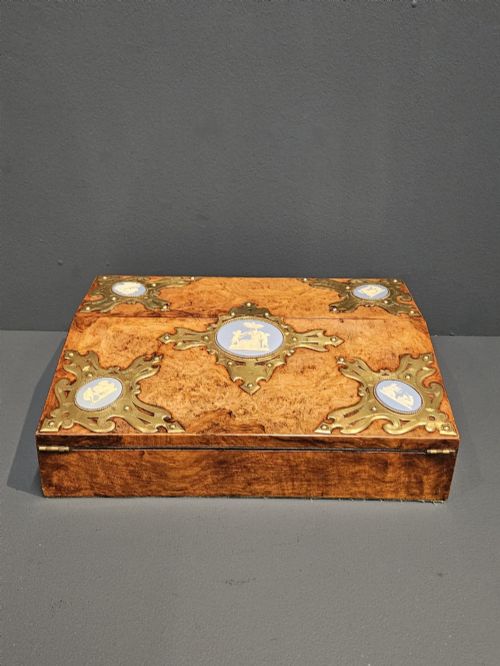
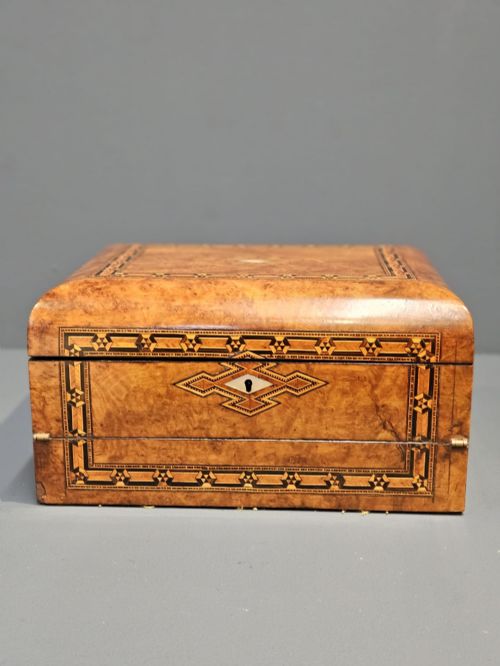
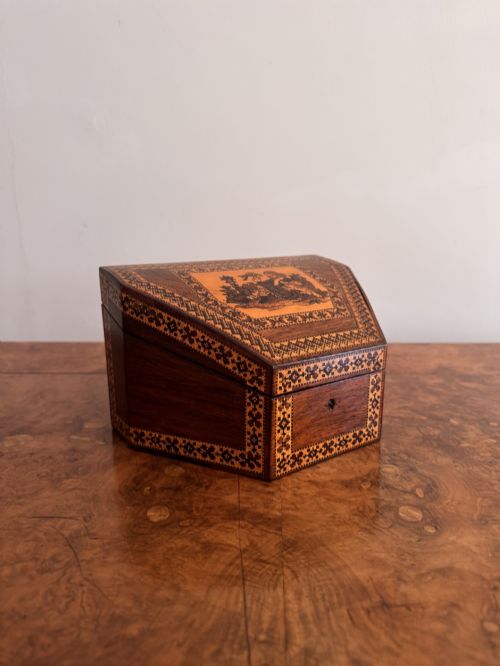
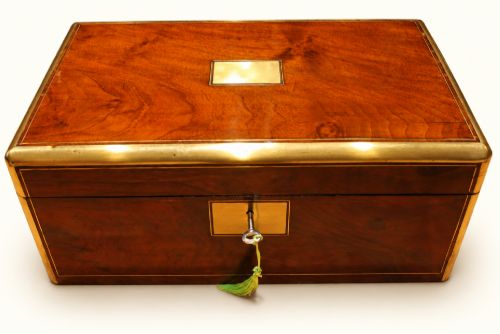
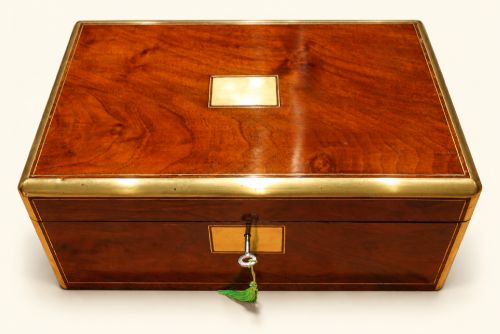
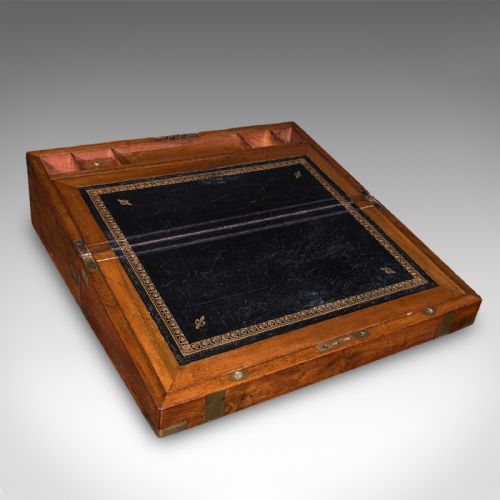
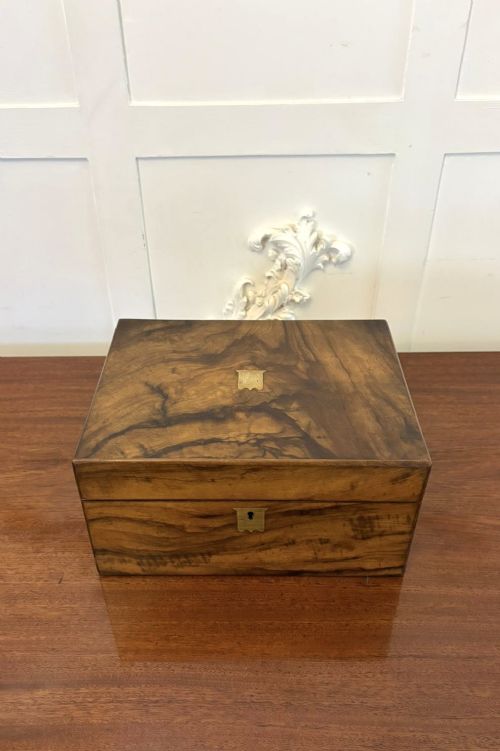
The most common form on this page is the Victorian writing slope, frequently fashioned from burr walnut or figured walnut with brass edging and fitted secret drawers. Variants extend to stationery cabinets, campaign writing desks, and boxes featuring Tunbridge ware inlay or mother-of-pearl details.
Materials and construction
Cabinet makers utilise walnut veneers, burr walnut, and figured walnut over secondary timbers, often applying brass binding, corner mounts, or boxwood stringing to protect edges and define panels. Interiors integrate leather writing surfaces, glass inkwells, and concealed compartments secured by locks such as those by Bramah.
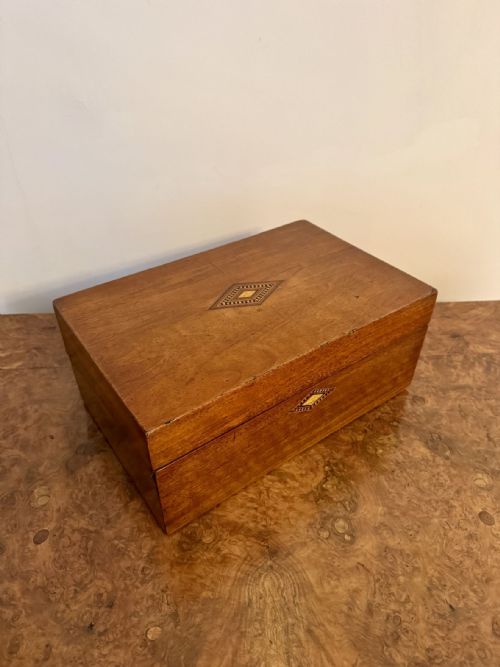
Decorative techniques incorporate parquetry, marquetry, and Tunbridge ware mosaic detailing, creating geometric or floral motifs across the lid and slope exterior. Solid brass hinges, escutcheons, and campaign handles provide structural durability and functional contrast to the dark timber.
Walnut Slope Box Retail Price Guide 2026
Typical asking prices for walnut slope box among the pieces listed under this phrase on Sellingantiques today, from the lower quarter to the upper quarter. They describe what is for sale here now, not the wider market.
Writing slopes and stationery cabinets represent the majority of box forms recorded across the nineteenth-century periods.
Craftsmanship and condition
Superior pieces display seamless veneer matching across the lid and fall, where the grain patterns mirror symmetrically to create a harmonious surface. The crispness of parquetry or Tunbridge ware micro-mosaic work distinguishes standard production boxes from finely detailed examples.
Internal organisation dictates merit, with fully fitted stationery dividers, secret drawers operating smoothly, and original leather writing surfaces holding greater regard. The integration of robust hardware, including functioning locks with keys, marks a higher standard of original manufacture.
William Austin·George Austin·Mappin & Webb
The Walnut Slope Box Glossary
- Burr walnut
- Timber harvested from walnut tree growths, producing swirling, highly figured grain patterns prized for decorative veneer work on high-status boxes.
- Tunbridge ware
- Woodwork decorated with mosaic tesserae assembled from numerous small pieces of naturally coloured woods to form pictorial or geometric designs.
- Bramah lock
- A patented high-security cylindrical lock mechanism found on quality nineteenth-century writing slopes and boxes.
- Escutcheon
- A protective metal plate surrounding a keyhole, usually fashioned from brass on these writing boxes.
- Parquetry
- Geometric mosaic woodwork formed by fitting veneer pieces together to create patterns across box surfaces.
Walnut Slope Box: Frequently Asked Questions
How do I use a slope box today?
These boxes function effectively as decorative desk accessories, holding modern stationery, letters, or small personal items. Their internal compartments and secret drawers provide practical storage while maintaining a period aesthetic on a modern desk or table.
The sloping lid can also display open books or serve as a stable surface for contemporary correspondence and journaling.
How do I tell Victorian from Georgian boxes?
Georgian writing slopes tend to feature simpler lines with mahogany or early walnut veneers, often accompanied by understated brass corner brackets. Victorian examples frequently employ heavily figured burr walnut, elaborate brass binding, and complex parquetry or Tunbridge ware inlay.
Victorian boxes also more commonly incorporate spring-loaded secret drawers and advanced locking mechanisms, reflecting mid-nineteenth-century industrial production methods.
What are secret drawers?
Secret drawers are concealed compartments hidden behind movable partitions, false drawer backs, or dummy panels within the interior of a writing slope. Users access them by lifting specific dividers or releasing internal spring catches.
Cabinet makers included these spaces for the safe storage of currency, private letters, or valuables while travelling.