

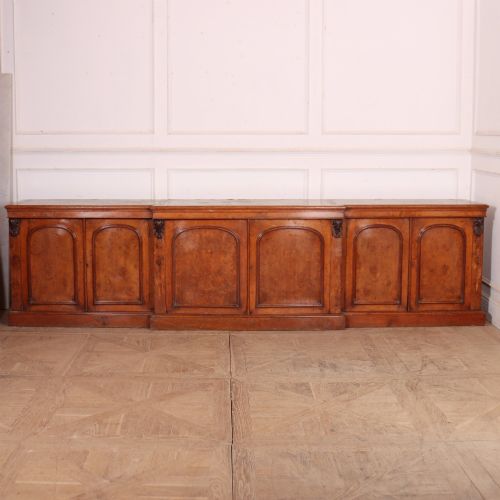
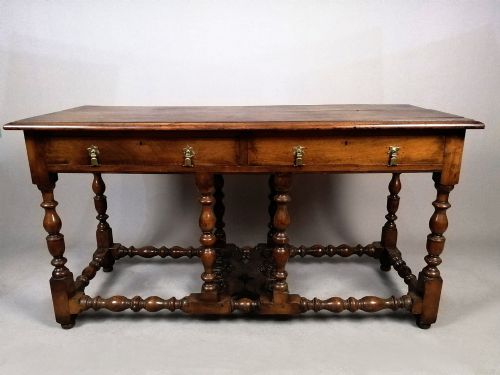
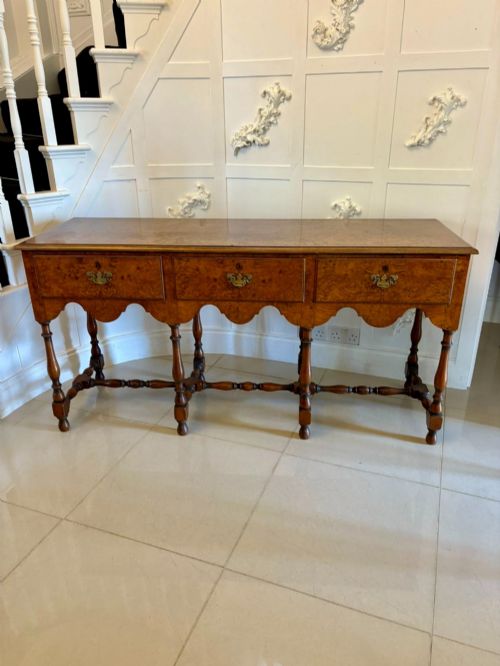
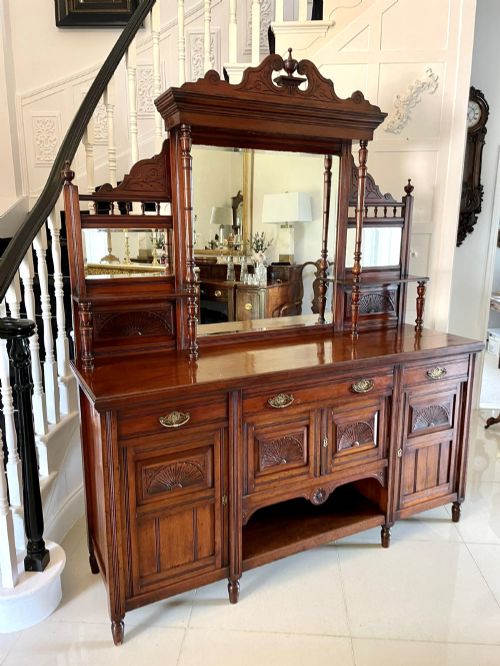
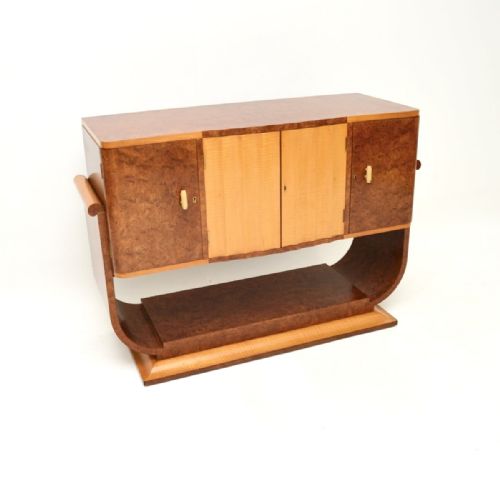
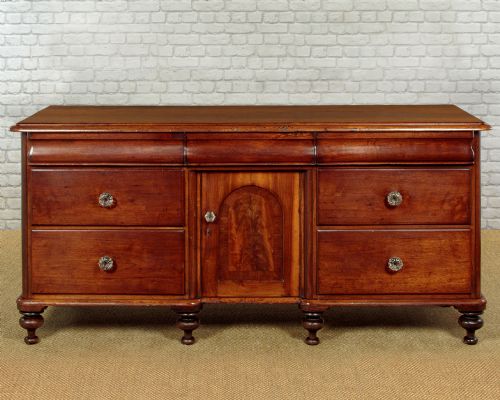


Walnut Sideboard Base
A walnut sideboard base offers generous storage and rich timber grain, making it a striking foundation for any dining room.
Walnut Sideboard Base
A walnut sideboard base provides a solid and practical surface for serving food and storing dining room essentials while displaying deep, figured wood tones. These items span periods from the 18th century through to the 19th century, Edwardian, and Art Deco eras, showing diverse forms like lowboys, chest bases, and dresser bases.
Makers produced these storage items in styles ranging from Queen Anne and George I to William IV, Renaissance Revival, and Art Deco. Buyers encounter everything from simple low cupboards to carved mirror back sideboards and side cabinets.
How they were made
Cabinet makers utilised solid walnut, burr walnut, and oak for structural integrity and visual depth, frequently incorporating secondary timbers such as pine and sycamore in carcases and drawers. Crossbanding and carved details added decorative refinement to flat surfaces and borders.
Metalwork played a functional role, with brass handles, hinges, and escutcheons fitted to drawers and doors. Glass panels appeared in later display variants, while leather occasionally lined interior working surfaces.
Walnut Sideboard Base Retail Price Guide 2026
Typical asking prices for walnut sideboard base among the pieces listed under this phrase on Sellingantiques today, from the lower quarter to the upper quarter. They describe what is for sale here now, not the wider market.
Burr walnut grain swirls so wildly that matching two cupboard doors feels like reading tea leaves.
What varies in quality
The choice of timber grain separates standard utility pieces from exceptional examples, particularly where burr walnut or crossbanding creates striking patterns across the front. Finer workmanship shows in the precise joining of drawers and the preservation of original brass hardware.
Proportion and stylistic purity influence the standing of each piece, distinguishing simple vernacular kitchen dressers from formally designed Georgian or Queen Anne sideboard bases. The condition of the timber surface, whether polished or bleached, also shapes the overall character.
The Walnut Sideboard Base Glossary
- Dresser base
- A low wooden storage unit with drawers and cupboards, traditionally used for food preparation and serving in large kitchens or dining rooms.
- Crossbanding
- A decorative border technique where narrow strips of veneer are laid across the grain of the main panel to frame the surface.
- Lowboy
- A small oak or walnut table with drawers, standing on four legs, typically used as a side table or dressing chest.
- Queen Anne
- An English stylistic period defined by cabriole legs, curved lines, and understated walnut veneers rather than heavy carving.
Walnut Sideboard Base: Frequently Asked Questions
What is a walnut sideboard base used for?
These pieces provide deep cupboard and drawer storage for dining rooms, hallways, or living spaces while offering a sturdy surface for lamps and serving dishes.
Their robust construction makes them practical for everyday use as sideboards, low cabinets, or serving dressers.
How do I identify a Georgian walnut base?
Georgian pieces often display restrained lines, crossbanded drawer fronts, and solid walnut or oak construction without the heavy carving seen on later Victorian furniture.
Looking at the interior timbers and drawer joints helps confirm the period of manufacture.
Where should I place a dresser base at home?
A dresser base fits well against a dining room wall, in a wide hallway, or serving as a low media console in a living room.
The low height allows items to be displayed on top without overwhelming the surrounding space.
What is the difference between a sideboard and a dresser base?
A dresser base typically originates from a kitchen or informal dining context with deep drawers, whereas a formal sideboard often includes fitted cellaret drawers or serving compartments.
Both serve as low storage furniture, though their internal layouts reflect different domestic uses.