




Walnut Parlor Settee
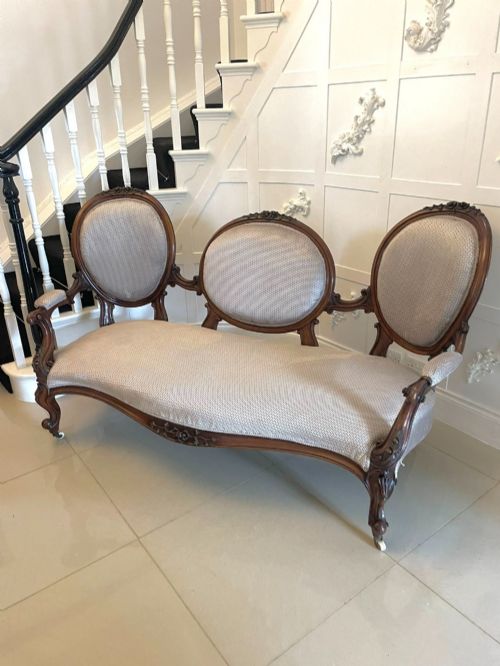
A walnut parlor settee brings formal Victorian elegance to a room, offering carved timber frames and rich upholstery for formal seating.
Walnut Parlor Settee
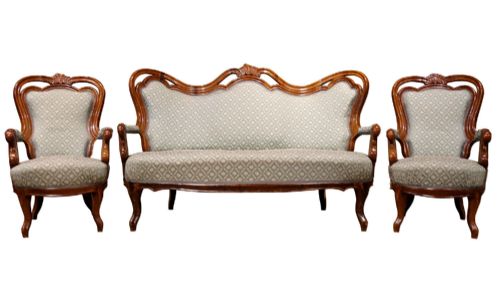
A walnut parlor settee is a formal drawing room seat built during the nineteenth century, often appearing alongside matching armchairs as part of larger salon suites. These pieces combine exposed timber frames with upholstered seats and backs designed for formal entertaining.
Construction and materials
These settees rely on solid walnut and complementary hardwoods to build structural frames that support elaborate hand-carved ornamentation. Artisans shaped the crest rails and cabriole legs from timber before applying decorative elements like marquetry inlay.
Upholstery forms an essential part of the construction, utilising traditional textiles such as velvet, damask fabric, and patterned textiles secured over internal padding. Metal components and brass details occasionally appear in structural fastenings or decorative mounts on French-influenced pieces.
Walnut Parlor Settee Retail Price Guide 2026
Typical asking prices for walnut parlor settee among the pieces listed under this phrase on Sellingantiques today, from the lower quarter to the upper quarter. They describe what is for sale here now, not the wider market.
Victorian parlor seating was engineered so upright that slouching was practically an engineering failure.
Assessing quality and craftsmanship
The distinction between standard examples and finer pieces lies in the crispness of the hand-carved woodwork and the integrity of the walnut frame. Superior items display deep, purposeful carving on the crest back and arms rather than shallow, mechanical shaping.
Cohesion within a suite also dictates the standing of a piece, particularly when settees are joined by matching armchairs in uniform timber and upholstery. The quality of the original textile work, whether damask or velvet, reflects the overall ambition of the original commission.
The Walnut Parlor Settee Glossary
- Cameo back
- An upholstered sofa back shaped with a distinct wooden oval or medallion frame resembling a cameo. This style gained popularity during the Victorian period for parlor seating.
- Salon suite
- A matched set of seating furniture comprising a settee and several armchairs designed for a drawing room. These suites share uniform wood types and upholstery fabrics.
- Marquetry
- The art of applying pieces of veneer to a structure to form decorative patterns and pictures. In these listings, it appears on French-influenced parlor furniture.
- French Empire
- A neoclassical design style characterised by formal symmetry and rich classical motifs. Settees from this tradition often incorporate elaborate woodwork and contrasting veneers.
Walnut Parlor Settee: Frequently Asked Questions
What is a walnut parlor settee?
A walnut parlor settee is a nineteenth-century formal sofa built with a carved wooden frame and upholstered seating. These pieces were designed for display and entertaining in Victorian drawing rooms.
They frequently appear as standalone items or as part of larger salon suites accompanied by matching armchairs.
How were parlor settees used?
These settees served as formal seating in nineteenth-century reception rooms and parlours where guests were entertained. They were positioned against walls or within conversational groupings alongside matching chairs.
Their primary role was to signal social status and taste while providing refined seating during afternoon visits.
How do I style a settee at home?
A walnut parlor settee works best in a living room, hallway, or bedroom where its carved timber frame and historic character can be appreciated. It functions well as a focal seating piece away from heavy modern furniture.
Pairing it with neutral surroundings allows the detailed woodwork and period upholstery to stand out without visual competition.
How can I tell the period of a settee?
Dating relies on observing the combination of wood species, carving style, and upholstery framing techniques. Victorian pieces often display heavy walnut carving and cameo back designs.
Later nineteenth-century examples incorporate French revival influences or marquetry inlay that point toward the eighteen nineties.