

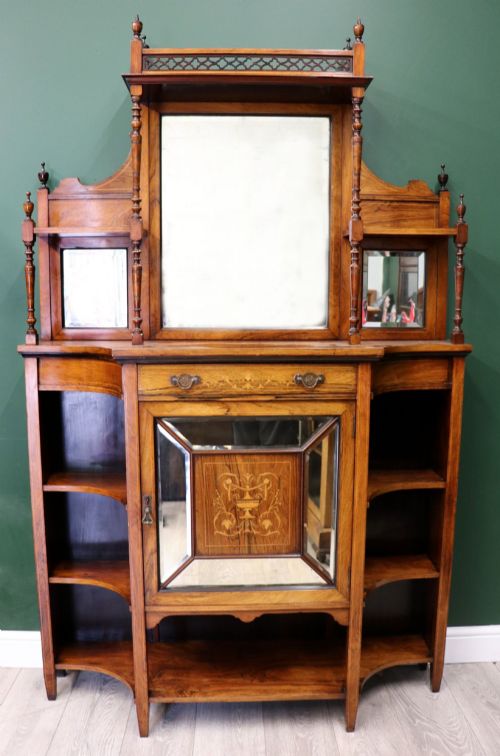
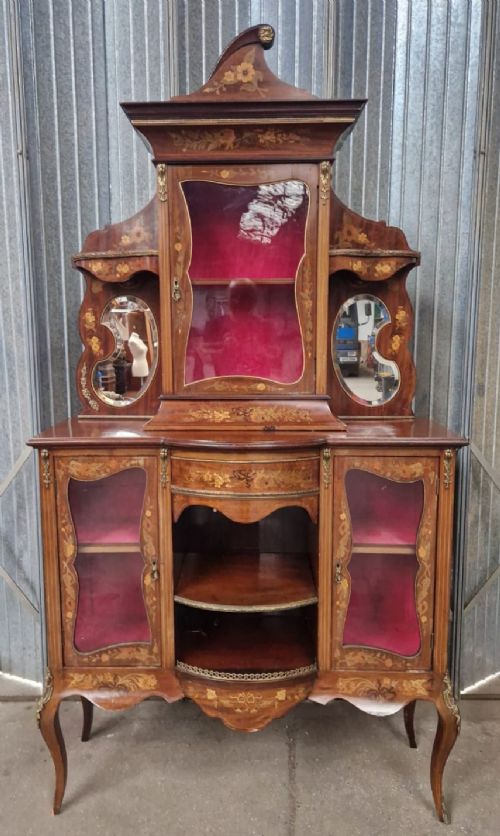
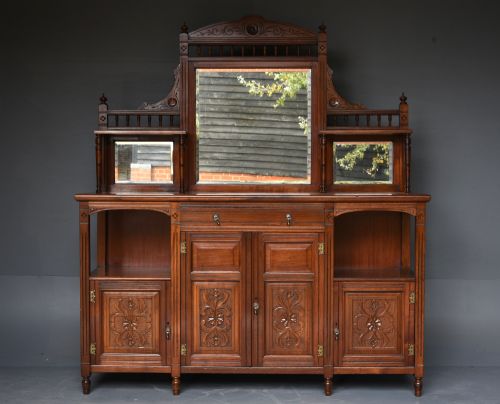
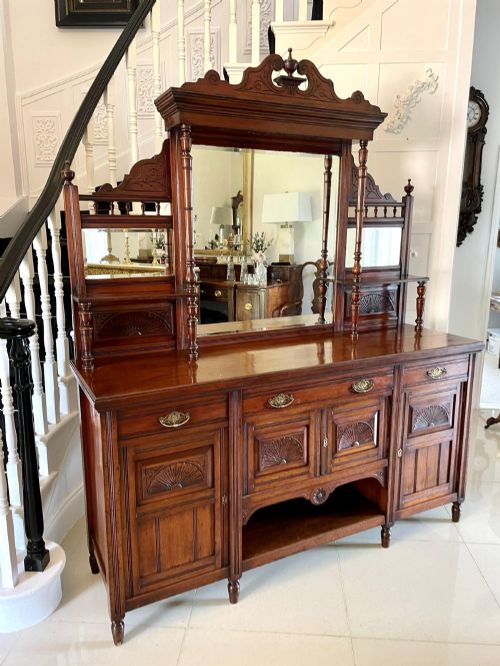
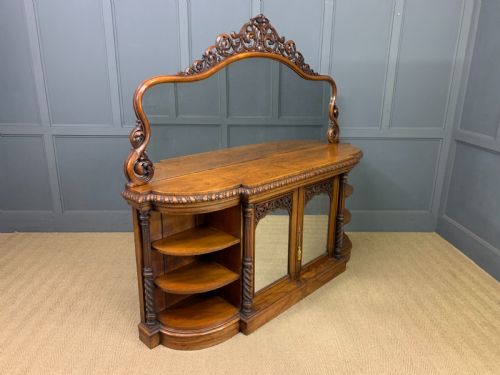


Walnut Mirror Back Chiffonier
A walnut mirror back chiffonier is a substantial nineteenth-century storage piece with an integrated glass plate, combining utility with display.
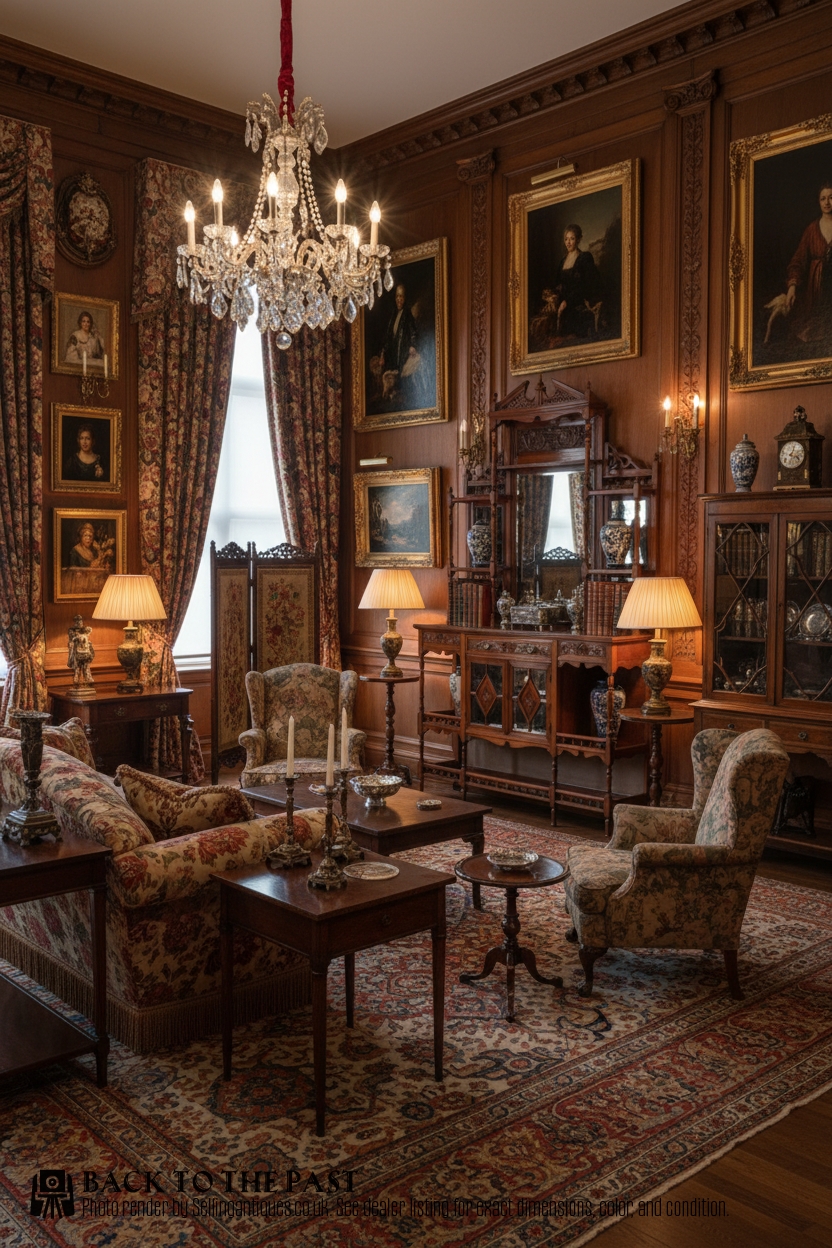
Walnut Mirror Back Chiffonier
When you search for a walnut mirror back chiffonier, you encounter substantial Victorian and Edwardian furniture pieces that combine lower cupboard storage with an upper tiered display structure. These items function as principal reception room furnishings designed to hold porcelain, books, and household silver.
The versions most frequently met on this page date from the mid-nineteenth century to 1880, utilising rich walnut and burr walnut veneers. They appear under various historic categorisations including side cabinets, credenzas, and sideboards, reflecting their versatile domestic roles.
How they were made
Cabinet makers constructed these pieces using solid timber frames faced with figured walnut and burr walnut veneers to create striking grain patterns across the main body and doors. Skilled artisans applied intricate carvings, brass mounts, and occasional amboyna banding to enhance the principal surfaces.
The upper mirror backing incorporated bevelled or plain glass plates secured within carved wooden frames, while lower sections often featured marble tops or panelled doors enclosing adjustable shelving.
Walnut Mirror Back Chiffonier Retail Price Guide 2026
Typical asking prices for walnut mirror back chiffonier among the pieces listed under this phrase on Sellingantiques today, from the lower quarter to the upper quarter. They describe what is for sale here now, not the wider market.
Some Victorian chiffoniers doubled as makeshift cocktail cabinets long before the twentieth-century home bar ever existed.
What varies in quality
The distinction between standard examples and top-tier exhibition pieces lies in the selection of timber veneers and the depth of the hand-carved ornamentation. Finer specimens display symmetrical burr walnut figuring across wide expanses and robust structural joinery that withstands decades of use.
Secondary details such as the weight of the brass hardware, the clarity of the mirror glass, and the precision of any inlaid marquetry separate standard workshop production from superior London quality furniture.
The Walnut Mirror Back Chiffonier Glossary
- Burr walnut
- A specialised timber veneer taken from the gnarly growths of walnut trees, prized for its swirling, highly figured grain patterns. Cabinet makers reserved this material for the most prominent display surfaces.
- Chiffonier
- A low sideboard or cabinet featuring a raised superstructure or mirror back, developed during the nineteenth century for dining and drawing rooms. This form evolved from simple shelved sideboards into elaborate display furniture.
- Ormolu
- Gilded bronze ornamentation applied to furniture mounts, popular in revivalist nineteenth-century design. This material adds metallic contrast to dark walnut surfaces.
- Aesthetic Movement
- A late nineteenth-century design style focusing on artistic refinement rather than heavy historical revivals. Pieces from this period exhibit cleaner lines and simpler decorative motifs.
Walnut Mirror Back Chiffonier: Frequently Asked Questions
What is a walnut mirror back chiffonier?
It is a nineteenth-century Victorian or Edwardian cabinet featuring enclosed lower storage and an integrated upper mirror.
These pieces served as display and storage furniture in principal reception rooms.
How do I date a walnut chiffonier?
Dating relies on identifying stylistic markers, timber types, and construction methods associated with the Victorian and Edwardian eras.
Mid-nineteenth-century examples frequently employ rich burr walnut veneers and heavy carved mouldings.
Where should I place one at home?
These large cabinets suit principal reception rooms, dining spaces, or wide hallways where their proportions anchor the space.
The integrated mirror helps reflect natural light into darker corners of a room.
How do I care for walnut veneer?
Maintain the timber by keeping it away from direct heat sources and sudden humidity changes that affect veneer stability.
Regular dusting with a soft cloth preserves the polished surface without requiring heavy chemical polishes.