

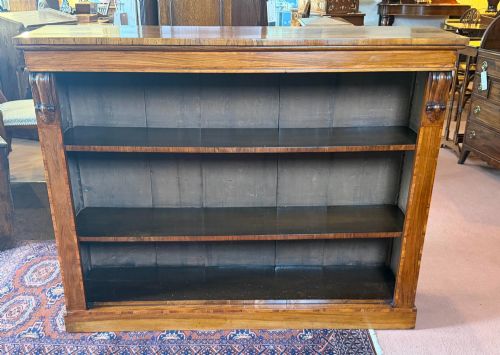
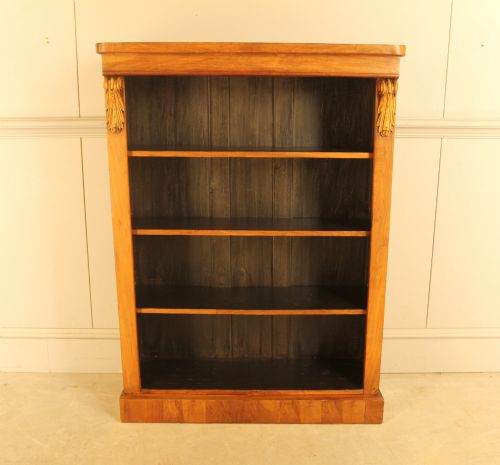
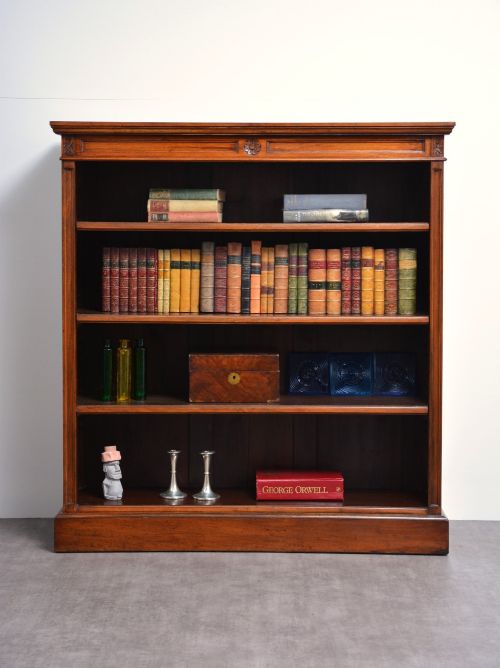
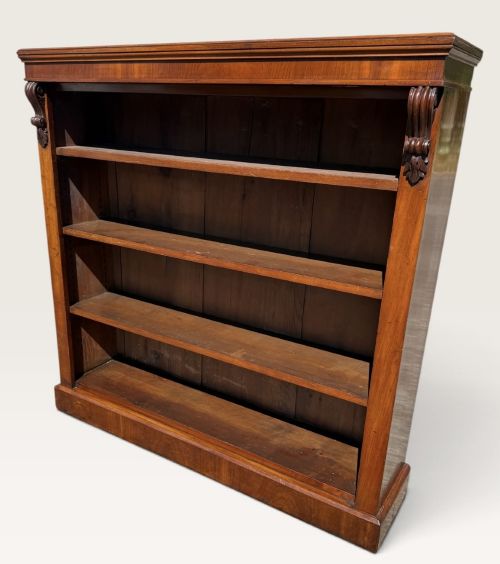

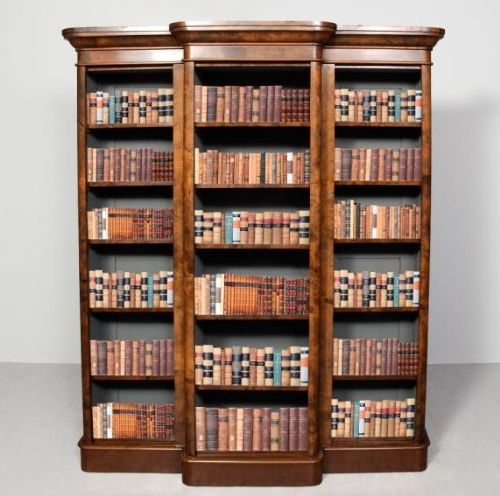

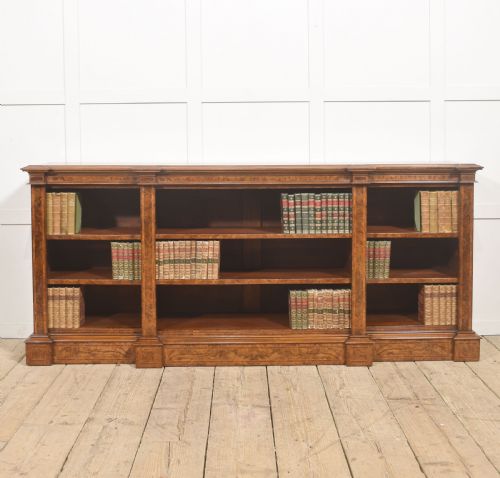
Walnut Library Shelf
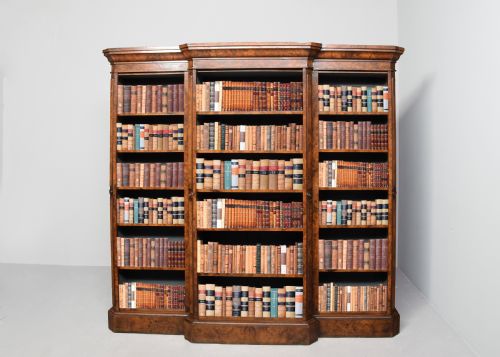
These walnut library shelf pieces range from breakfront bookcases to etageres, offering rich timber tones and practical open storage for your books.
Walnut Library Shelf
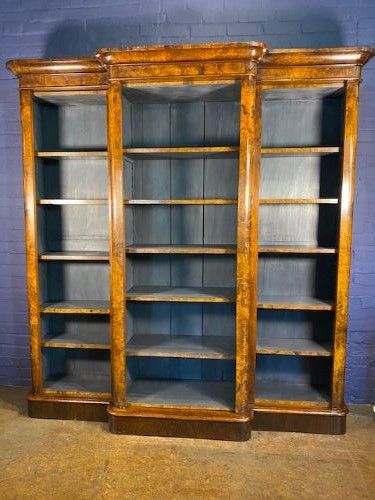
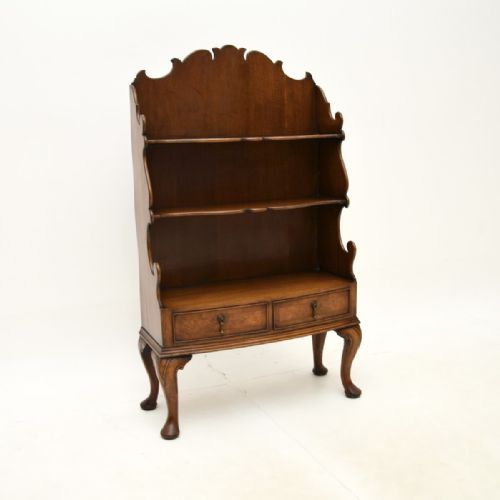
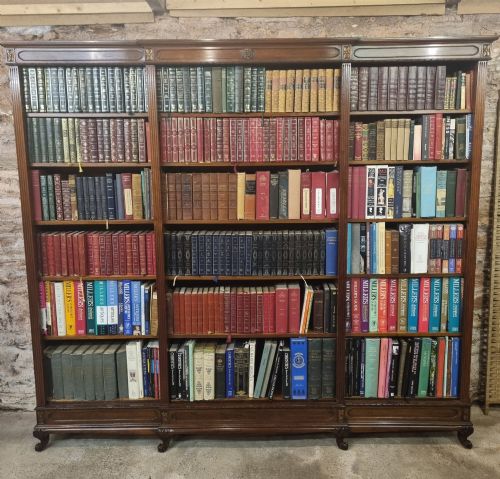
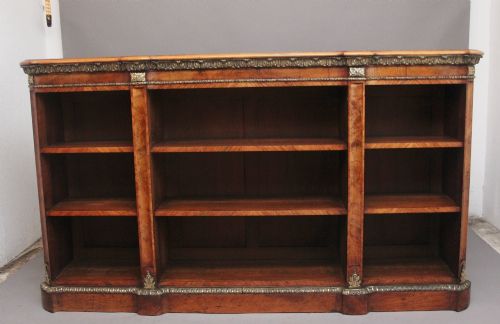
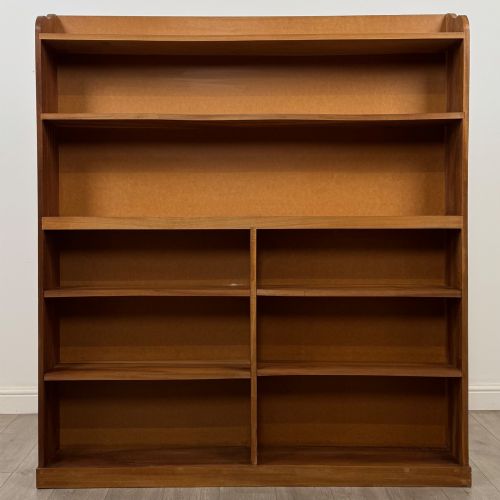
A walnut library shelf brings warm timber grain and functional book storage to a room, appearing in forms such as open bookcases, breakfront cabinets, and etageres. You will most frequently encounter nineteenth-century and Edwardian open bookcases, often fitted with adjustable shelves for practical use.
The selection spans periods from the William IV era through Victorian times and into the early twentieth century. Makers utilised rich veneers and solid timber to construct versatile shelving units designed for home libraries and studies.
How they were made
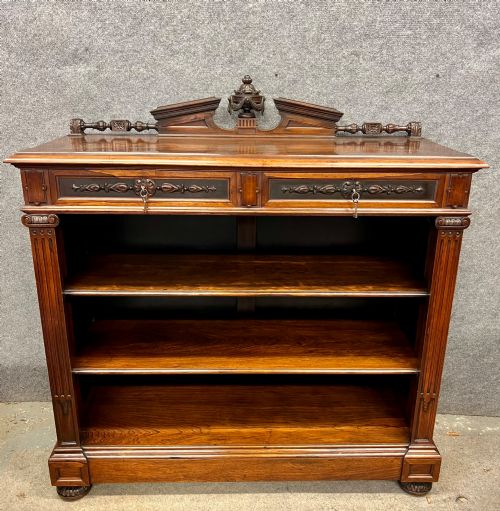
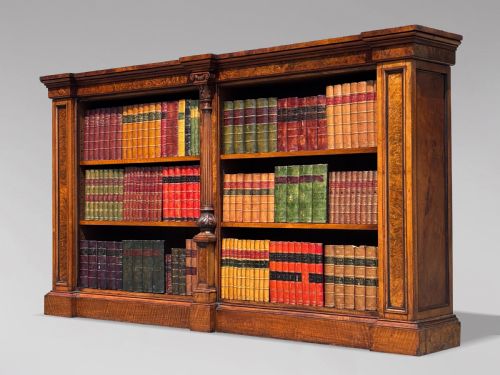
Cabinet makers utilised solid walnut and decorative burr walnut veneer applied over secondary timbers like pine. These surfaces were often enhanced with carved friezes, barley twist columns, and polished brass details.
Internal construction typically incorporated adjustable wooden shelving supported by peg systems. Larger breakfront examples were constructed in sections for transport and stability.
Walnut Library Shelf Retail Price Guide 2026
Typical asking prices for walnut library shelf among the pieces listed under this phrase on Sellingantiques today, from the lower quarter to the upper quarter. They describe what is for sale here now, not the wider market.
Some nineteenth-century shelves come with barley twist columns, proving that even a bookcase likes a little architectural curl.
What varies in quality
The fineness of the burr walnut figuring across the breakfront surfaces dictates much of the visual distinction. Richly patterned veneers and carefully matched grain panels elevate a piece above standard utility furniture.
Proportion and detailing separate workshop outputs, from simple nineteenth-century open carcases to grander examples with architectural cornices and fine cabinetmaker signatures.
Johnstone and Jeanes·Heal's·Maple and Co.
The Walnut Library Shelf Glossary
- Breakfront
- A cabinet design where the central section projects forward from the flanking wings. This architectural arrangement creates depth and visual interest in larger library bookcases.
- Burr walnut
- A specialised timber veneer harvested from the wart-like growths on walnut trees. It yields complex, swirling grain patterns highly prized by nineteenth-century cabinet makers.
- Etagere
- A piece of furniture consisting of a set of open shelves for displaying small objects or books. These lighter stands appear alongside heavier breakfront bookcases.
- Adjustable shelves
- Shelving resting on movable supports that allows internal heights to be altered. This practical adaptation accommodates books of varying sizes.
Walnut Library Shelf: Frequently Asked Questions
Are the library shelves adjustable?
Many nineteenth-century and Edwardian examples include adjustable shelving supported by wooden or metal rack systems. This allows the internal height to be altered for different volume sizes.
Fixed shelves do appear in certain older or simpler regional pieces, so checking individual descriptions remains worthwhile.
How do I distinguish Victorian from Edwardian pieces?
Victorian walnut bookcases often display heavier proportions, deeper timber tones, and decorative carvings such as barley twist columns or applied friezes. They date from the mid to late nineteenth century.
Edwardian examples tend to have lighter frames, simpler lines, and sometimes brighter walnut grain patterns reflecting early twentieth-century domestic tastes.
What timber was used besides walnut?
While walnut and burr walnut veneer dominate the primary surfaces, secondary timbers such as pine appear inside carcases and drawer linings. Brass hardware and occasional ormolu mounts provide structural and decorative contrast.
Glass panels also feature on glazed cabinet variations designed to protect leather-bound volumes from dust.