




Walnut Jewellery Case
A walnut jewellery case is a fitted wooden box for personal ornaments, prized for figured grain and velvet interiors.
Walnut Jewellery Case
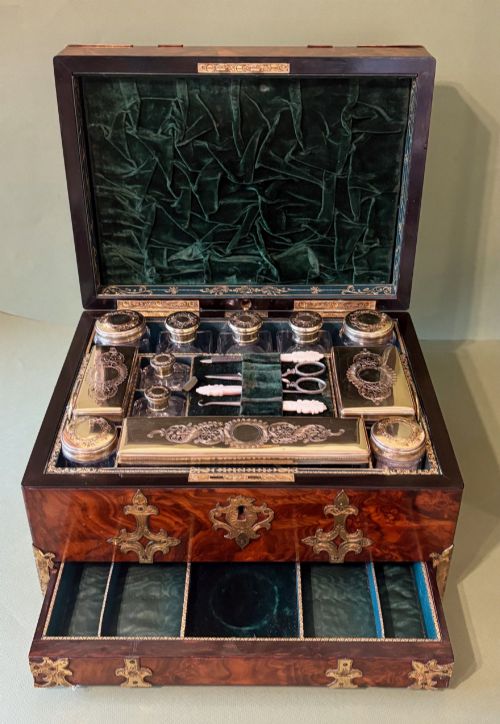
A walnut jewellery case is a functional wooden receptacle designed to hold personal treasures, typically lined with velvet or silk to protect delicate items. These pieces frequently surface from the Victorian period, alongside earlier Georgian examples and specialised forms like dressing cases and sewing boxes.
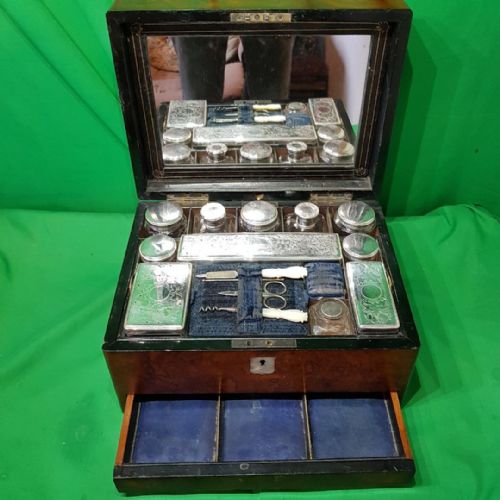
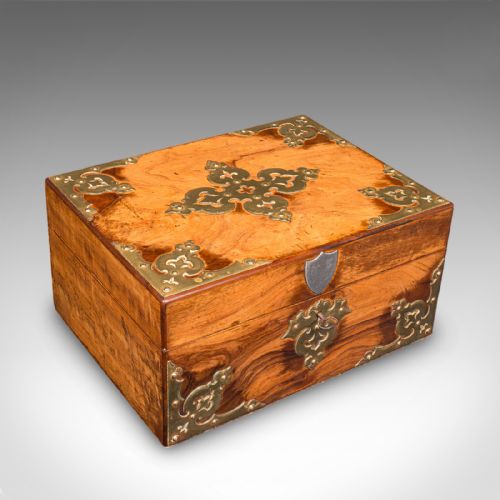
The objects seen here range from compact tabletop boxes to larger vanity cases fitted with mirrors and compartments. Many incorporate brass mounts or mother of pearl inlay, reflecting the domestic luxury of the nineteenth century.
Construction and Materials
These cases rely on solid timbers veneered with burr or figured walnut, displaying intricate natural grain patterns across the exterior lid and sides. Cabinetmakers applied thin slices of burr walnut to stable underlying woods, creating decorative surfaces that caught the light in Victorian drawing rooms.
Interiors are constructed with fitted wooden trays lined in plush velvet or silk, often housing silver-topped jars and small mirrors. Brass hardware such as escutcheons, hinges, and carrying handles reinforced the corners and provided secure locking mechanisms for valuable contents.
Walnut Jewellery Case Retail Price Guide 2026
Typical asking prices for walnut jewellery case among the pieces listed under this phrase on Sellingantiques today, from the lower quarter to the upper quarter. They describe what is for sale here now, not the wider market.
Listings span the Victorian and Georgian periods, utilising materials such as burr walnut, brass, glass, silver, velvet, mother of pearl, and silk.
Assessing Quality
The hierarchy of quality rests primarily on the choice of wood and the complexity of the internal fittings. Exceptional examples display highly figured burr walnut veneers with symmetrical grain matching across the surfaces, rather than plain timber.
Comprehensive internal fittings, including original silver accessories, integrated mirrors, and multi-tiered velvet trays, elevate a piece above standard utility boxes. Maker attribution, such as signed London firms, further distinguishes the superior specimens from unsigned workshop production.
Parkins and Grotto
The Walnut Jewellery Case Glossary
- Burr walnut
- A distinctive timber cut from walnut tree growths, prized for its swirling, mottled grain patterns. It forms the decorative exterior of many nineteenth-century luxury boxes.
- Dressing case
- A fitted box containing compartments for cosmetics, brushes, and jewellery, often equipped with a mirror inside the lid. These portable items accompanied travellers on long journeys.
- Escutcheon
- A protective brass plate surrounding a keyhole. On these boxes, it serves both a functional purpose and a decorative role on the front lid.
- Workbox
- A specialised container used for sewing and needlework implements. Many share the same compartmentalised internal layout and walnut construction as jewellery boxes.
- Gothic Revival
- An architectural and decorative style popular in the nineteenth century, characterised by pointed arches and medieval motifs. It occasionally appears on specialised sewing and decorative boxes of the era.
Walnut Jewellery Case: Frequently Asked Questions
How do I date a walnut jewellery case?
Dating relies on stylistic clues, construction methods, and hardware types typical of the Victorian and Georgian eras. Burr walnut veneers and brass mounts are particularly characteristic of mid-nineteenth-century British cabinetmaking.
Maker marks or retailer signatures stamped on the lockplates or leather interiors also help pinpoint the exact decade of manufacture.
Were these boxes used for travel?
Larger dressing cases and vanity boxes were designed for wealthy travellers moving between country estates and townhouses. They often featured secure brass locks and sturdy side handles for carriage transport.
Smaller tabletop versions remained stationary on bedroom dressing tables to hold everyday rings and brooches.
How should I clean the velvet interior?
Velvet linings require gentle care using a soft, dry brush to lift surface dust without damaging the pile. Moisture should be avoided entirely to prevent staining the fabric and warping the wood underneath.
Old silk and velvet components are delicate and best preserved through minimal handling.