
Walnut Glazed China Cabinet
A walnut glazed china cabinet brings warmth and visibility to a room, offering glazed protection for cherished porcelain and books through centuries of cabinet-making.
Walnut Glazed China Cabinet
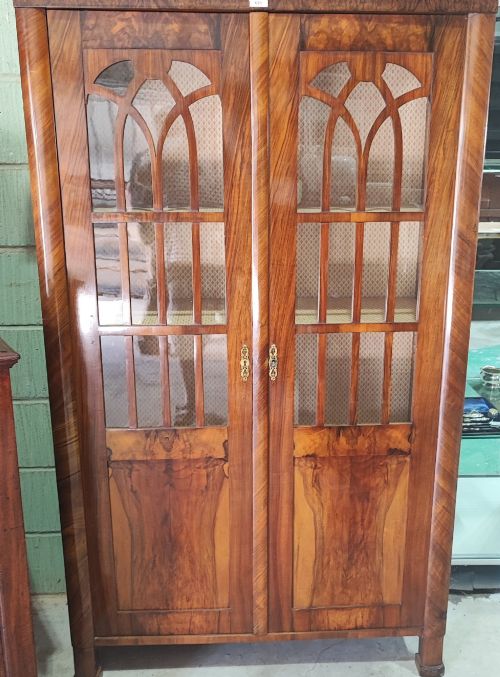
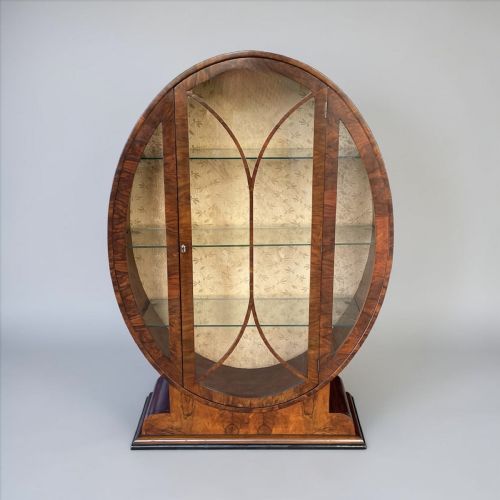
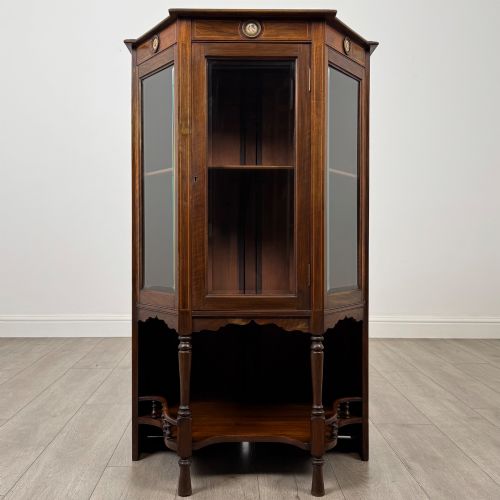
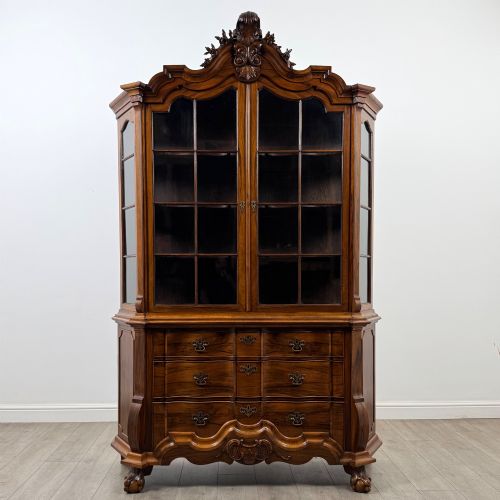
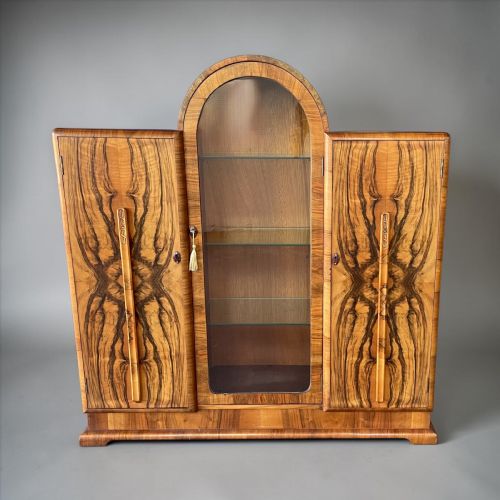
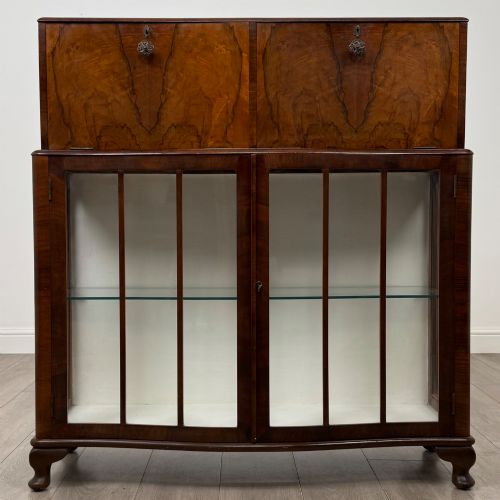
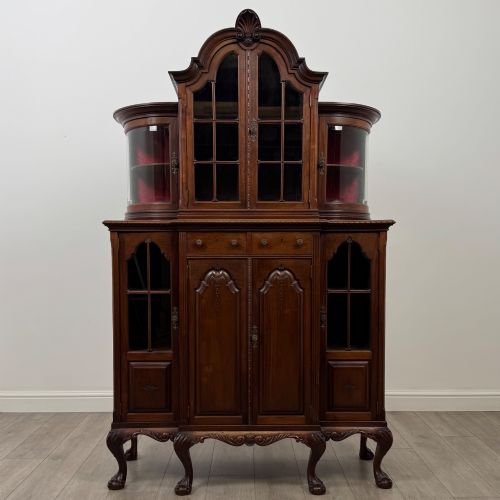
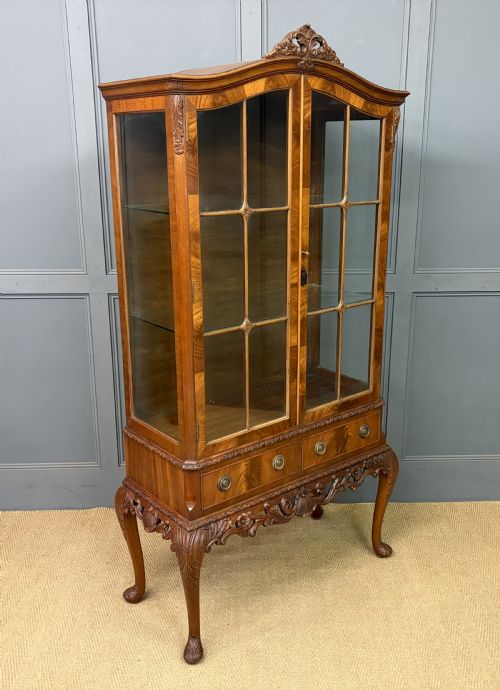
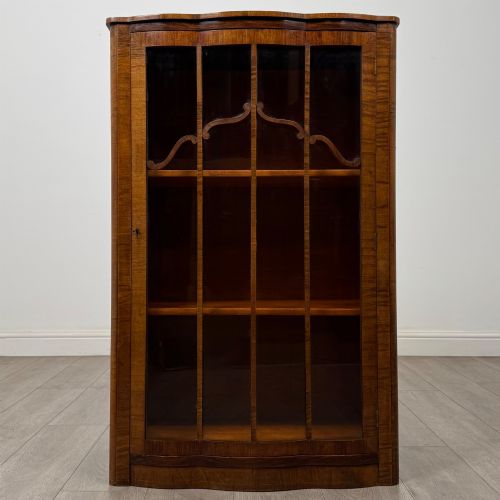
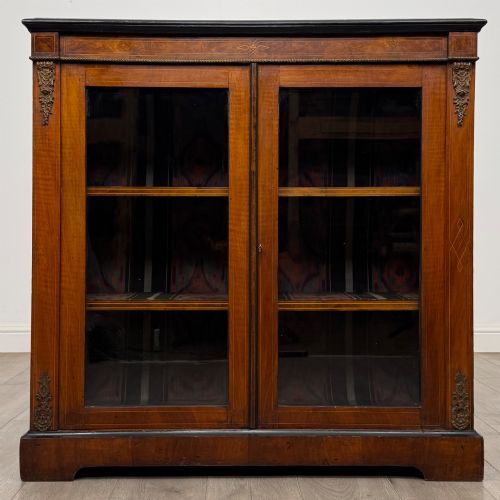
A walnut glazed china cabinet is a storage and display piece designed with glass panels to showcase ceramics, glassware, and books while keeping dust at bay. The walnut glazed china cabinet takes many forms across the selection, ranging from compact pier cabinets and corner units to large two-part bookcases and tall vitrines.
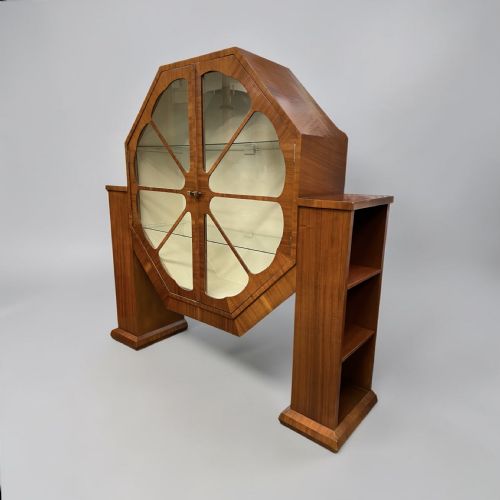
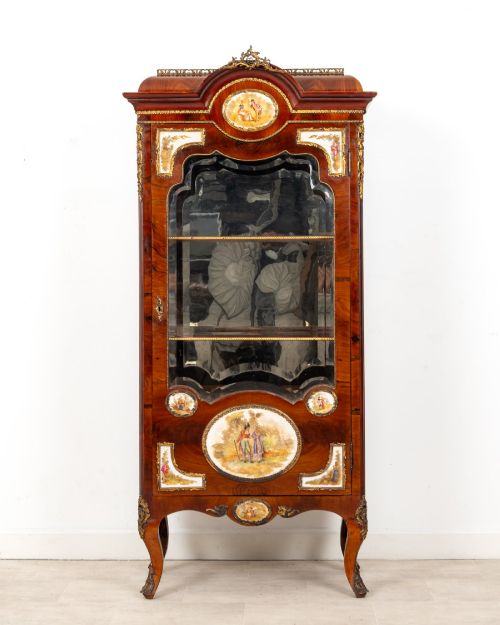
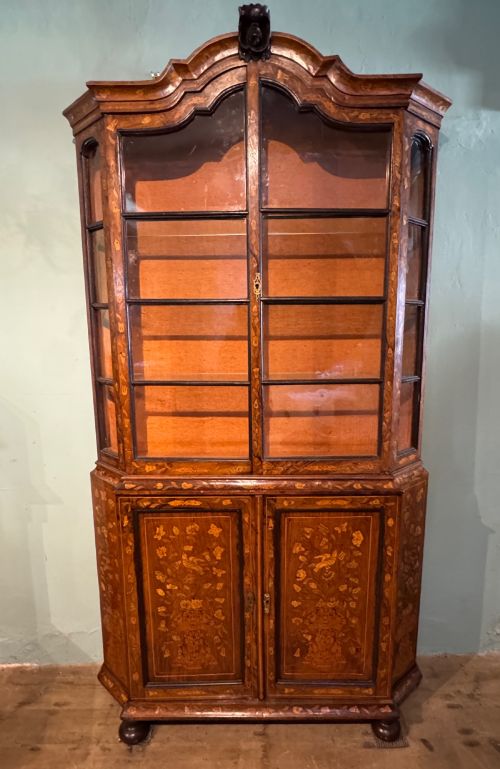
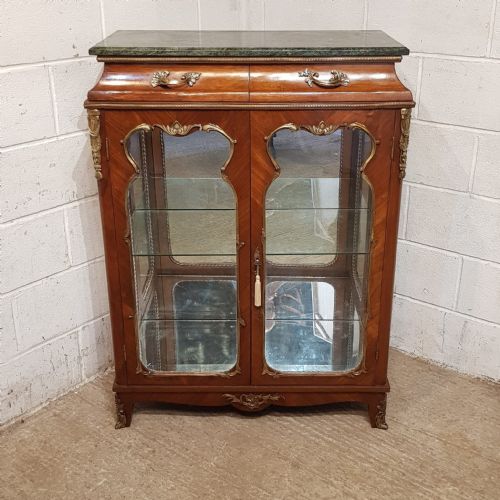
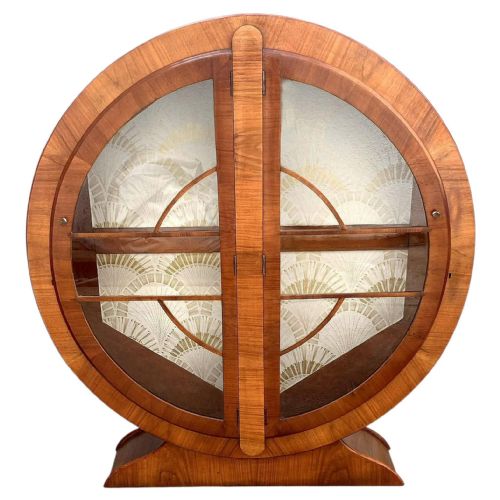
Buyers meet pieces from diverse eras, with Edwardian and Art Deco examples appearing alongside Victorian, Georgian, and revival styles. Dutch marquetry and French ormolu-mounted designs provide ornate alternatives to clean-lined 1930s circular and rocket cabinets.
How they were made
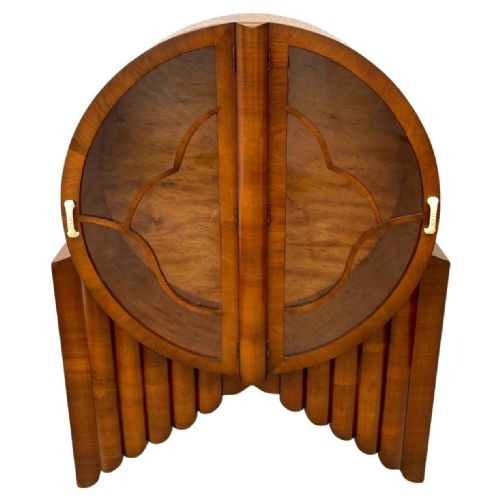
Glass panels are fitted into timber doors or curved frames, accompanied by brass hardware, ormolu mounts, and fabric or velvet linings inside the display areas. Cabinets from the twentieth century often employ steam-bent woods for circular and oval Art Deco silhouettes.
Some Art Deco cabinets abandon straight lines entirely, adopting Clevis and rocket shapes designed to make porcelain orbit in style.
What varies in quality
The sophistication of the timber veneer work and the complexity of the cabinet shape dictate the tier of a piece. Simple Edwardian glazed units sit at one end, while master-carved Dutch marquetry vitrines, ormolu-mounted French pieces, and sculptural Art Deco designs represent higher craftsmanship.
The integration of custom hardware, detailed marquetry floral motifs, and specialised glazing bars reflect the ambition of the original workshop. Structural integrity in curved glass doors and the preservation of original mirror backs also separate standard production from superior examples.
Maple & Co.·August Ungethüm·Edwards & Roberts·Rurka·Maurice Adams
The Walnut Glazed China Cabinet Glossary
- Burr walnut
- A prized wood figuring obtained from the growth warts of walnut trees, showing swirling, knotted grain patterns. It is sliced into thin veneers for decorative furniture fronts.
- Marquetry
- The art of applying pieces of veneer to a structure to form decorative patterns and pictures. Floral designs and scrolling foliage are common on Dutch examples.
- Ormolu
- Gilded bronze mounts applied to furniture for decoration, popular in French and revival pieces. These metal accents highlight corners, feet, and cornices.
- Vitrine
- A glass-sided cabinet specifically designed for displaying fine objects and porcelain. The term originates from the French word for glass.
- Pier cabinet
- A low cabinet built to stand against the narrow wall space between windows. Victorian examples often feature mirror backs and marquetry inlay.
Walnut Glazed China Cabinet: Frequently Asked Questions
How do I style a walnut cabinet?
Balance your collection of ceramics and glassware by grouping items according to height and colour tone, leaving breathing room between objects. Ensure the internal velvet or mirrored backdrops remain visible to complement the timber frame.
Position the cabinet away from direct sunlight to protect the walnut veneer and any internal fabric linings from fading over time. Soft ambient room lighting enhances the glass panels without creating harsh glare.
Are shelves adjustable in these cabinets?
Many Edwardian and later bookcase cabinets feature adjustable wooden or glass shelves supported by modular pilasters or metal racks. This allows you to alter shelf heights to accommodate taller china pieces or folio books.
Earlier antique vitrines and display cabinets often have fixed wooden or glass shelving integrated directly into the carcass construction. Check individual specifications if you require flexibility for varied display items.
How do I care for walnut veneer?
Dust the exterior regularly with a soft, dry cloth and feed the walnut timber periodically with a quality beeswax to maintain moisture. Avoid silicone-based polishes that can build up a residue and dull the natural grain.
Maintain a stable room temperature and humidity level to prevent the walnut veneers from drying out, shrinking, or lifting away from the carcase.