





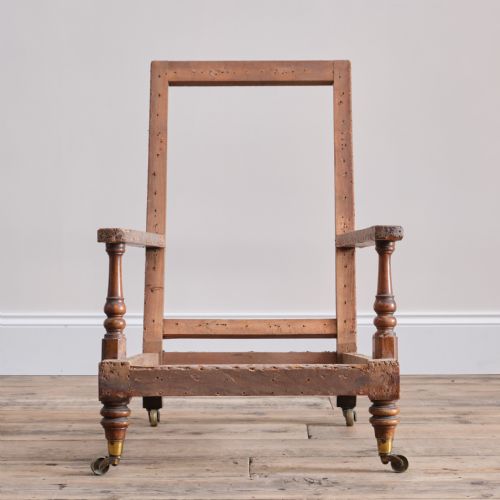

Walnut Framed Easy Chairs
Walnut framed easy chairs are sturdy seats built for comfort, and you are looking at sturdy frames ready for a room.
Walnut Framed Easy Chairs
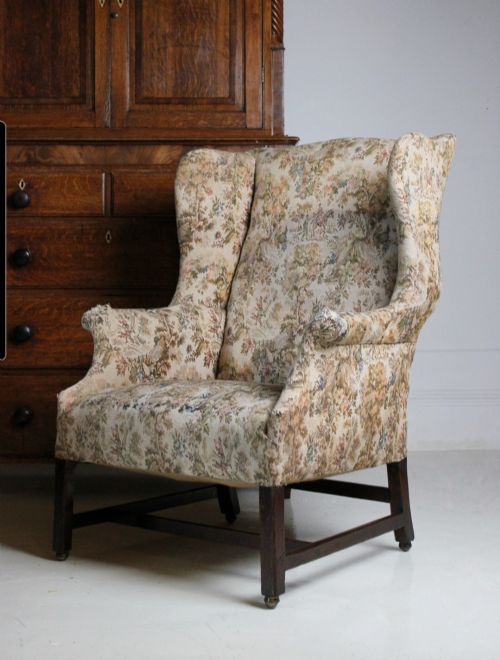
Walnut framed easy chairs are comfortable seating options that appear across several periods, including Victorian and the 1920s. You are most likely to meet Victorian and 19th-century examples on this page, often featuring open arms or wingbacks.
The selection includes specific forms such as tub chairs, fireside armchairs, and bergere chairs. Makers like Howard and Sons emerge frequently in various styles, alongside pieces influenced by French Rococo revival and Art Deco designs.
How they were made
The construction relies on timber frames primarily formed from walnut and mahogany, offering robust structural support. Carved details frequently appear on the wooden frameworks of the 19th-century items.
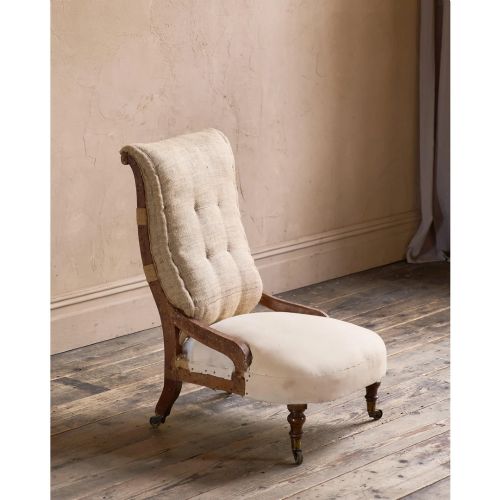
Upholstery methods incorporate traditional materials such as horsehair, hessian, cotton, and fabric. Brass elements and split cane panels are also utilised in specific pieces to finish the design.
Walnut Framed Easy Chairs Retail Price Guide 2026
Typical asking prices for walnut framed easy chairs among the pieces listed under this phrase on Sellingantiques today, from the lower quarter to the upper quarter. They describe what is for sale here now, not the wider market.
Listings feature walnut as the primary timber alongside mahogany, paired with traditional fillings like horsehair and hessian across multiple 19th-century periods.
What varies in quality
The standard of walnut framed easy chairs is determined by the crispness of the timber carving and the integrity of the wooden frame. Stronger architectural lines and well-executed stylistic revivals separate the finer pieces from simpler domestic seating.
The choice of upholstery materials and the retention of original stuffing methods also influence the character of the chair. Pieces bearing recognised maker attribution demonstrate a higher level of historical interest.
Howard and Sons
The Walnut Framed Easy Chairs Glossary
- Bergere
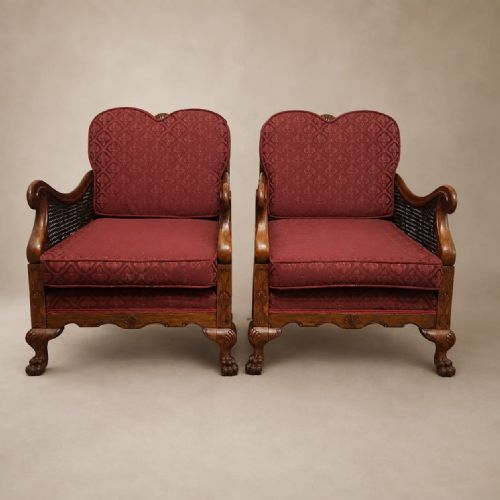
- A closed-sides upholstered armchair with wooden framing, often featuring cane panels. This French style provides a lighter visual weight in a sitting room.
- Wingback
- An armchair with high sides attached to the back, designed to shield the occupant from drafts. The wings traditionally trapped heat from a fireplace.
- Tub chair
- A curved-back armchair where the arms sweep continuously into the backrest in a circular shape. This compact form sits well in smaller spaces.
- Fauteuil
- An open-arm armchair originating in France, characterised by exposed wooden framing around the arms and back. These elbow chairs were built for drawing rooms.
- Crewelwork
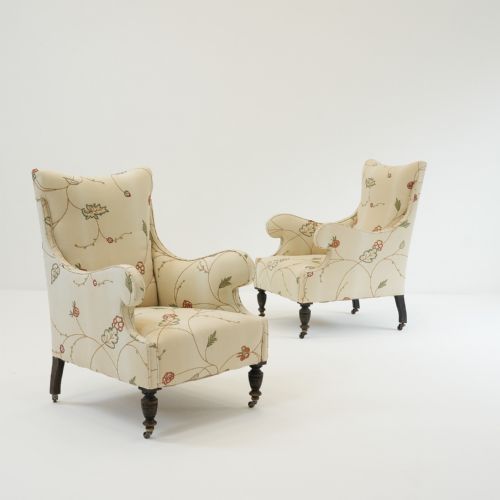
- A type of embroidery using wool yarn on a heavy fabric base, often seen on traditional chair coverings. This tactile surface adds texture to the seat.
Walnut Framed Easy Chairs: Frequently Asked Questions
What defines a walnut framed easy chair?
These seats combine a visible timber structure made of walnut with upholstered components designed for comfort. They span various 19th-century and early 20th-century movements.
They appear in forms ranging from open armchairs to high-backed fireside seats.
How do I identify a Victorian example?
Victorian pieces often display darker walnut frames with carved wooden details and traditional upholstery fillings like horsehair. Their proportions tend to be solid and generous.
Look for specific regional revivals and classic open-arm configurations common to the mid-to-late 19th century.
Where were these chairs used?
They served primarily as fireside seating, library reading chairs, and drawing-room furniture. Their design prioritised relaxation over formal posture.
Today, they function well as accent seating in living spaces or bedrooms.
What is a bergere chair?
A bergere is an upholstered armchair featuring wooden framing and woven cane panels along the sides and back. This style originated in France and offers a lighter appearance.
They frequently include loose seat cushions resting over a supportive base.