

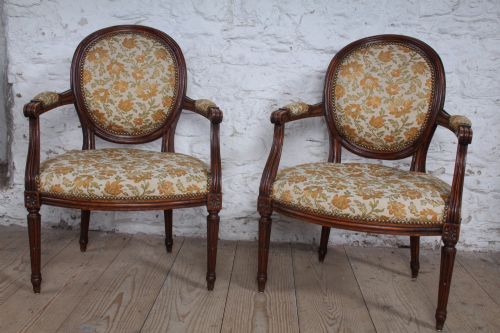

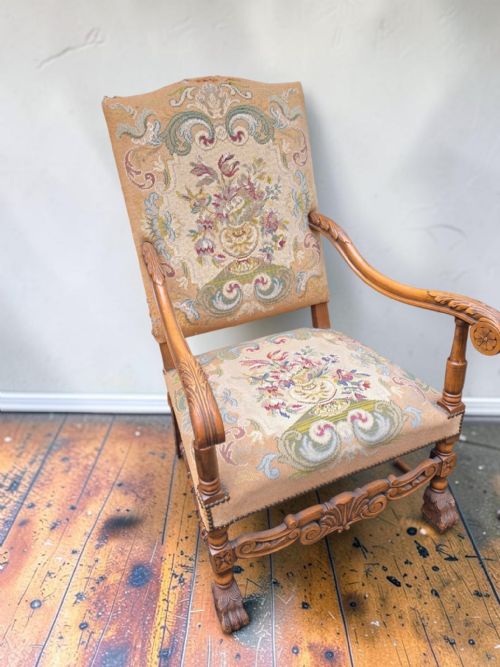
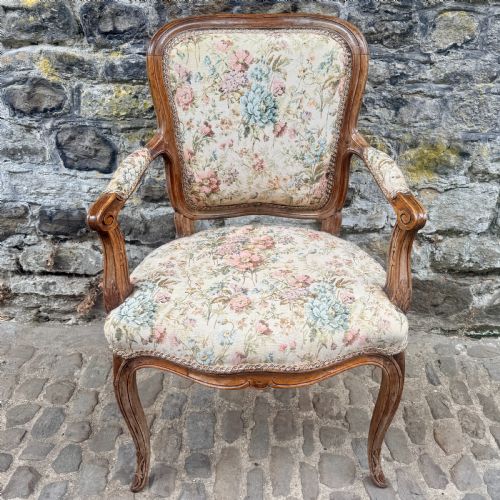
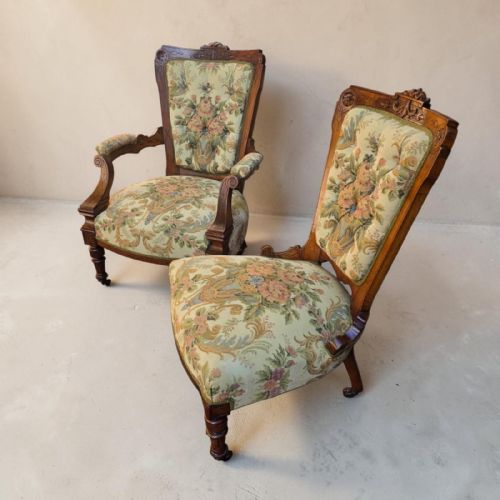
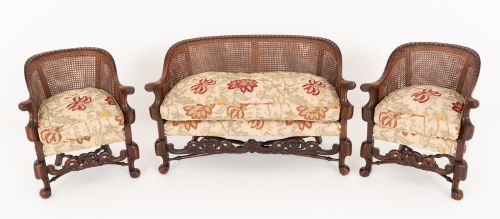
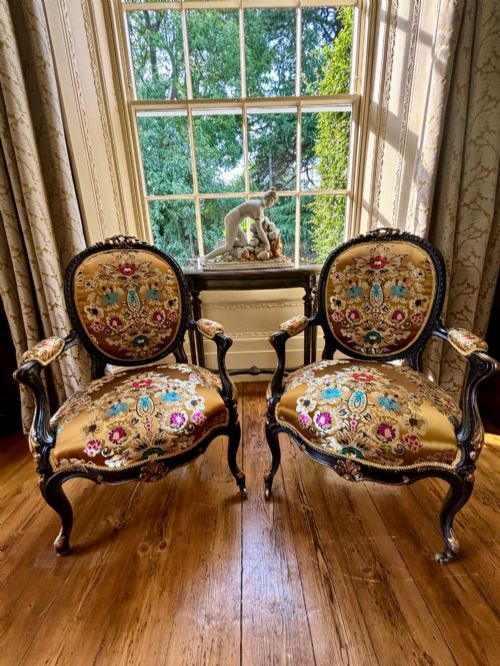
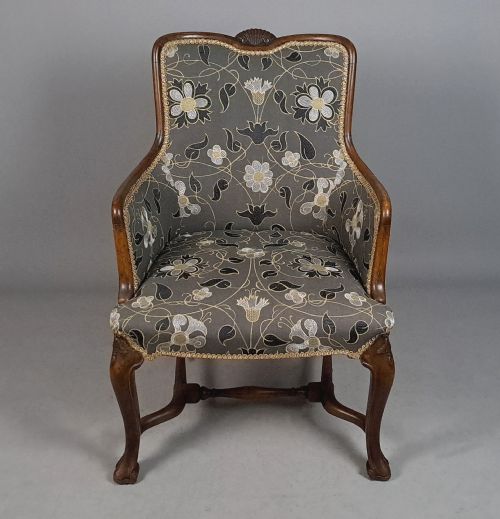
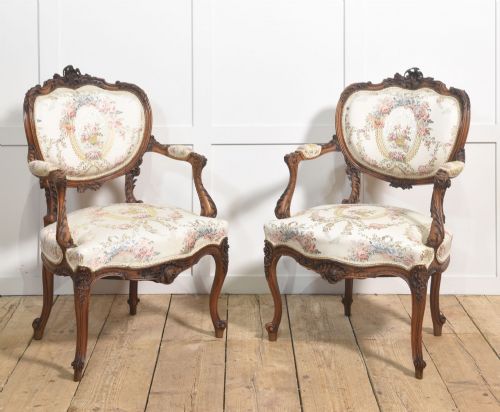

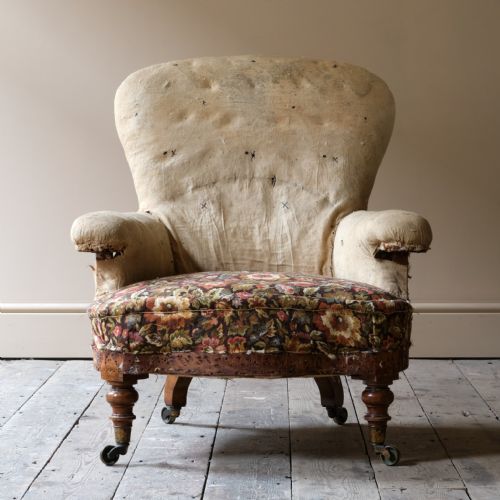


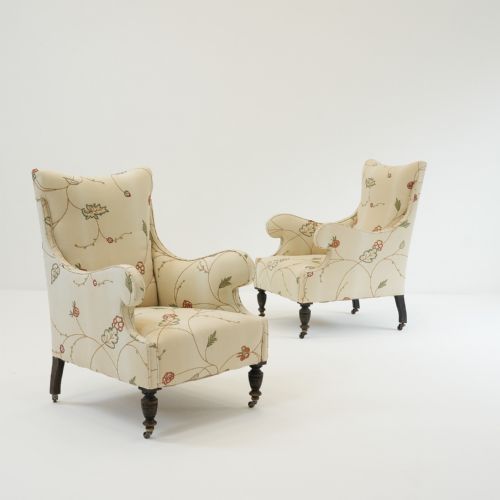


Walnut Floral Armchair
These walnut floral armchair selections bring together centuries of rich upholstery and warm timber frames, offering genuine character and sturdy comfort.
How They Were Made
Frames are constructed primarily from walnut, sometimes paired with hardwood and supported by brass elements or ceramic castors. Woodcarving appears across many examples, shaping cabriole legs, scroll arms, and decorative crests.
Upholstery techniques involve traditional textiles including tapestry fabric, needlepoint panels, crewelwork, and patterned fabric covers. Skilled needlework and button-backed padding secure the cushions and panels to the wooden structures.
What Varies in Quality
The standard of carving and timber selection determines the structural distinction of each chair. Crisp hand-carving on walnut frames indicates superior craftsmanship compared to softer or shallower detailing.
The integrity and preservation of the original tapestry or needlework upholstery heavily influence the overall standard. Intricate needlepoint panels and well-preserved fabric covers maintain greater integrity than heavily worn or later replacement textiles.
Walnut Floral Armchair Retail Price Guide 2026
Typical asking prices for walnut floral armchair among the pieces listed under this phrase on Sellingantiques today, from the lower quarter to the upper quarter. They describe what is for sale here now, not the wider market.
Listings span from the 17th century to the Edwardian period, incorporating Victorian, Queen Anne, and French provincial styles.
Howard and Sons
The Walnut Floral Armchair Glossary
- Bergere
- An enclosed upholstered armchair with a wooden frame, often featuring cane panels or upholstered sides. This form appears frequently in French provincial seating.
- Fauteuil
- An open-armed upholstered armchair with exposed wooden armrests and framework. These originate largely from French design traditions.
- Cabriole leg
- A furniture leg that curves out and then bends inward, typically ending in a pad, scroll, or claw foot. This shape defines many Queen Anne style chairs.
- Marquetry
- Decorative inlay work using various woods or materials to create pictorial patterns on furniture surfaces. Dutch pieces often employ this technique on walnut.
- Needlepoint
- A type of canvas work embroidery used for upholstery and decorative wall hangings. Needlepoint panels frequently cover the seats and backs of period armchairs.
Walnut Floral Armchair: Frequently Asked Questions
How do I identify a Victorian walnut armchair?
Victorian walnut armchairs typically display dark wood frames, often with carved details, button-backed upholstery, or spoon-backed seating forms. Many date from the mid to late 19th century.
They often appear as nursing chairs, salon chairs, or open armchairs with upholstered textile panels.
What is a Queen Anne style armchair?
Queen Anne style armchairs feature characteristic cabriole legs and curved wooden frames, often executed in walnut. They frequently appear with wingback designs or decorative splat backs.
Revival versions from the early 20th century emulate these earlier 18th-century proportions and silhouettes.
Where were French provincial armchairs used?
French provincial armchairs served as comfortable seating within regional French homes, featuring open wooden frames and upholstered panels. Styles like Louis XV and Louis XVI influence these forms.
They utilise walnut frames alongside needlepoint tapestry or fabric covers.
How should I care for antique upholstery?
Protect antique textile upholstery from direct sunlight to prevent fading of the tapestry, needlepoint, or fabric covers. Gentle vacuuming with a soft brush attachment helps remove dust.
Avoid harsh cleaning chemicals on both the walnut frame and the historic fabric.