

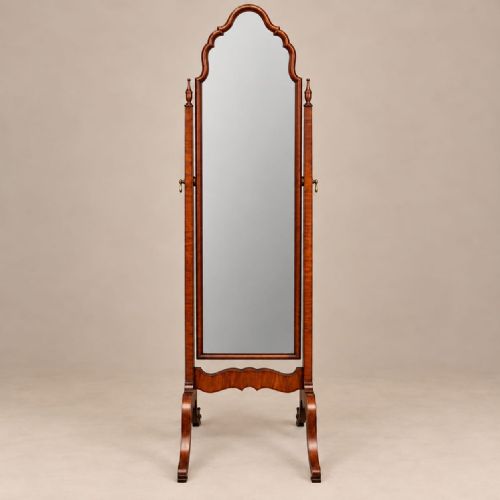
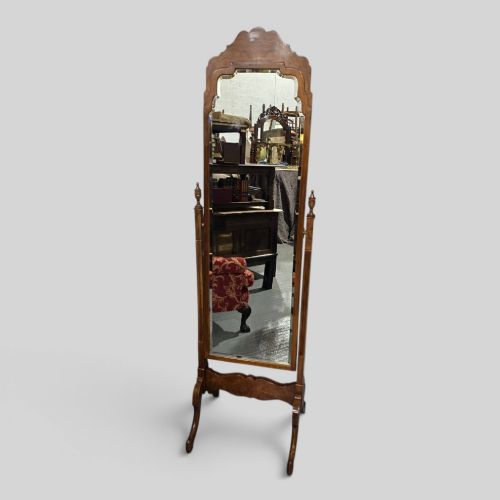
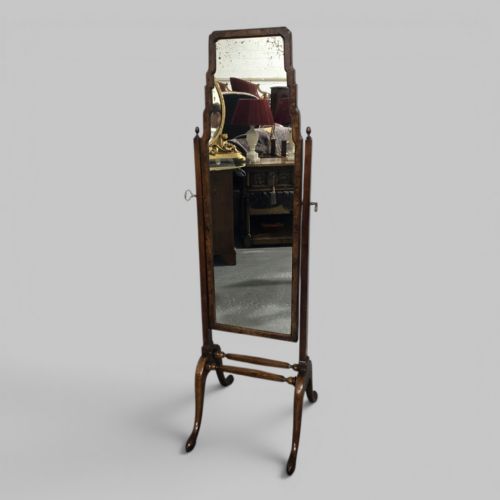
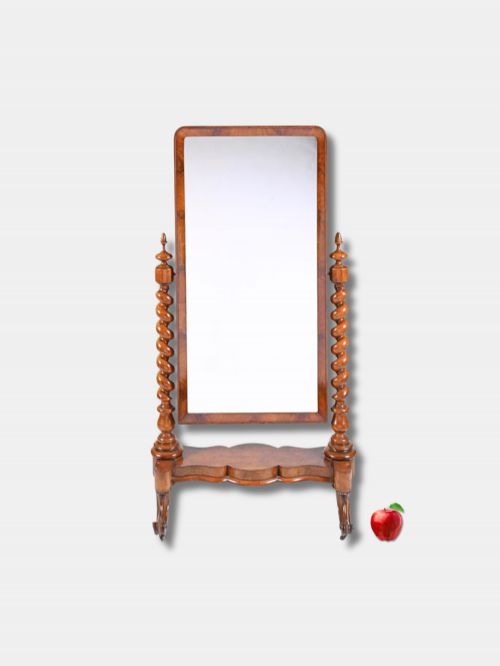


Walnut Floor Mirror
These walnut floor mirror pieces bring height and rich timber grain to a room, offering the full-length reflection that every dressing space requires.
Walnut Floor Mirror
A walnut floor mirror stands tall to provide a full-length reflection, taking the form of a cheval mirror or a tall floor-standing dressing mirror. These pieces emerge in styles ranging from Queen Anne and Victorian to Art Deco and Regency.
The versions most commonly met on this page date from the nineteenth and early twentieth centuries, particularly the 1920s. They appear in burr walnut, figured walnut, and standard walnut timber.
Makers designed these mirrors to anchor a bedroom or dressing room, combining functional glass with decorative frames supported on stands, pivots, or barley twist columns.
How they were made
Craftsmen built these frames using solid walnut and applied veneers of burr walnut or figured walnut to create rich surface patterns. Timber framing supports the heavy glass panels securely within the structure.
Additional materials such as brass, gilt bronze, and glass form the hinges, pivots, and decorative mounts. Barley twist supports and carved details are shaped directly into the wood.
Mirrors utilise traditional silvered glass plates set into standing wooden frames, often featuring adjustable pivots that tilt the glass to various angles.
Walnut Floor Mirror Retail Price Guide 2026
Typical asking prices for walnut floor mirror among the pieces listed under this phrase on Sellingantiques today, from the lower quarter to the upper quarter. They describe what is for sale here now, not the wider market.
One historical piece on record originated directly from a gents outfitters shop.
What varies in quality
The depth and figuring of the walnut veneer dictate much of the visual appeal, with burr walnut and exhibition quality pieces showing superior grain selection. Elaborate carving and ornate design elevate the status of the frame.
Construction methods determine the stability of the tall structure, where solid joints and substantial timber prevent wobble on the floor supports. High-grade brass fittings and smooth-acting pivot mechanisms demonstrate superior workmanship.
The Walnut Floor Mirror Glossary
- Cheval mirror
- A freestanding full-length mirror suspended on a frame with side pivots that allow it to swing. This design lets the user tilt the glass to adjust the angle of reflection.
- Burr walnut
- A prized timber harvested from the wart-like growths on walnut trees, yielding complex and swirling grain patterns. Cabinet makers used veneers of this wood to cover prominent surfaces.
- Barley twist
- A decorative turning style resembling the spiral twist of a barley stalk. This technique appeared on the upright supports of Victorian mirrors.
- Pier mirror
- A tall mirror designed to hang on the wall or stand between windows, often reflecting light into darker spaces of a room.
Walnut Floor Mirror: Frequently Asked Questions
What is a cheval mirror?
A cheval mirror is a freestanding full-length glass panel suspended on vertical posts with pivots. This allows the frame to tilt forward or backward.
Such designs became popular in dressing rooms and bedrooms for viewing an entire outfit at once.
How do I date a walnut mirror?
Dating relies on observing the prevailing style, construction techniques, and materials used in the frame. Queen Anne revival pieces differ noticeably in carved detail from Art Deco examples.
Examining the type of wood veneer and the hardware helps narrow down the manufacturing period.
Where should I place a floor mirror?
Floor mirrors suit bedrooms, dressing areas, and hallways where full-length reflections are practical. Placing them opposite windows also helps bounce natural light around the room.
Ensure the floor surface is level to keep the standing frame stable on its base.