






Walnut Etagere Whatnot
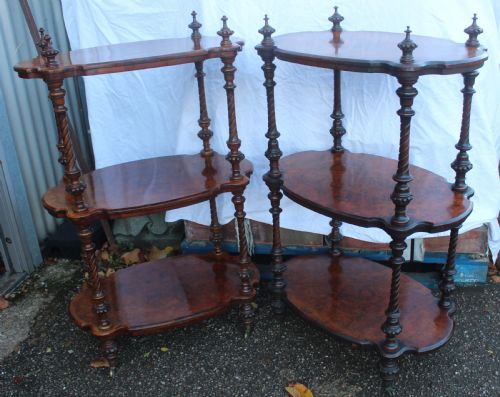
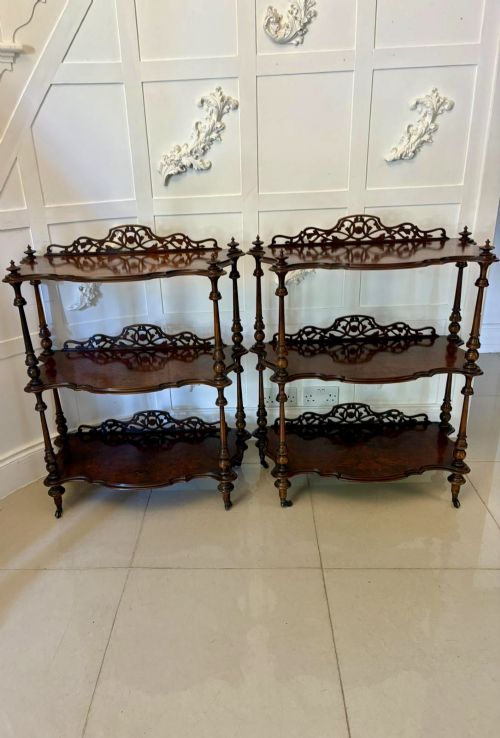
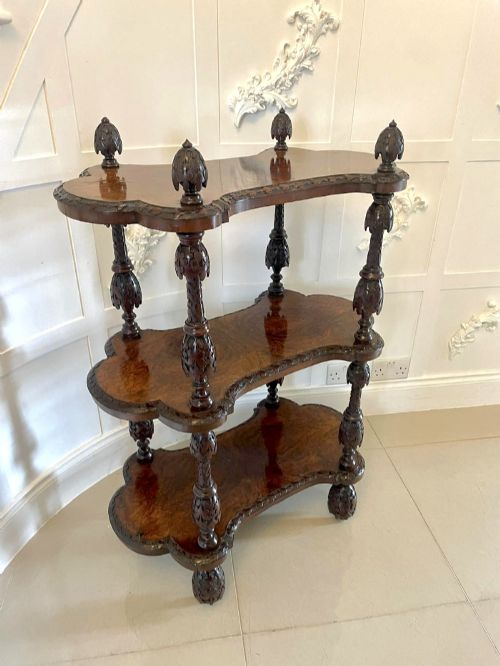
A walnut etagere whatnot brings tiered display space to a room, uniting open shelving with rich figured timber.
Walnut Etagere Whatnot
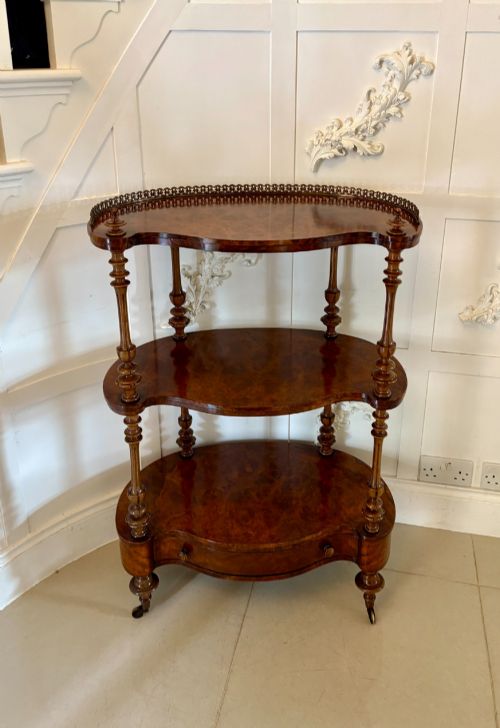
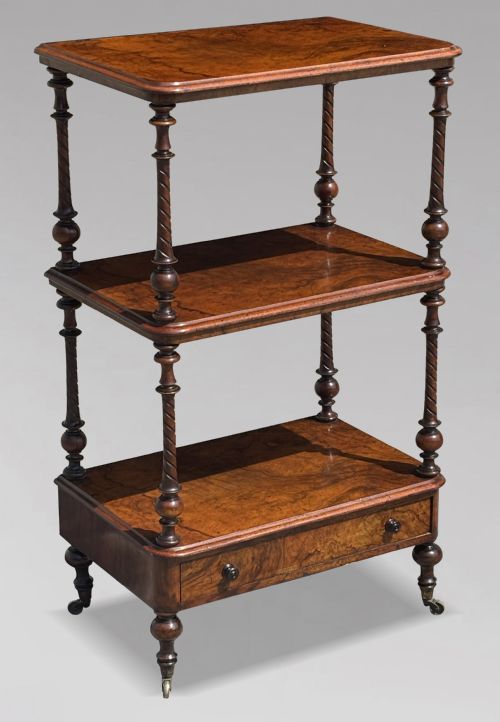
A walnut etagere whatnot stands as an open multi-tiered shelving unit designed for displaying decorative objects, books and small domestic items. When searching for a walnut etagere whatnot, buyers encounter pieces spanning the Victorian and Edwardian eras, alongside Regency and Louis XV style examples.
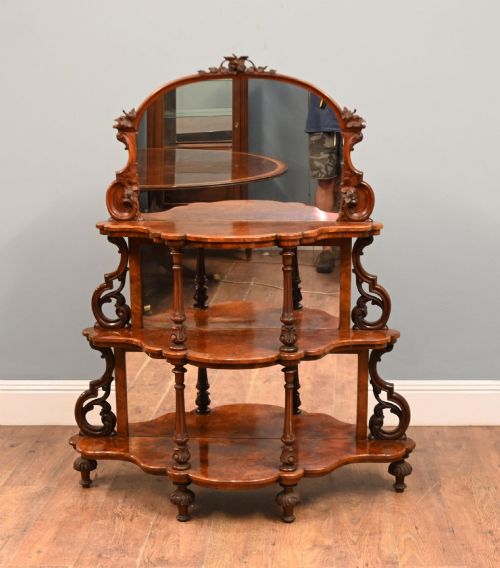
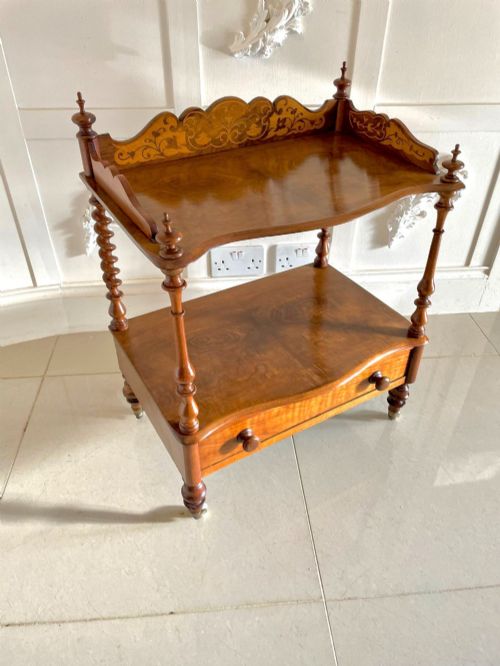
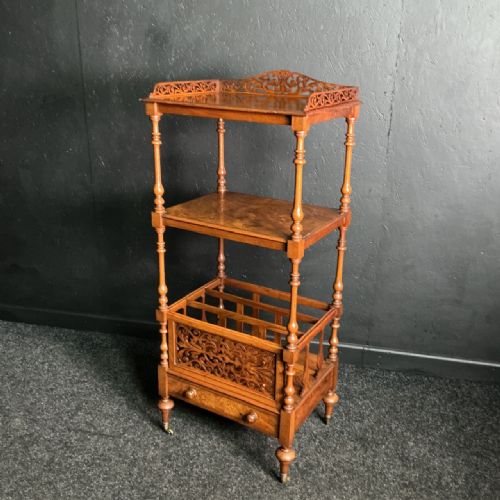
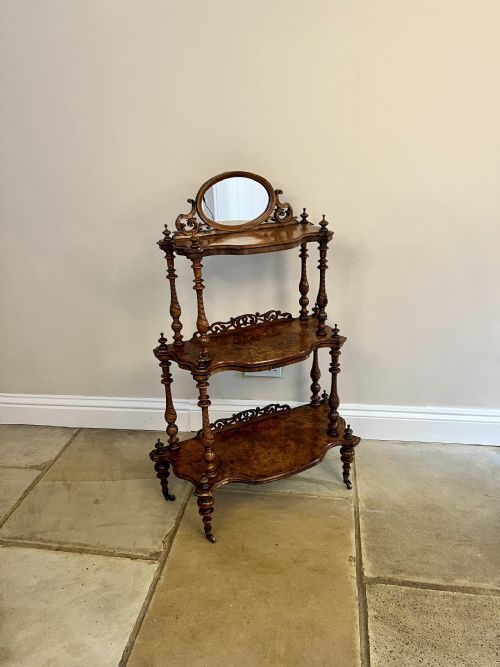
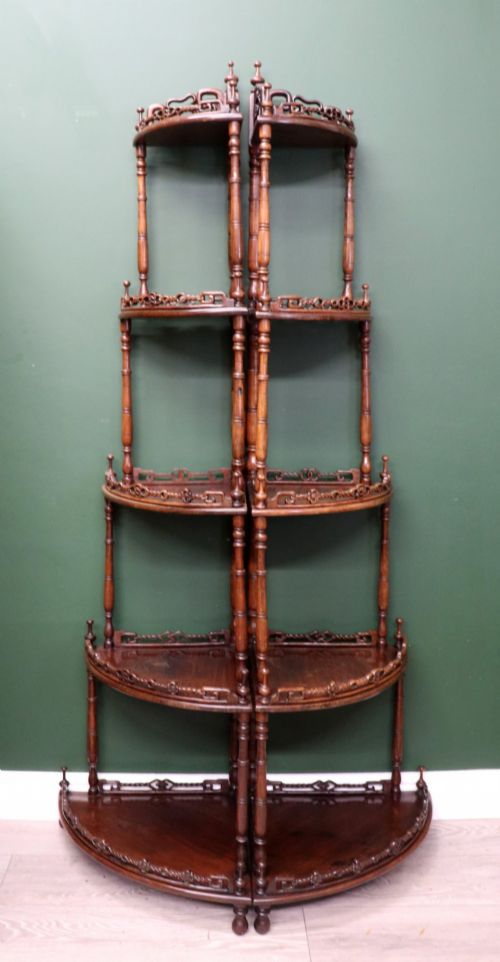
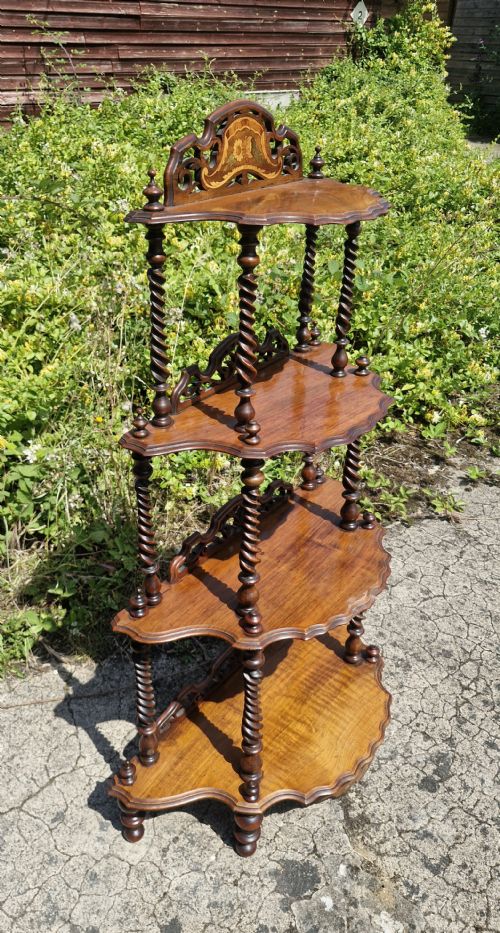
The forms on this page range from freestanding three-tier and four-tier shelving units to serpentine shapes, demi-lune display consoles and corner whatnots. Many examples incorporate mirrors, pierced fretwork, or lower cupboards configured as music cabinets and jewellery cabinets.
Originating predominantly from nineteenth-century British workshops and French makers, these pieces serve practical display functions in reception rooms and drawing rooms. Buyers find variations from diminutive two-tier etageres up to towering six-tier display stands supported by hollow barley twist columns.
How they were made
Cabinet makers utilised solid walnut and burr walnut veneers applied to secondary timbers, selecting figured grain patterns for visual impact on prominent tiers. Marquetry inlay appears across many surfaces, introducing floral or geometric motifs in contrasting woods.
Structural embellishments rely on brass, gilt metal and ormolu mounts, which frame shelves or edge serpentine table sections. Glass panels integrate into mirrored backs, while turned columns, fretwork galleries and barley twist supports divide the tiers.
Walnut Etagere Whatnot Retail Price Guide 2026
Typical asking prices for walnut etagere whatnot among the pieces listed under this phrase on Sellingantiques today, from the lower quarter to the upper quarter. They describe what is for sale here now, not the wider market.
Listings feature walnut, burr walnut, mahogany, glass, brass, ormolu, and porcelain across Victorian, Edwardian, and Regency periods.
What varies in quality
The caliber of a piece depends on the choice of burr walnut veneer and the precision of the marquetry inlay across the tiers. Superior examples display crisp fretwork carving, well-matched timber grains, and substantial mounts in ormolu or brass rather than plain plated metal.
Construction methods separate standard production from exhibition pieces, visible in the stability of multi-tiered uprights and the seamless integration of mirrored backs or glazed doors. Finer variations exhibit harmonious proportions, particularly in serpentine and demi-lune formats where curved joinery demands exact execution.
Gillows
The Walnut Etagere Whatnot Glossary
- Whatnot
- A piece of furniture consisting of several open shelves for small objects, originating in the late eighteenth century. These units developed numerous tiers for holding books, ornaments and curiosities.
- Etagere
- A piece of furniture with a set of open shelves for displaying small articles. This French term frequently overlaps with the English whatnot format.
- Burr walnut
- Timber taken from a walnut tree growth where the grain has burl formation, creating swirling patterns. Cabinet makers prized this wood for decorative veneering on cabinet doors and tabletops.
- Marquetry
- Decorative inlay work where pieces of veneer are fitted into a ground material to form pictures or patterns. Craftsmen utilised various tinted woods to achieve floral and scroll designs.
- Ormolu
- Gilded bronze applications mounted onto furniture surfaces for decorative trim. This technique accentuates the corners, borders and feet of mid-nineteenth-century luxury pieces.
Walnut Etagere Whatnot: Frequently Asked Questions
What is the difference between an etagere and a whatnot?
An etagere originated in France primarily as a decorative open-shelved display stand for ornaments. A whatnot developed in Britain as a multi-tiered utility piece for books, silver and general household items.
Over the nineteenth century, cabinet makers blended the terms as French styles influenced British design. Today the titles describe similar open shelving furniture.
How were these tier units used historically?
Drawing rooms and parlours utilised these shelves to display collections of ceramics, small sculptures and bound volumes. They kept decorative objects visible and accessible during social gatherings.
Certain variations included enclosed lower sections serving as music cabinets or storage cupboards for valuables.
Where should I place a corner whatnot?
A corner whatnot fits directly into empty room angles, maximising floor space in smaller reception rooms or bedrooms. Their wedge-shaped shelves provide stable display areas without obstructing walkways.
Pairing a corner stand with matching wall mirrors enhances natural light within the room.
How do I care for antique walnut furniture?
Maintain walnut surfaces by dusting regularly with a soft, dry cloth and avoiding direct sunlight to prevent veneer fading. Natural beeswax applied sparingly preserves the timber moisture and grain depth.
Keep pieces away from direct heat sources to protect the inlaid marquetry and glue joints.