



Walnut Etagere Shelving
Walnut etagere shelving brings tiered display and open storage into rooms, constructed primarily during the Victorian era.
Walnut Etagere Shelving
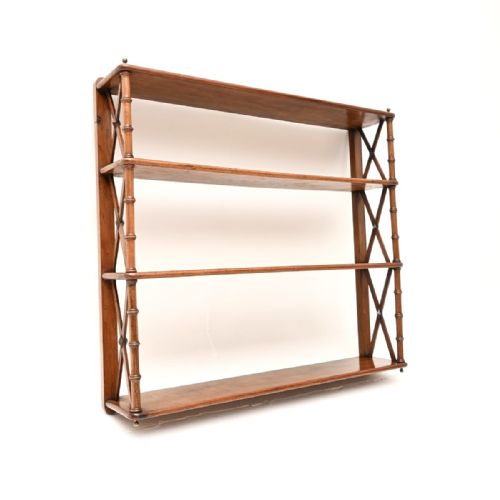
When searching for walnut etagere shelving, buyers encounter multi-tiered display stands, corner units, wall-mounted shelves, and whatnots originating predominantly from the Victorian period alongside nineteenth-century French workshops. These pieces serve to exhibit ornaments, books, and small collections across several open platforms.
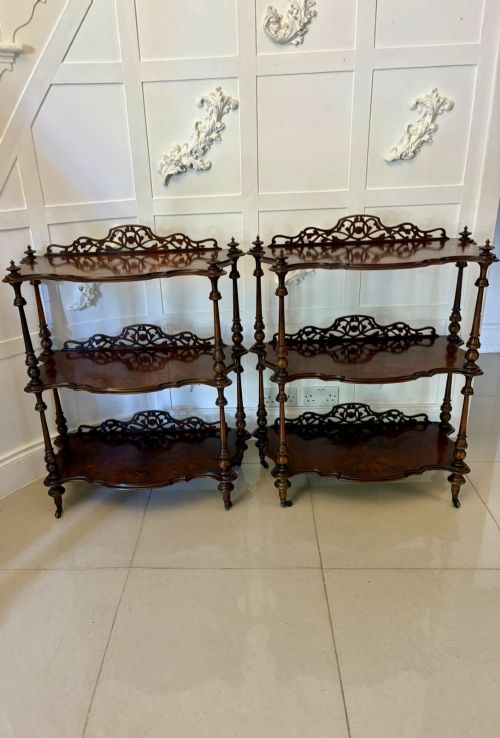
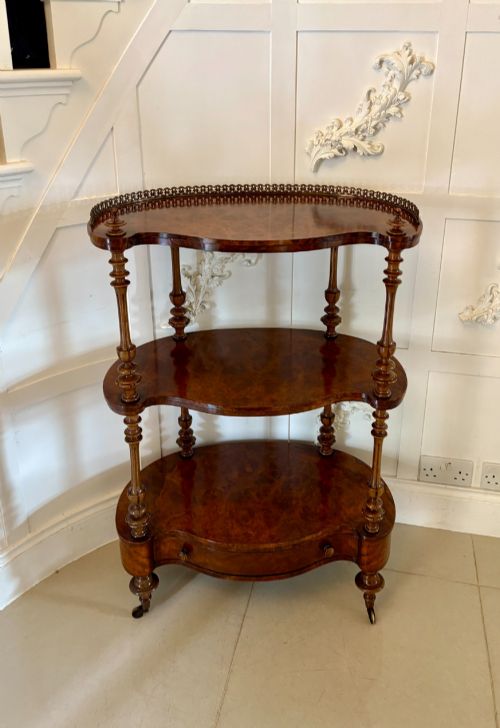
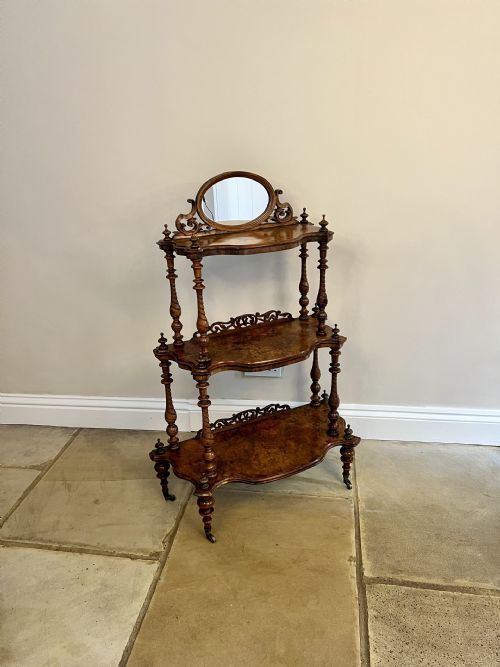
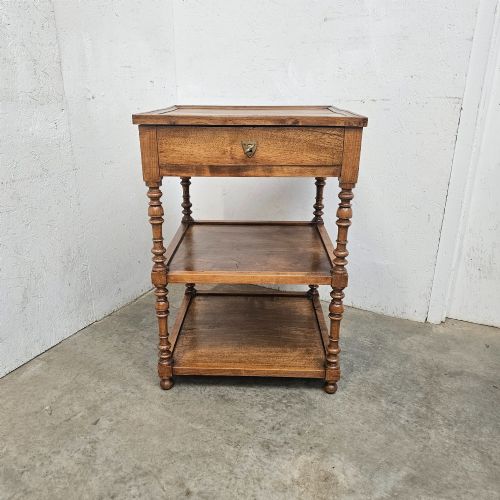
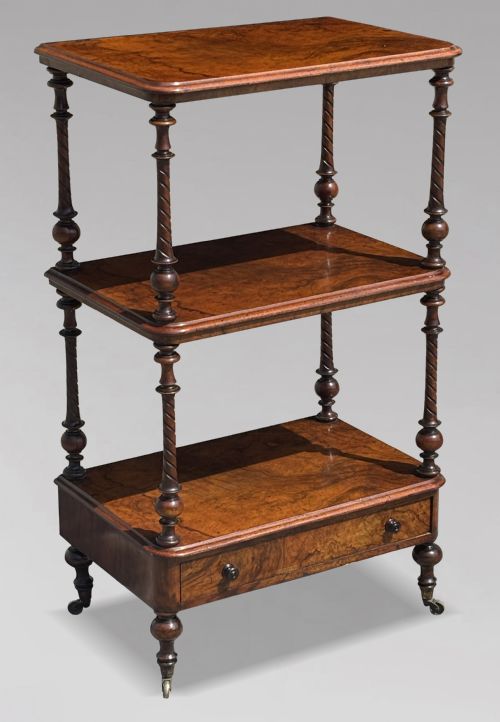
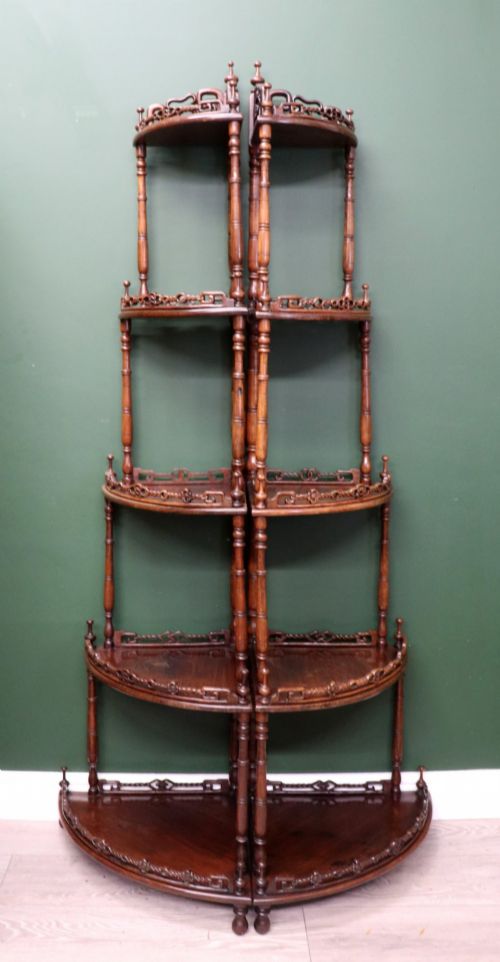
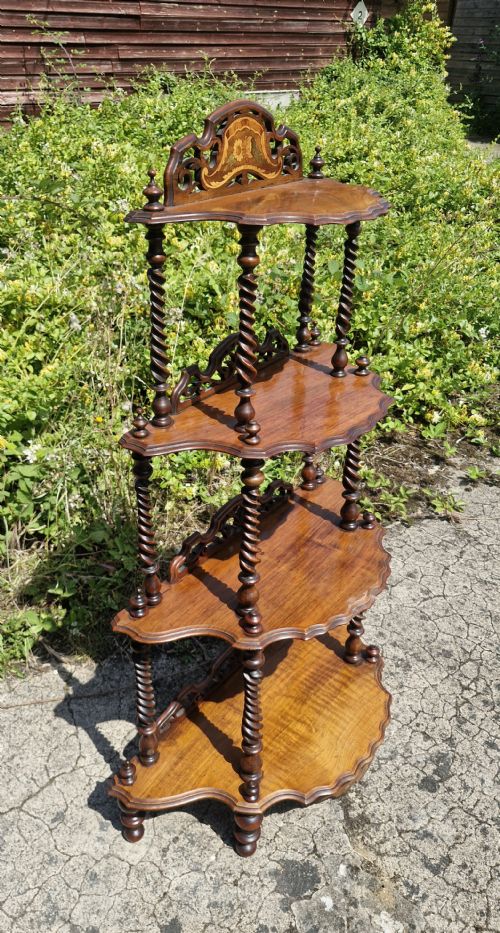
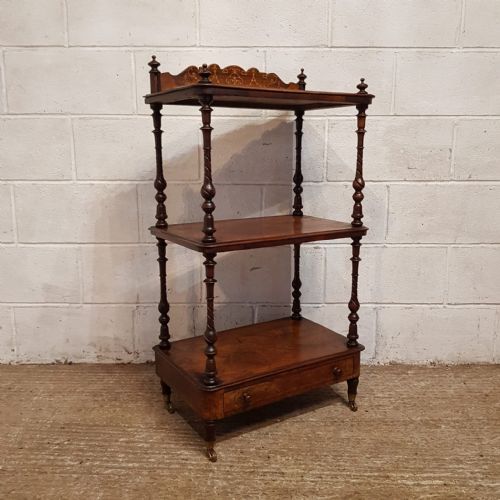
The version most commonly met on this page is the Victorian walnut whatnot or three-tier etagere, often featuring turned or barley-twist supports and occasional marquetry inlay. Alongside these upright standing units, the selection includes demilune console tables, corner cabinets, and hanging wall shelves.
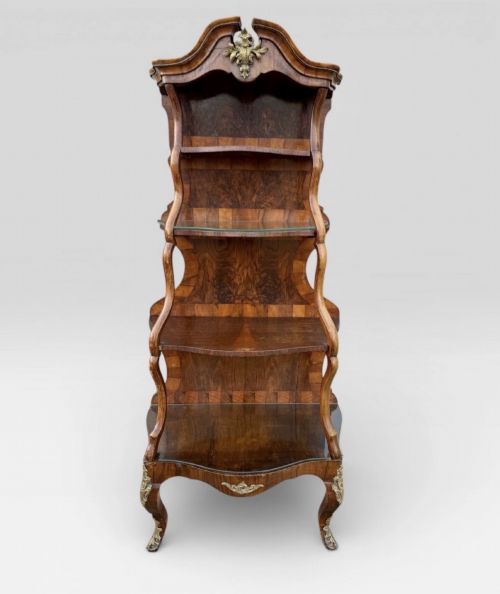
Origins span English country houses and continental French provincial or chateau settings, utilising rich timber grains to create vertical interest in domestic interiors. Pieces range from diminutive two-tier designs to tall six-tier display stands fitted with glass or brass mounts.
How walnut etagere shelving was made
Cabinetmakers utilised solid walnut and decorative burr walnut veneers applied to secondary timbers, frequently enhancing surfaces with marquetry and wood inlay. Metal elements such as brass mounts, gilt metal, and ormolu provide structural detailing and decorative contrast against the dark timber.
Construction techniques involve tiered platforms supported by turned wooden columns, hollow barley-twist uprights, or brass fittings, creating sturdy frameworks for display. Finishing processes included polishing the timber to highlight the natural figuration and grain patterns of the walnut.
Some tall Victorian whatnots feature hollow barley twists that give the impression of twisting wooden ribbons holding up the china.
What varies in quality
The distinction between standard and superior pieces rests on the choice of timber figure, particularly the richness and complexity of burr walnut veneer. Finer examples display meticulous marquetry inlay, precision in the turning of vertical supports, and harmonious proportions across multiple tiers.
Integration of high-grade mounts, such as cast ormolu and polished brass details, elevates a piece from a utilitarian storage item to a refined display furniture. Structural integrity of the joints and the crispness of carved or shaped serpentine edges further separate standard production from exceptional work.
Gillows
The Walnut Etagere Shelving Glossary
- Etagere
- A piece of furniture consisting of a set of open shelves for displaying small objects or ornaments. These tiers allow items to be viewed from multiple angles.
- Whatnot
- A nineteenth-century multi-tiered shelving unit designed for holding books, ornaments, or bric-a-brac. They appear in both freestanding and corner configurations.
- Burr walnut
- Timber taken from a tree growth where the grain has grown in a deformed, swirling pattern. This produces highly decorative and mottled figuring prized by cabinetmakers.
- Marquetry inlay
- Decorative veneer work created by fitting together small pieces of different woods into patterns. This technique adorns the shelves and friezes of finer display units.
- Serpentine
- A furniture edge or front curving inward centrally and outward at the ends, forming an undulating line. It adds fluid movement to cabinet shapes.
- Demilune
- A half-moon or semicircular shape utilised for console tables and corner-fitting display units. This profile allows pieces to sit flush against walls.
Walnut Etagere Shelving: Frequently Asked Questions
What is an etagere?
An etagere is a piece of furniture made with multiple open tiers designed for displaying ornaments, books, and collections.
These pieces provide vertical storage without closing off the room, allowing light and visibility to pass through the shelves.
How were corner whatnots used?
Corner whatnots were placed in unused room corners to hold decorative items, ceramics, and small books.
They maximise floor space while offering the same tiered display benefits as freestanding upright models.
How do I style walnut shelving?
Walnut shelving suits traditional and eclectic interiors, providing dark wood tones that ground lighter decorative objects.
Pair them with ceramics, glassware, and small books across the tiers to balance visual weight.
How do I date a whatnot?
Dating relies on observing timber selection, construction methods, and stylistic cues such as turning patterns or inlay.
Victorian pieces frequently display burr walnut veneers, brass mounts, and turned barley-twist upright supports.