



Walnut Dining Armchair
A walnut dining armchair brings rich timber grain and architectural presence to the table, offering both robust support and historical character.
Walnut Dining Armchair
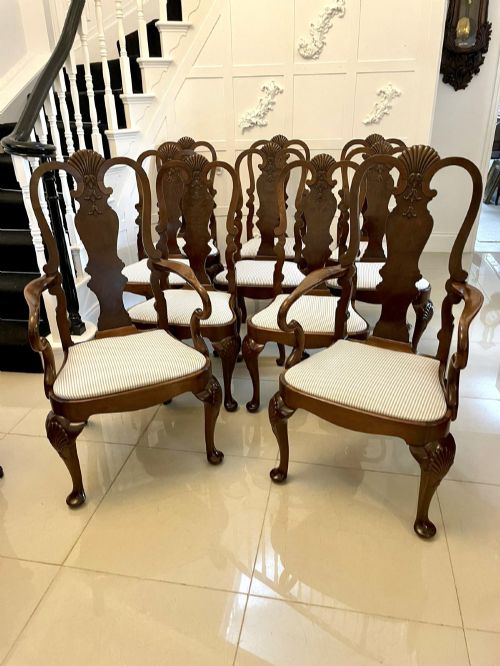
A walnut dining armchair is a substantial seat designed for the head of a table or as part of a larger dining set, combining practical comfort with decorative timber work. When searching for a walnut dining armchair, buyers encounter pieces spanning from the seventeenth century through the Victorian era and into the early twentieth century. These chairs frequently emerge as part of larger dining sets, parlour suites, or as individual carver chairs.
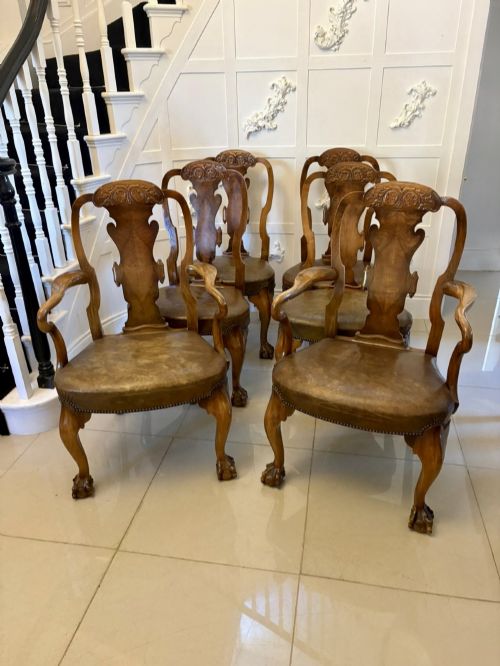
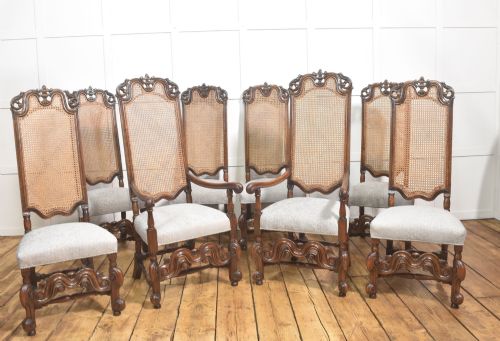
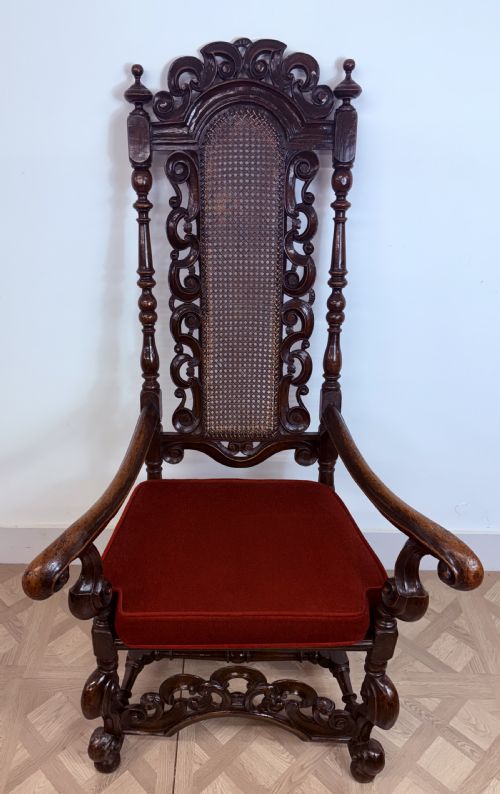
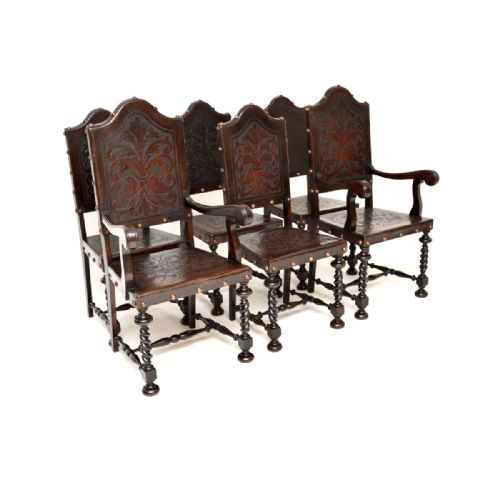
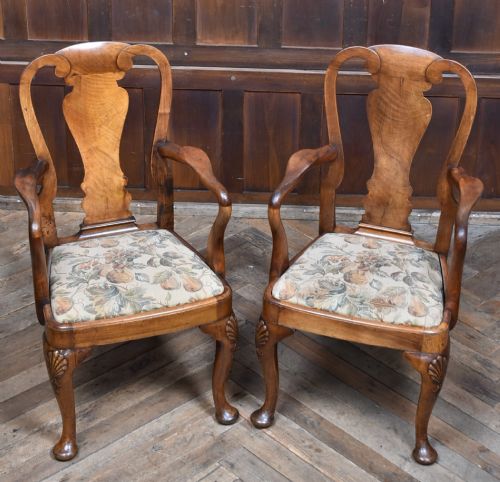
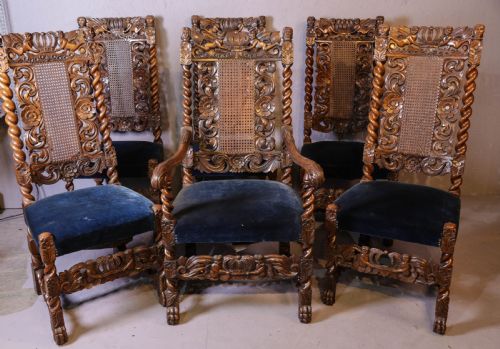
The selection ranges from heavily carved Carolean and Portuguese Baroque revivals to restrained Queen Anne style crook armchairs and geometric Art Deco designs. Many examples incorporate high backs, scroll arms, and upholstered pads, while others utilise cane panels or embossed leather. Whether handling a seventeenth century survivor or an Edwardian revival, each piece reflects the prevailing taste of its period for rich dark timber.
Materials and Construction
Makers utilised solid walnut and walnut veneers for frames, exploiting the timber's grain and deep warm tone for both structural integrity and decorative impact. Carving was executed directly into the wood, ranging from deep relief work on high backrests and stretchers to subtle mouldings on cabriole legs.
Support and upholstery relied on traditional methods, incorporating drop-in seats, cane work, and pinned leather secured with brass tacks. Textile coverings span original embossed leather, velvet, and modern replacement fabrics depending on the era of manufacture and subsequent restoration.
Walnut Dining Armchair Retail Price Guide 2026
Typical asking prices for walnut dining armchair among the pieces listed under this phrase on Sellingantiques today, from the lower quarter to the upper quarter. They describe what is for sale here now, not the wider market.
Listings for this phrase span the seventeenth century to the 1930s, featuring walnut, leather, cane, and brass elements.
Judging Quality and Craftsmanship
Quality rests in the crispness of the timber carving and the architectural proportions of the frame, where superior examples display fluid lines and deeply articulated ornament rather than shallow mechanical cutting. The selection of the walnut timber itself dictates value, with figured grain and substantial stock setting finer pieces apart from plain or heavily repaired alternatives.
Originality of components, including stretchers, arm attachments, and seating materials, defines the standing of a piece within its period. Chairs retaining their early leather panels, cane work, or period joinery command greater appreciation than those altered by later interventions.
Shoolbred·Spillman & Co
The Walnut Dining Armchair Glossary
- Carver chair
- An armchair designed to match a set of dining chairs, traditionally placed at the ends of the table.
- Cabriole leg
- A furniture leg that curves out and then in, resembling an animal's leg, commonly seen on Queen Anne and Georgian style chairs.
- Caning
- Woven rattan or split cane used to form breathable panels for seat backs and pads.
- Marquetry
- Decorative veneer patterns formed by fitting together contrasting pieces of wood or other materials.
- Stretcher
- A horizontal wooden rail connecting the legs of a chair to provide structural rigidity.
Walnut Dining Armchair: Frequently Asked Questions
How do I spot a true seventeenth century walnut armchair?
Examine the construction methods, tool marks, and timber density, as early pieces display pegged joints and hand-cut joinery rather than modern fixings.
Look for signs of genuine age in the walnut patina, wear patterns on the arms, and the specific style of carving associated with seventeenth century workshops.
Can I use these armchairs around a modern dining table?
These armchairs function effectively at modern dining tables, provided you check the seat height and clearance for the armrests beneath the table surface.
Ensure the structural frame and upholstery remain sturdy enough for regular daily use rather than purely decorative placement.
What is the difference between Queen Anne style and George II chairs?
Queen Anne style chairs typically feature smooth fluid lines, spooned backs, and pad feet, emphasising simple curves over heavy ornament.
George II designs often introduce more robust proportions, carved shell motifs on the knees, and ball and claw feet.
How should I care for antique leather and walnut?
Maintain walnut surfaces with appropriate traditional wax polish applied sparingly, avoiding modern silicone sprays that damage the finish.
Treat embossed or plain leather upholstery with specialist leather balms to prevent drying and cracking over time.