

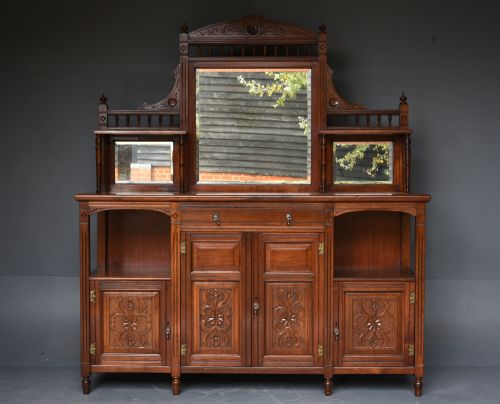
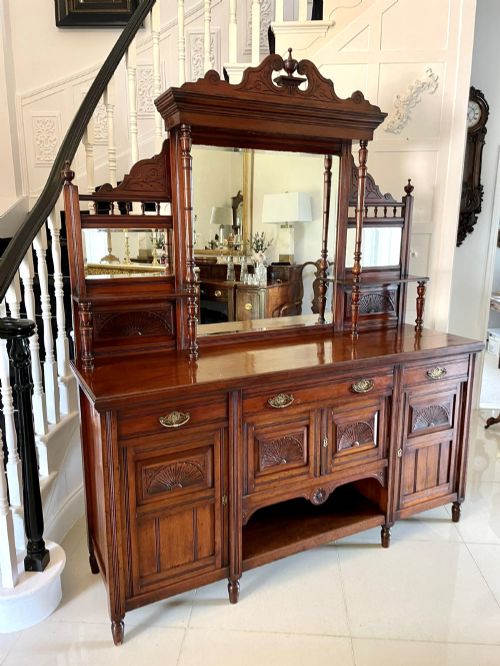

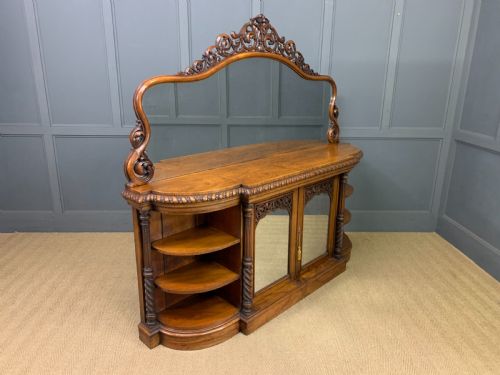
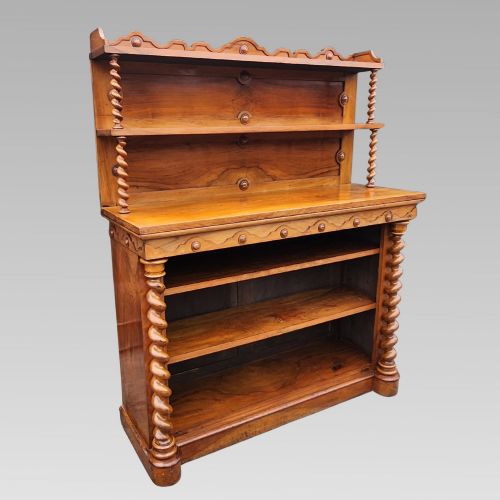


Walnut Chiffonier Sideboard
When you search for a walnut chiffonier sideboard, you encounter formal Victorian and Edwardian lower storage furniture built for display and service.
Walnut Chiffonier Sideboard
A walnut chiffonier sideboard combines the enclosed lower storage of a traditional sideboard with the display function of a chiffonier or credenza. These forms emerge strongly during the Victorian period, continuing into the Edwardian era with varied ornamentation.
How they were made
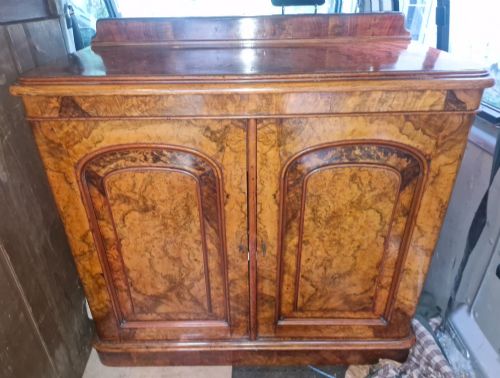
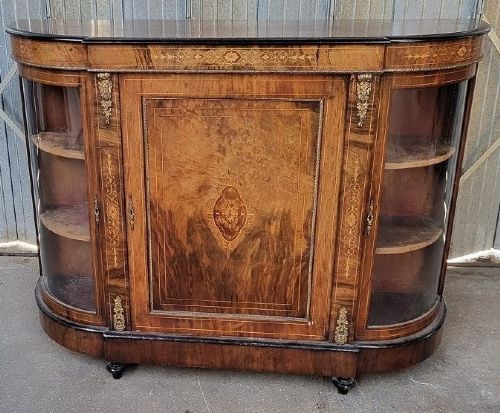
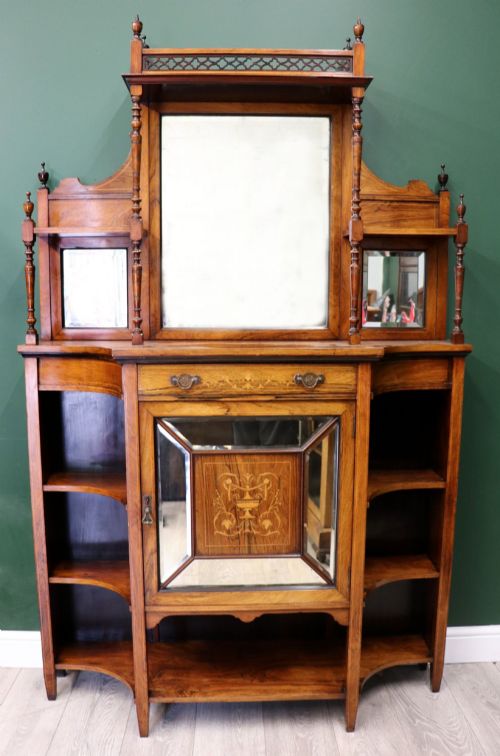
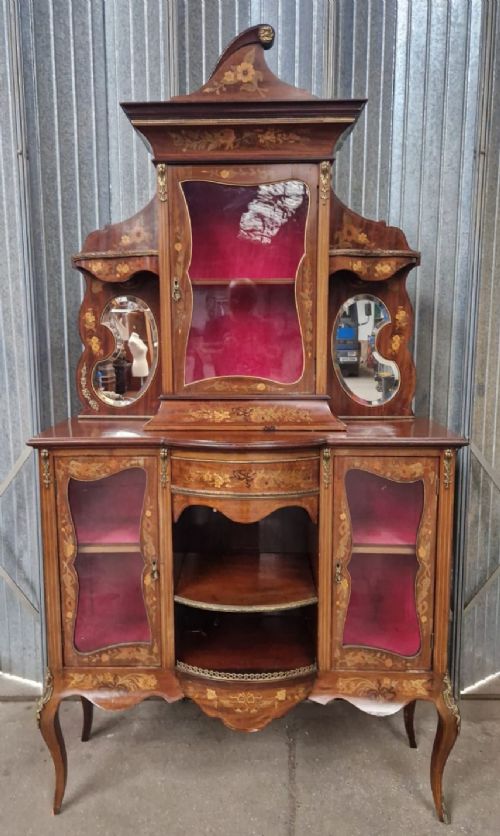
Carpenters utilised solid walnut and applied figured burr walnut veneers to primary surfaces to create dramatic grain patterns. Marquetry inlay, brass mounts, and carved wooden details complete the structural ornament.
Many examples incorporate glass panels for display doors, mirror glass in panelled backs, and marble tops intended to provide a durable and decorative upper surface. Secondary timbers support the internal carcass construction.
Walnut Chiffonier Sideboard Retail Price Guide 2026
Typical asking prices for walnut chiffonier sideboard among the pieces listed under this phrase on Sellingantiques today, from the lower quarter to the upper quarter. They describe what is for sale here now, not the wider market.
Materials recorded across the inventory include burr walnut, marble, ormolu, brass, and mirror glass.
What varies in quality
The selection of veneer grain marks the difference between standard production and exhibition quality pieces, with burr walnut yielding intricate natural patterns. The refinement of hand-carving, marquetry precision, and the weight of brass fittings distinguish superior workshops.
Structural integrity depends on the thickness of the timber and the stability of the mirror frames and marble slabs. Pieces marked by specific makers or attributed to prominent cabinet works often demonstrate higher execution standards in joinery and finish.
Gillows·James Plunckett Art Furniture Makers
The Walnut Chiffonier Sideboard Glossary
- Burr walnut
- A figured wood veneer taken from the wart-like growths on walnut trees, prized for its swirling, mottled patterns. It creates a decorative surface texture on cabinet doors and tabletops.
- Credenza
- A low-standing cabinet or sideboard designed for dining rooms, frequently featuring glass doors or curved side compartments. It serves both display and storage purposes.
- Chiffonier
- A compact sideboard or low cabinet typically fitted with shelves or drawers beneath a raised surface. Victorian versions often incorporated mirror backs.
- Ormolu
- Gilt bronze ornamentation applied to furniture mounts and architectural details. It provides metallic contrast against dark wood surfaces.
- Marquetry
- The art of applying pieces of veneer to a structure to form decorative patterns and pictures. Craftsmen use contrasting woods to create floral or geometric motifs.
Walnut Chiffonier Sideboard: Frequently Asked Questions
How were these sideboards used?
They served in dining rooms and parlours for storing serving dishes, cutlery, and linens while displaying ornaments on top.
Glass-fronted variants allowed owners to exhibit porcelain and glassware securely.
How do I date a walnut chiffonier?
Dating relies on stylistic clues such as Victorian carved mirror backs, Aesthetic Movement linear details, or Edwardian proportions.
Construction methods and timber selection also indicate whether a piece originates from the mid-19th century or later.
Where should I place one at home?
They fit well in dining rooms, living spaces, or wide hallways where low-profile storage is required.
Their decorative wood grain and mirrored elements complement both traditional and mixed interior schemes.