

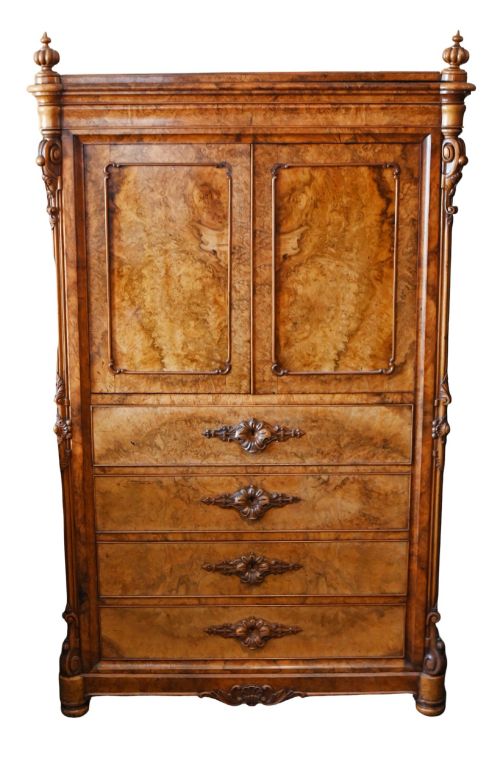


Walnut Bureau Abattant
A walnut bureau abattant is a refined drop-front writing cabinet crafted for private correspondence and storage.
Walnut Bureau Abattant
When you search for a walnut bureau abattant, you enter the world of vertical writing furniture designed with a hinged writing flap that conceals fitted interior compartments. These pieces combine the utility of a desk with the compact footprint of a tall cabinet.
The selections span distinct periods and regional aesthetics, ranging from eighteenth-century Dutch floral marquetry to nineteenth-century French and Italian interpretations. You encounter forms styled after the Louis Philippe, Louis XVI Revival, and Moorish tastes alongside robust Dutch Baroque designs.
Cabinetmakers constructed these writing desks to serve both decorative and practical functions in the home. The integration of a fall-front reveals pigeonholes and small drawers intended for letters, documents, and valuables.
How they were made
Craftsmen utilised walnut as the primary timber, often enhancing surfaces with intricate fruitwood inlay, parquetry, and geometric marquetry. Some variations incorporate contrasting bird-eye maple veneer or decorative bone details within the interior compartments.
Structural embellishments frequently include cast brass mounts, gilt bronze details, and polished marble tops resting above the fall-front. Interior writing surfaces are commonly lined with baize to provide a smooth plane for penmanship.
Walnut Bureau Abattant Retail Price Guide 2026
Typical asking prices for walnut bureau abattant among the pieces listed under this phrase on Sellingantiques today, from the lower quarter to the upper quarter. They describe what is for sale here now, not the wider market.
Listings feature walnut, fruitwood, and maple veneer alongside marble tops and brass mounts across nineteenth and eighteenth century examples.
What varies in quality
The sophistication of the marquetry and parquetry work dictates much of the visual hierarchy across these cabinets. Finer examples display meticulous botanical or geometric patterns cut from diverse fruitwoods, whereas simpler versions rely on the natural figuring of walnut grain.
The integration of secondary materials such as carved mounts, marble slabs, and interior secondary woods distinguishes standard production from more ambitious workshop output. Construction precision in the movement of the fall-front and the hidden drawers remains a primary indicator of joinery standards.
Adriano Brambilla
The Walnut Bureau Abattant Glossary
- Abattant
- A drop-front panel or fall-front door hinged at the bottom, which pulls down to create a horizontal writing surface. This feature defines the primary mechanical action of the cabinet.
- Marquetry
- Decorative veneer patterns formed by fitting together small pieces of wood, bone, and other materials into pictorial or geometric designs. Craftsmen apply these intricate compositions across the exterior facades.
- Parquetry
- Geometric mosaic woodwork arranged in repeating patterns such as cubes or chequers. It differs from marquetry by focusing on geometric repetition rather than pictorial scenes.
- Escritoire
- An antique writing desk or cabinet equipped with drawers and a writing flap. The term is often used interchangeably with secretaire and bureau abattant.
- Baize
- A coarse woolen material resembling felt used to line writing flaps and desk surfaces. It protects paper and provides a tactile writing medium.
Walnut Bureau Abattant: Frequently Asked Questions
What is a bureau abattant?
A bureau abattant is a tall writing cabinet featuring a vertical drop-front panel that conceals a fitted interior of small drawers and pigeonholes.
When closed, the piece presents as a compact chest or cabinet, preserving floor space while concealing the writing materials within.
How do I use a drop-front desk?
To use the desk, you unlock and lower the vertical fall-front panel until it rests horizontally on support brackets or the desk frame.
This action reveals the writing surface and internal compartments, allowing you to compose letters or store documents before closing the panel again.
How do I care for walnut veneer?
Walnut furniture requires protection from direct sunlight and stable indoor humidity to prevent the veneer from drying or lifting.
Dust the timber gently with a dry cloth and avoid harsh chemical polishes that can degrade nineteenth-century or eighteenth-century finishes.
How do I tell periods apart?
Periods are identified through structural silhouettes, decorative motifs, and characteristic regional ornamentation like Dutch floral marquetry or French gilt bronze mounts.
Eighteenth-century examples often exhibit elaborate floral inlay and baroque curves, while nineteenth-century pieces frequently revive classical Louis styles or incorporate Moorish geometric patterns.