





Walnut Breakfront Low Bookcase
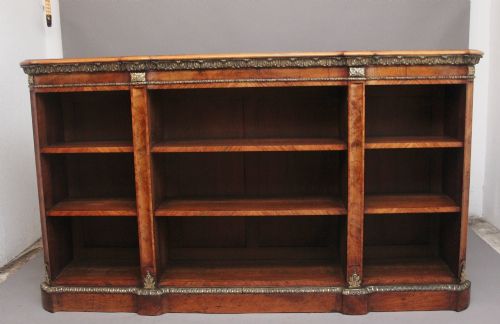
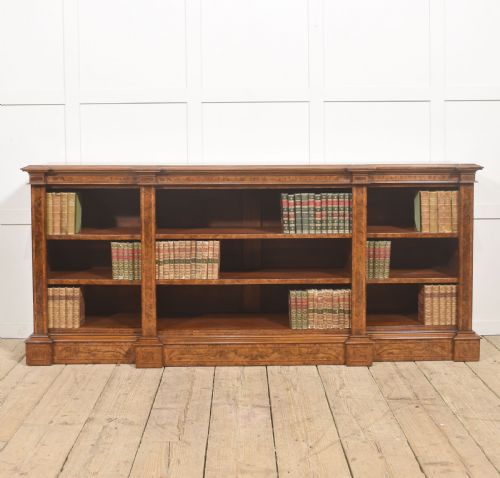
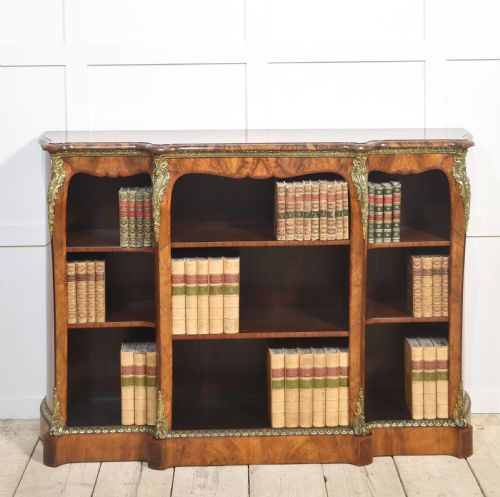
A walnut breakfront low bookcase is a substantial timber library cabinet designed with a projecting central section, offering both display space and refined period presence.
Walnut Breakfront Low Bookcase
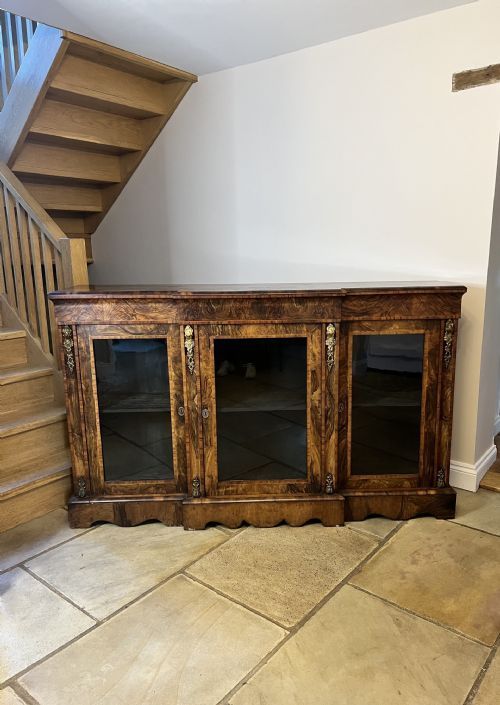
A walnut breakfront low bookcase is defined by its characteristic stepped forward central section, keeping volumes and cabinet storage at an accessible height. These pieces appear in forms ranging from open shelving configurations to enclosed glazed or panelled three-door cabinets.
The selections available span multiple periods, most notably the Victorian era alongside Regency, Edwardian, and Queen Anne revival pieces. Makers such as Johnstone and Jeanes, Maple and Co., and Gillows contributed to this tradition of fine cabinetry.
Most examples utilise rich timbers including burr walnut and standard walnut veneer, frequently ornamented with marquetry, brass, or gilt metal mounts. They function practically as low library cabinets or side cabinets while establishing a formal focal point in a room.
How they were made
Constructed primarily from timber carcases, these bookcases employ walnut and burr walnut veneers to achieve complex, highly figured grain patterns across the broad front surfaces. Marquetry inlay is frequently incorporated to add intricate decorative detail into the timber panels.
Metal ornamentation plays a key structural and decorative role, with brass, ormelu, and gilt metal mounts applied to frame doors, protect edges, and highlight the breakfront geometry. Glazed doors utilise timber framing to house glass panes safely within the cabinet facade.
Walnut Breakfront Low Bookcase Retail Price Guide 2026
Typical asking prices for walnut breakfront low bookcase among the pieces listed under this phrase on Sellingantiques today, from the lower quarter to the upper quarter. They describe what is for sale here now, not the wider market.
Listings feature pieces spanning the Regency period through the Victorian era and into the early 20th century.
What varies in quality
The standard of the timber veneer selection dictates much of the visual weight, with heavily figured burr walnut commanding a different presence than plain walnut surfaces. Finer pieces integrate precise marquetry work and substantial brass or ormolu mounts rather than simpler cast metal additions.
Attribution to notable cabinet makers such as Gillows, Maple and Co., or Johnstone and Jeanes elevates the standing of a piece through documented workshop provenance and superior internal construction. The complexity of the breakfront moulding and the precision of the door joinery further distinguish standard production from exceptional cabinet work.
Johnstone and Jeanes·Maple and Co.·Gillows
The Walnut Breakfront Low Bookcase Glossary
- Breakfront
- A cabinet facade where the central section projects forward from the flanking outer wings. This architectural arrangement creates depth and visual rhythm across large pieces of furniture.
- Burr walnut
- Timber taken from a growth wart on a walnut tree, yielding swirling, highly figured grain patterns. It is sliced into veneer and prized for decorative cabinet surfaces.
- Ormelu
- Gilded bronze ornamentation applied to furniture, popular in high-end 19th-century cabinet making. It provides bright metallic contrast against dark timber surfaces.
- Marquetry
- The art of applying small pieces of veneer to a structure to form decorative patterns or pictures. Craftsmen use different tinted woods to create contrasting pictorial designs.
- Dwarf bookcase
- A lower-height shelving unit designed to sit beneath dado height or window sills. These pieces keep books within arm reach without dominating wall space.
Walnut Breakfront Low Bookcase: Frequently Asked Questions
How do I style a low bookcase?
Low bookcases sit comfortably beneath windows or against principal walls without obstructing pictures or architectural mouldings. The top surface provides an ideal platform for displaying decorative objects, clocks, or table lamps.
Because the upper surface remains at eye level when standing or passing, arrangement of items placed on top requires careful balance. Mixing vertical objects like framed prints with horizontal stacks of books achieves a natural proportion.
How do I care for walnut veneer?
Walnut furniture benefits from stable indoor environments away from direct heat sources and strong sunlight, which can dry timber and fade veneers. Dusting regularly with a soft, dry cloth preserves the polished finish without requiring heavy polishes.
Applying microcrystalline wax occasionally helps nourish the wood and protect the surface from minor moisture marks. Avoid placing hot items or damp vessels directly onto the polished timber top.
How do I distinguish Victorian from Regency styles?
Regency pieces typically display classical restraint, clean architectural lines, and restrained brass mounts inspired by ancient Greek and Roman design. They often rely on the natural figure of the timber rather than heavy surface decoration.
Victorian pieces, by contrast, frequently embrace richer ornamentation, including elaborate burr walnut veneers, marquetry inlay, and cast ormolu mounts. Proportions can be heavier and more exuberant, reflecting mid-to-late 19th-century manufacturing capabilities and tastes.