

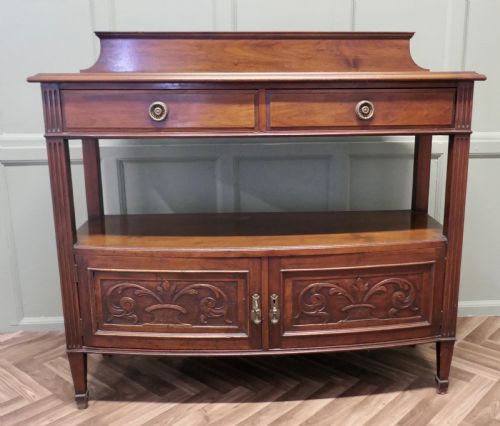


Walnut Bow Front Credenza
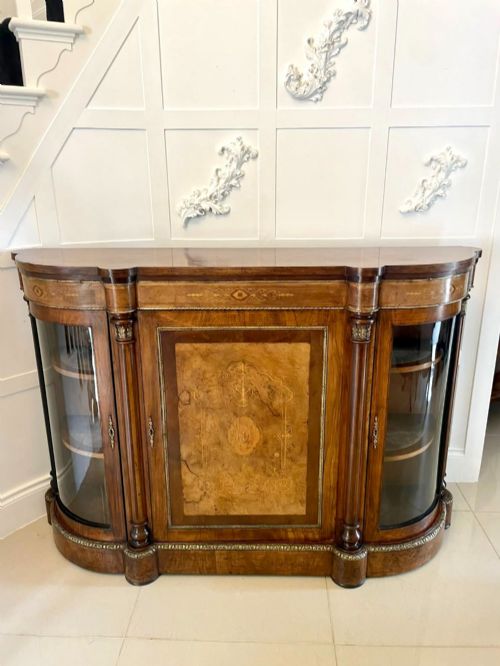
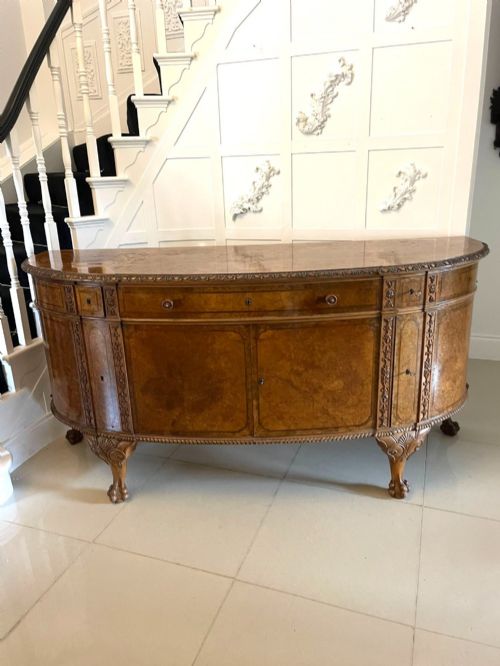
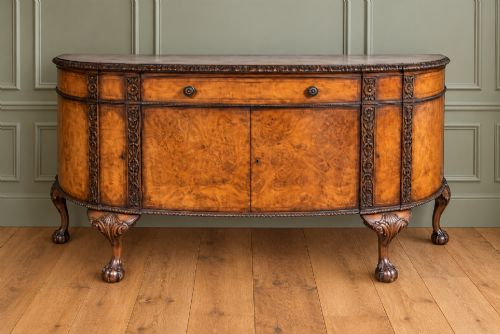
These walnut bow front credenza pieces bring together burr timber and curved glass, offering collectors a striking focal point for the room.
Walnut Bow Front Credenza
A walnut bow front credenza combines curved timber framing with generous surface display space, drawing the eye immediately in any interior scheme. These pieces appear across Victorian, nineteen-thirty, eighteen-sixty, nineteen-twenty, nineteen-ten, nineteenth-century, and eighteen-seventy periods, showing enduring popularity among makers.
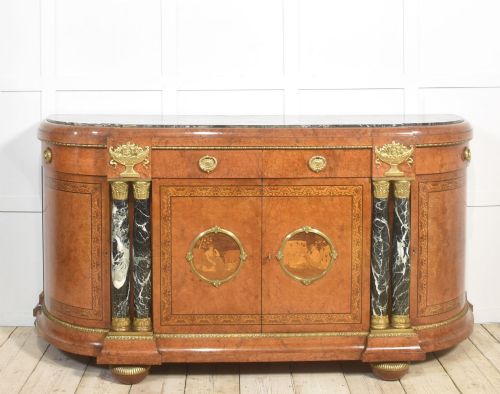
The primary forms on this page include credenzas, sideboards, buffets, chiffoniers, and display cabinets. Most examples rely on burr walnut timbers, often accented with boxwood inlay, glass panels, or marble tops.
Stylistic influences range from classic Victorian and Queen Anne Revival to Louis XV and Art Nouveau. Buyers encounter both straight-sided and bow-ended formats, each designed to house tableware or display prized objects.
Materials and construction methods
Makers selected figured burr walnut for its rich grain patterns, frequently pairing the warm timber with boxwood inlay to create delicate contrasting borders. Structural elements utilise solid hardwood to support the weight of the carcase and marble tops.
Decorative metalwork defines much of the finishing, with ormolu mounts and brass fittings securing the doors and framing the glass. Cabinetmakers mastered the difficult art of curving wood to form the distinctive bow front profile without compromising structural integrity.
Walnut Bow Front Credenza Retail Price Guide 2026
Typical asking prices for walnut bow front credenza among the pieces listed under this phrase on Sellingantiques today, from the lower quarter to the upper quarter. They describe what is for sale here now, not the wider market.
The listings here span Victorian, nineteen-thirty, eighteen-sixty, nineteen-twenty, nineteen-ten, nineteenth-century, and eighteen-seventy periods.
Assessing quality and craftsmanship
The visual appeal of a walnut bow front credenza rests heavily on the choice of veneer, where tightly swirled burr walnut commands greater visual presence than plain grain. Superior examples integrate intricate boxwood inlay and crisp carvings that remain sharp and well-defined across the timber.
Hardware and metal mounts also signal distinction, as finely chased ormolu and substantial brass fittings elevate the overall execution. The seamless curve of the bow front and the tight fit of glazed doors demonstrate the joiner's precise skill.
The Walnut Bow Front Credenza Glossary
- Burr walnut
- A prized timber harvested from walnut tree growths, known for its swirling and highly decorative grain patterns. Cabinetmakers sliced this wood into thin veneers to cover large surfaces.
- Ormolu
- Gilded bronze or brass mounts applied to furniture for decorative effect. This technique was widely utilised during the nineteenth century to highlight structural corners and door frames.
- Credenza
- A low cabinet traditionally used for storing and displaying dining ware. Over time, the form evolved to include glass-fronted display sections and curved ends.
- Boxwood inlay
- A method of embedding light-coloured boxwood into recesses carved into darker walnut timber. This creates sharp linear patterns and decorative borders.
- Chiffonier
- A compact sideboard featuring shelves or cupboards below a surface. It serves a similar function to a credenza in Victorian interiors.
Walnut Bow Front Credenza: Frequently Asked Questions
What is a walnut bow front credenza?
A walnut bow front credenza is a low storage and display cabinet featuring a curved front facade and rich timber grain.
These pieces emerged strongly during the Victorian era and continued into later twentieth-century revivals.
How do I date a walnut credenza?
Dating relies on examining construction techniques, timber choice, and stylistic markers such as Victorian proportions or Art Nouveau carvings.
Makers working in different decades applied distinct hardware styles like ormolu mounts and boxwood inlay.
Where were these cabinets used?
These pieces traditionally stood in formal dining rooms or drawing rooms to hold cutlery, linens, and fine glassware.
Today, they function well in living spaces as display units and statement storage.
How do I care for burr walnut?
Burr walnut requires protection from direct sunlight and excessive temperature changes to prevent the delicate veneer from lifting.
Regular dusting with a dry cloth keeps the polished timber finish in good condition.