

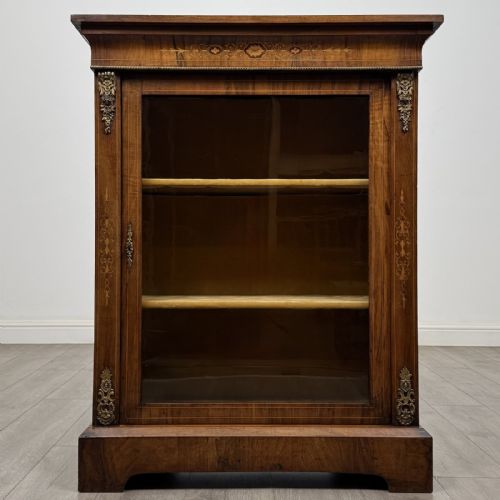
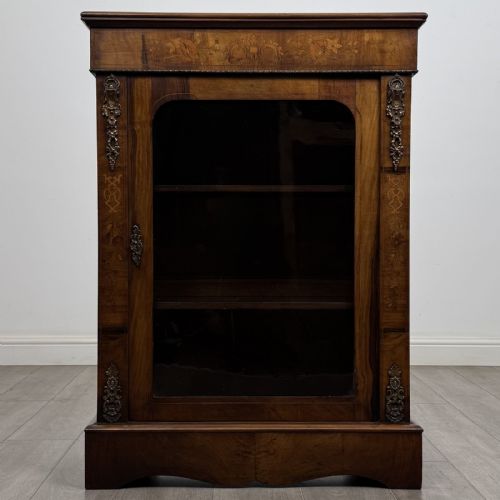
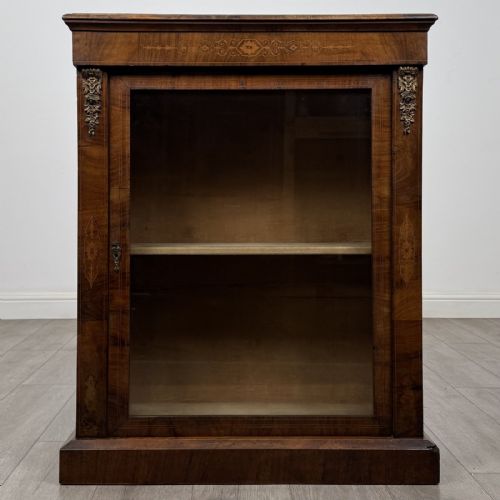
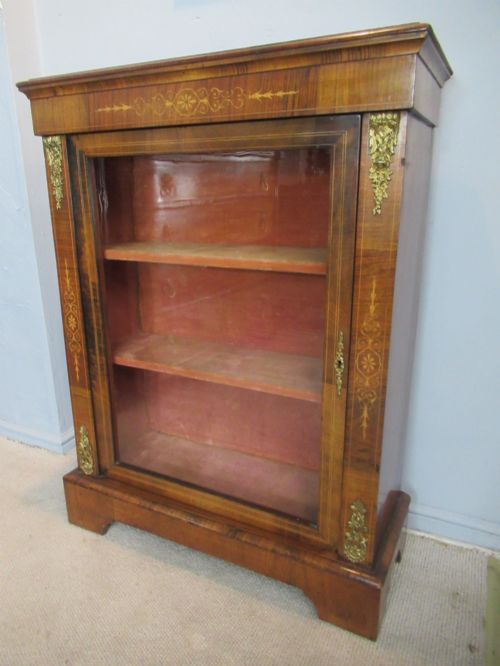
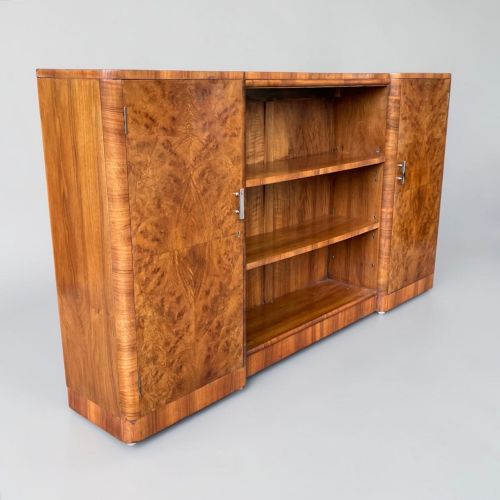
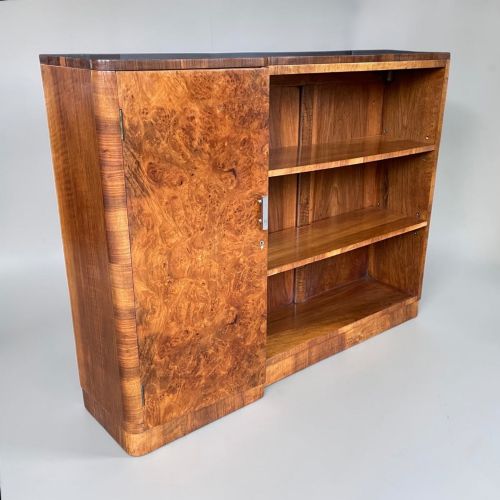
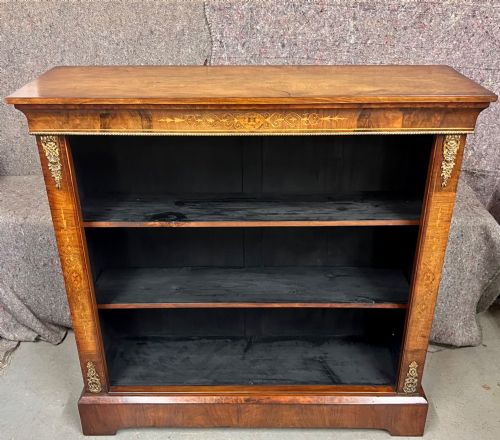
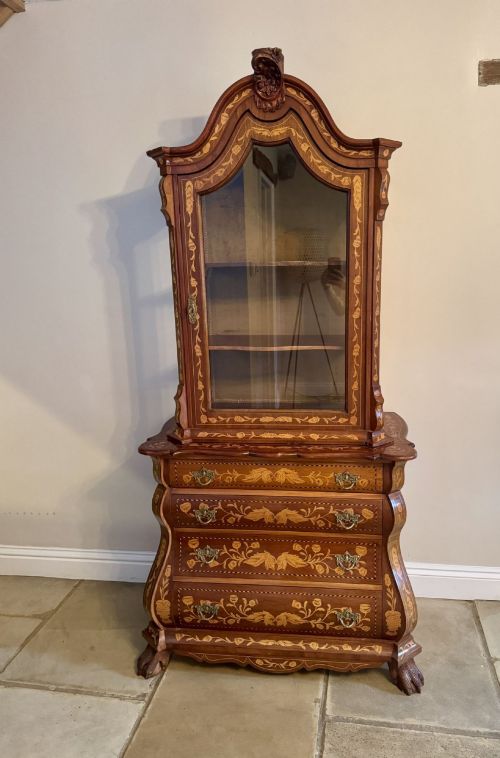
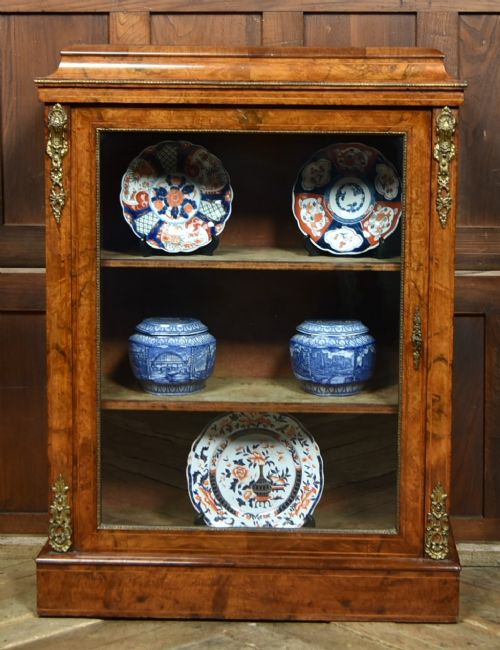
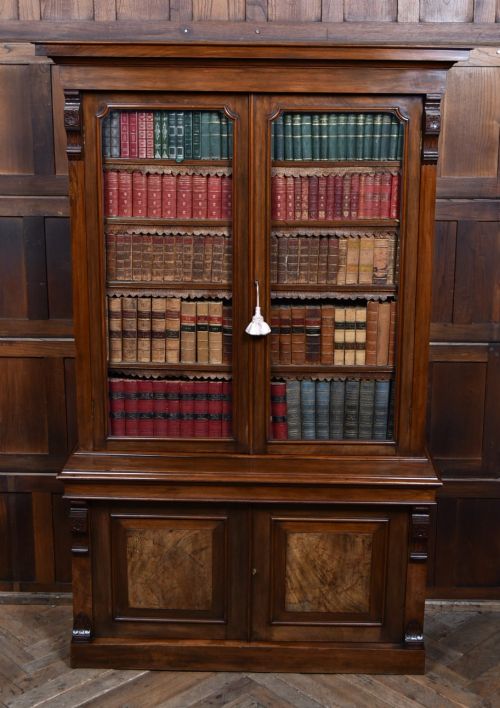
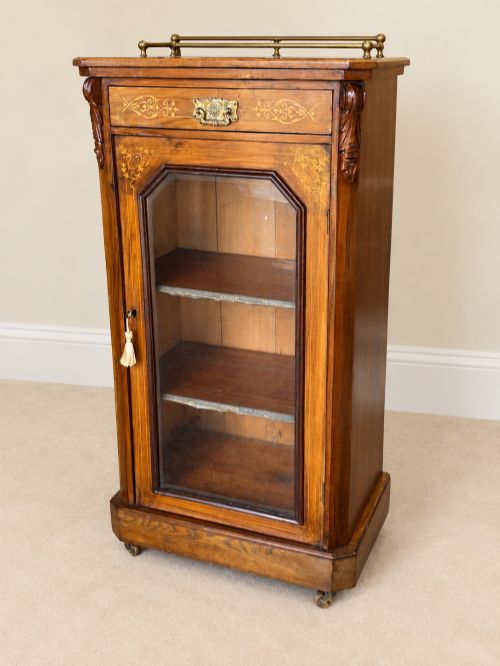
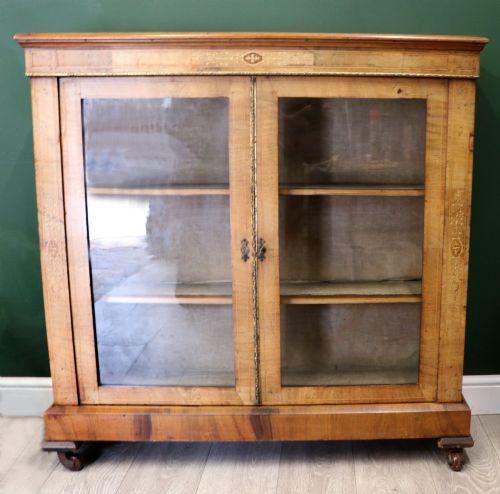
Walnut Bookcase Display Cabinet
A walnut bookcase display cabinet brings together the warmth of rich timber and the clarity of glass to house a collection.
Walnut Bookcase Display Cabinet
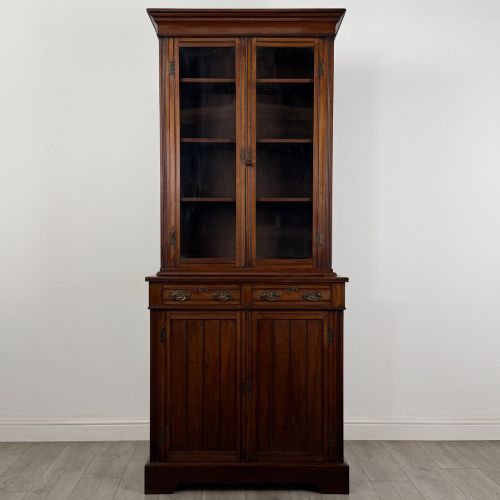
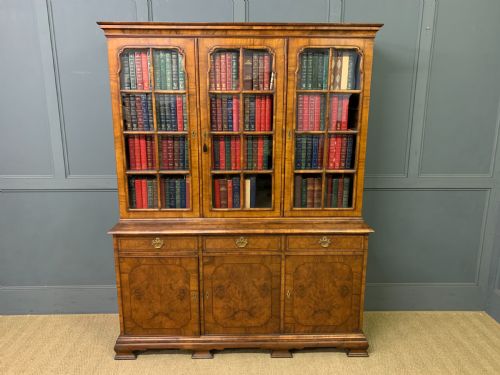
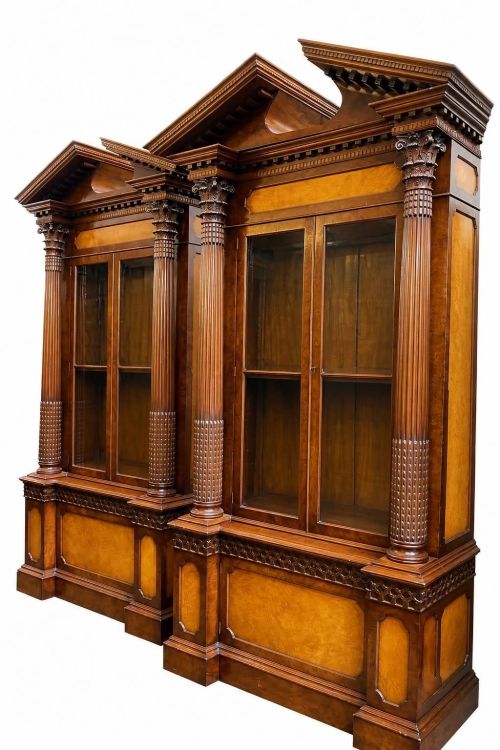
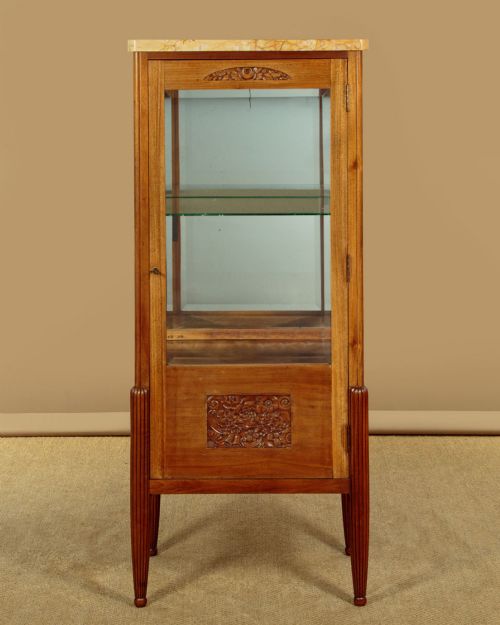
A walnut bookcase display cabinet combines enclosed shelving for books with glazed compartments for decorative objects, serving both a practical and a formal purpose in a room. When searching for a walnut bookcase display cabinet, buyers encounter forms ranging from tall Victorian breakfronts to compact Art Deco vitrines and Dutch marquetry pieces.
The selection spans several centuries and stylistic revivals, including Queen Anne Revival, Dutch Baroque, and French Provincial designs. Many examples integrate cupboards, secretaire drawers, or bombe bases beneath the main display area, offering varied storage solutions alongside the primary glass-fronted shelves.
Victorian and nineteenth-century iterations appear frequently, often constructed with bureau sections or inlaid pier cabinets designed for specific parlour uses. Twentieth-century Art Deco interpretations provide streamlined silhouettes in figured walnut and satin birch.
How they were made
Cabinet makers utilised solid walnut and decorative veneers such as burr walnut, laid over sturdy secondary timbers like oak, to create figured surfaces with deep grain patterns. Marquetry inlay in floral and baroque motifs appears on Dutch examples, requiring precise cutting of various light and dark woods.
Glass doors allowed light into the shelved interior, held in place by wooden glazing bars or mounted within brass frames. Ormolu mounts, porcelain plaques, and brass hardware complete the construction on finer revival and continental pieces.
Walnut Bookcase Display Cabinet Retail Price Guide 2026
Typical asking prices for walnut bookcase display cabinet among the pieces listed under this phrase on Sellingantiques today, from the lower quarter to the upper quarter. They describe what is for sale here now, not the wider market.
The listings on this page span from seventeen-fifty Dutch marquetry pieces up to nineteen-thirty Art Deco vitrines in satin birch and walnut.
What varies in quality
The crispness of hand carving on Renaissance Revival or Queen Anne style mouldings sets apart finer cabinets from simpler production pieces. The selection of timber grain, particularly the choice of symmetrical burr walnut or detailed floral marquetry, dictates the visual impact of the facade.
Gillows·Gabriel Viardot
The Walnut Bookcase Display Cabinet Glossary
- Burr walnut
- A wood veneer taken from the knotted growth of a walnut tree, producing swirling and mottled grain patterns. It was favoured by cabinet makers for grand nineteenth-century reception rooms.
- Ormolu
- Gilded bronze used for decorative mounts, feet, and key escutcheons on Victorian and continental cabinets. The technique involves applying a mercury and gold amalgam to cast brass or bronze.
- Marquetry
- The art of applying thin veneers of different woods and materials to form decorative pictures and geometric patterns. Dutch cabinet makers utilised this technique extensively on floral and bombe furniture.
- Vitrine
- A glass-sided and glass-fronted display cabinet designed to show porcelain, figures, and curiosities from all angles. These pieces became popular during the Victorian period and the Art Deco era.
- Breakfront
- A piece of furniture where the central section projects forward from the flanking wings. This configuration adds architectural depth to large bookcases and display cabinets.
Walnut Bookcase Display Cabinet: Frequently Asked Questions
What is a walnut bookcase display cabinet used for?
These pieces served to store a household library while simultaneously exhibiting porcelain, glassware, and treasured ornaments behind glass doors. The lower cupboards or drawers provided concealed storage for household papers and linens.
In modern interiors, they continue to perform both functions, protecting books from dust while creating a focal point in a dining room, study, or drawing room.
How do I date a walnut cabinet?
Dating relies on observing the stylistic characteristics, construction methods, and timber treatments. Victorian pieces often display rich burr veneers and revival styling, whereas Art Deco examples from the nineteen-thirties favour streamlined geometric forms.
Secondary woods inside drawers and the type of glass used in the doors also offer clues to the period of manufacture, distinguishing nineteenth-century work from earlier eighteenth-century Dutch pieces.
What is the difference between a pier cabinet and a display cabinet?
A pier cabinet is traditionally a low, narrow cabinet designed to fit the wall space between two windows, often featuring a single glazed door and ormolu mounts. A display cabinet is generally larger and intended to showcase collections of objects from multiple glass shelves.
Both forms utilise glass fronts, but the pier cabinet was specifically scaled for nineteenth-century architectural proportions in formal reception rooms.
How do I care for antique walnut furniture?
Antique walnut benefits from stable room temperatures away from direct sunlight and heat sources, which can dry out the timber and cause veneers to lift. Regular dusting with a soft, dry cloth preserves the polished surface without the need for heavy silicones.
Applying a traditional beeswax polish occasionally helps nourish the burr walnut grain and maintain the deep sheen characteristic of these woods.