
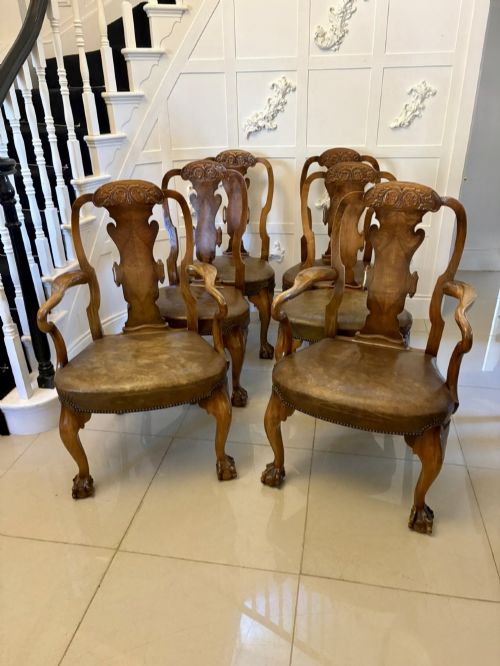
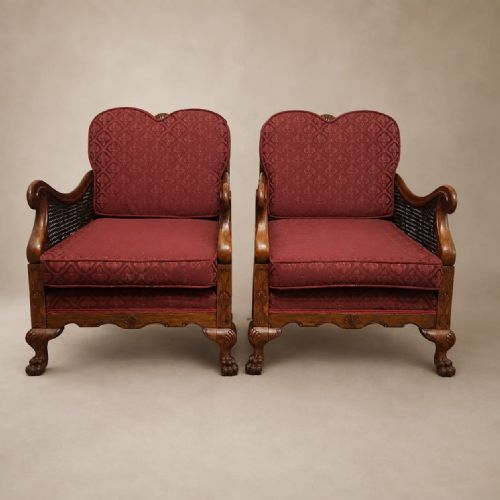
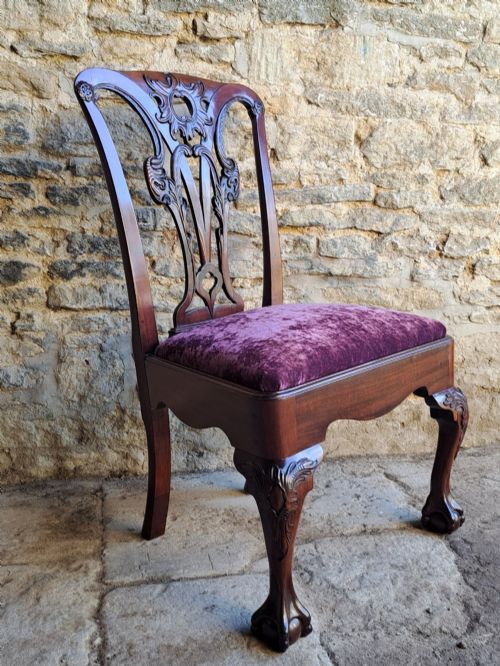
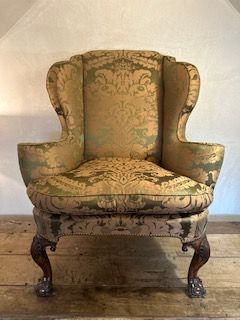
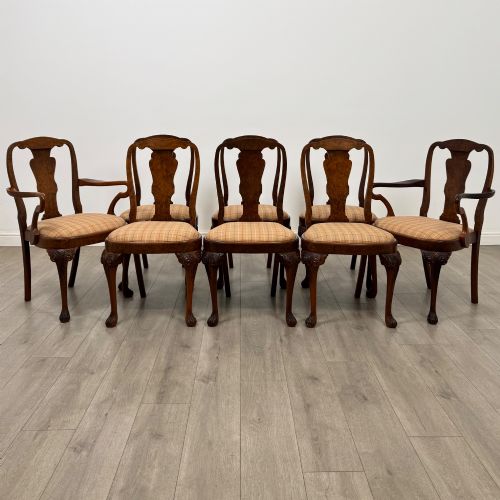
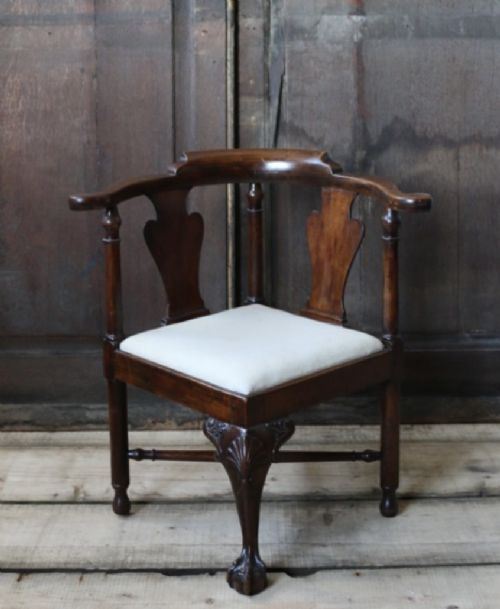

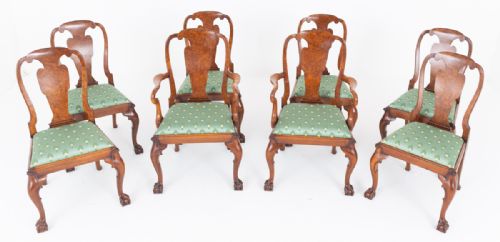
Walnut Ball and Claw Chair
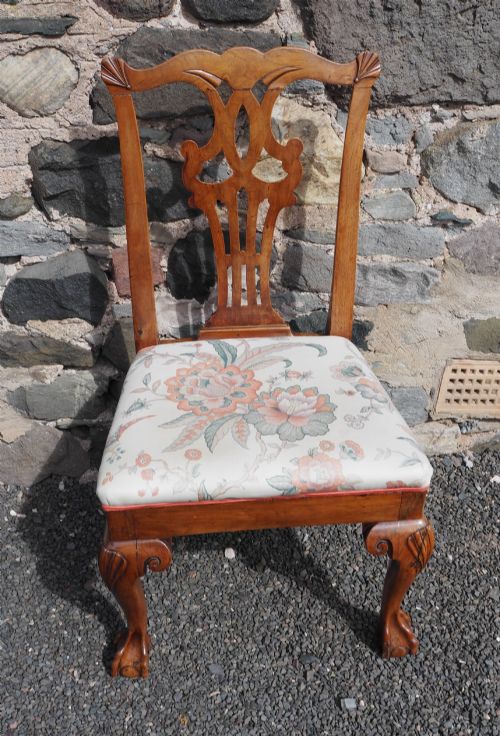
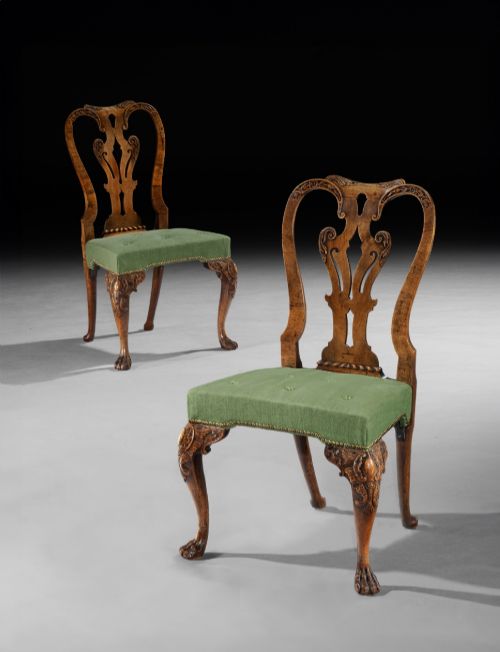
A walnut ball and claw chair brings robust timber and carved talon feet together in a seating form designed to anchor a traditional room.
Walnut Ball and Claw Chair
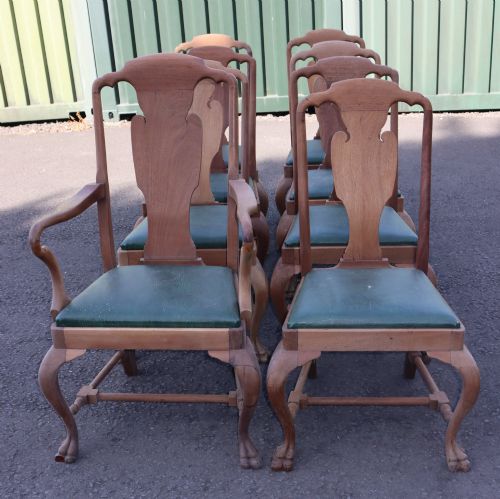
A walnut ball and claw chair is defined by its timber frame and the distinctive carved foot grasping a spherical shape, appearing across periods from the mid-eighteenth century to later revivals. Buyers searching this phrase encounter forms ranging from single side chairs and library armchairs to matched sets intended for dining tables.
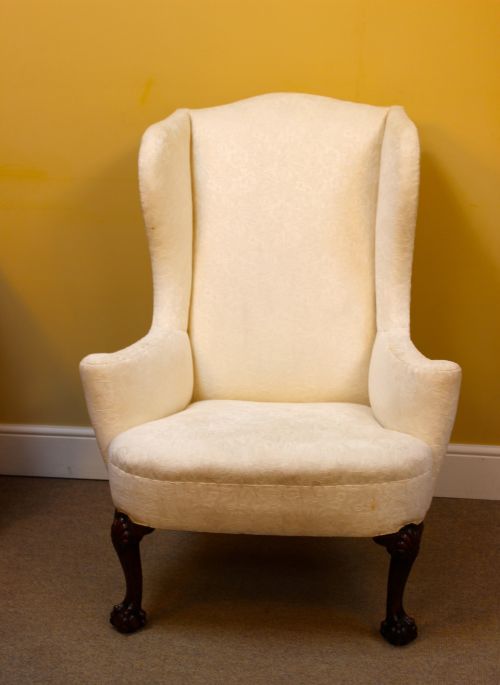
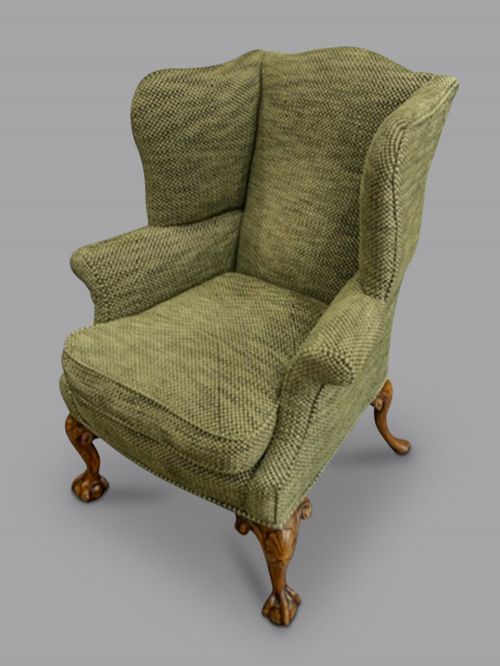
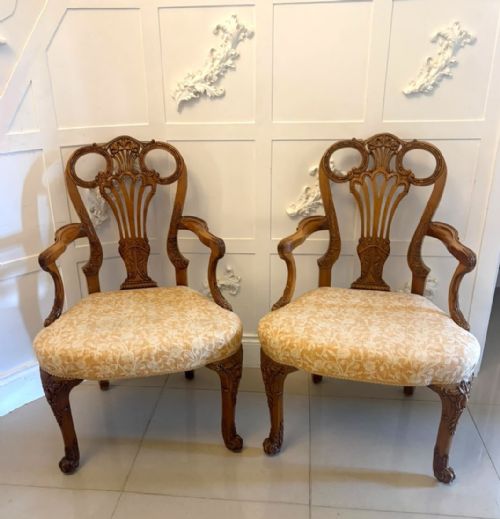
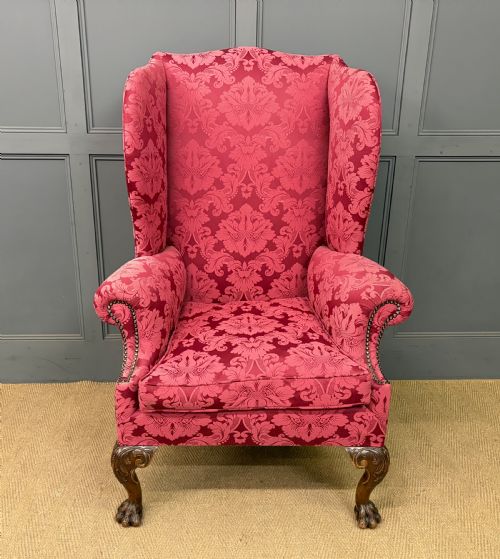
The material vocabulary of these pieces spans plain walnut, red walnut and burr walnut, frequently paired with upholstery in fabric, leather, velvet, damask or textile. Frames take the shape of wing armchairs, open desk chairs, carvers, and high back dining seats originating from Georgian, Victorian, and later revival movements.
Materials and Construction Methods
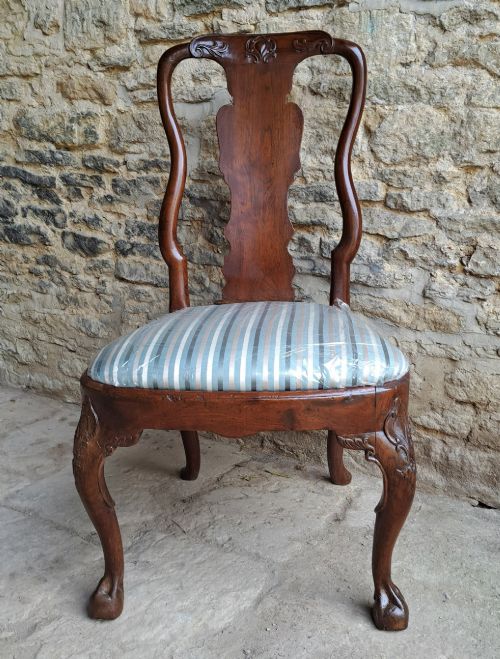
Cabinetmakers built these frames using solid walnut, red walnut, or figured burr walnut, selecting timber for density and grain pattern before shaping the structural members. Cabriole legs were carved directly from the wood to form the characteristic knee and ankle leading down to the sculpted foot.
Upholstered variants incorporated webbing, stuffing, and coverings secured with brass tacks or applied trim, while other examples utilised split cane panels for lightweight backrests. Joinery relied on traditional mortise and tenon methods to withstand the weight placed upon the seat and arms.
Certain early chairs feature carved wooden owl legs terminating in the signature ball and claw feet.
Distinctions in Quality
Quality in these chairs rests upon the crispness of the carving on the knee and the talon foot, where sharper detail indicates a more skilled hand at the bench. The selection of the walnut timber itself dictates the visual weight, with well-figured grain and matched sets commanding closer attention from collectors.
Proportion and stance govern the overall success of the piece, separating balanced original forms from later revival interpretations that lack the same subtlety of line. The integrity of the frame construction and the fidelity of the period style further separate standard production from exceptional examples.
Whytock and Reid of Edinburgh·Spillman and Co·William Morris
The Walnut Ball and Claw Chair Glossary
- Cabriole leg
- A furniture leg that curves outward at the knee and tapers inward toward the foot, mimicking animal limbs. This form appeared widely on eighteenth-century seating.
- Ball and claw foot
- A carved terminal representing a bird's talon gripping a ball, commonly found at the base of cabriole legs on walnut furniture. It derives from Chinese dragon motifs adopted by European cabinetmakers.
- Burr walnut
- Timber sliced from walnut tree growths, yielding intricate swirling patterns used for decorative veneer. It was favoured for high-status cabinet work and chair backs.
- Bergere
- An enclosed upholstered armchair with wooden framing exposed around the sides and back. Many examples incorporate cane panels within the frame.
- Wing armchair
- A high-backed seat featuring upholstered side panels designed to shield the occupant from drafts. These pieces often stand on cabriole supports with carved feet.
Walnut Ball and Claw Chair: Frequently Asked Questions
What periods do these chairs come from?
These seating forms span original eighteenth-century pieces made during the Georgian and George II eras through to nineteenth-century Victorian interpretations and early twentieth-century revival furniture.
Craftsmen across these periods reproduced and adapted the ball and claw motif, meaning construction techniques and timber finishes help establish the precise age of an individual piece.
How were walnut ball and claw chairs used?
Dining chairs and sets of side chairs were arranged around formal dining tables, while larger wing armchairs and library armchairs served as comfortable seating near hearths or desks.
Their robust timber construction and upholstered pads made them suited for daily domestic use in reception rooms and studies.
How do I live with antique walnut seating?
Placing these chairs away from direct heat sources and strong sunlight protects the walnut timber from drying out and preserves the integrity of leather, velvet, or textile upholstery.
Regular polishing with appropriate wax maintains the natural lustre of the wood grain without building up heavy residues on the carved surfaces.
How can I tell original period pieces from revivals?
Examining the timber inside the frame, the wear patterns on the feet, and the construction joints reveals whether a chair dates to the eighteenth century or a later revival period.
Revival pieces often display machine-cut elements and standardised carving, whereas older examples show hand-tool marks and timber shrinkage consistent with age.