



Walnut and Kingwood Commode
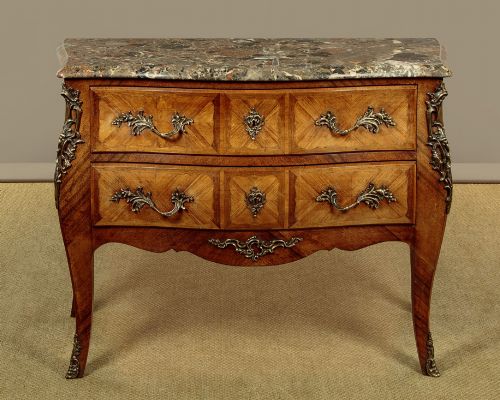
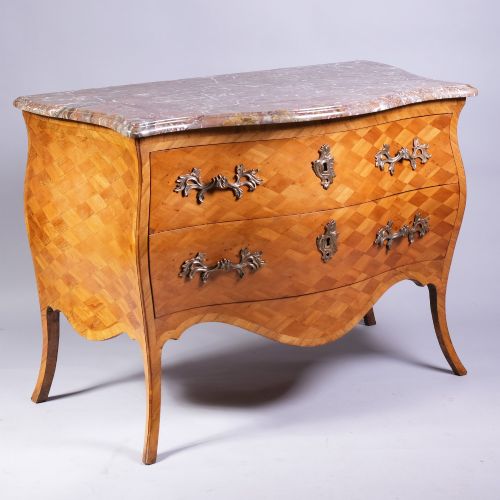
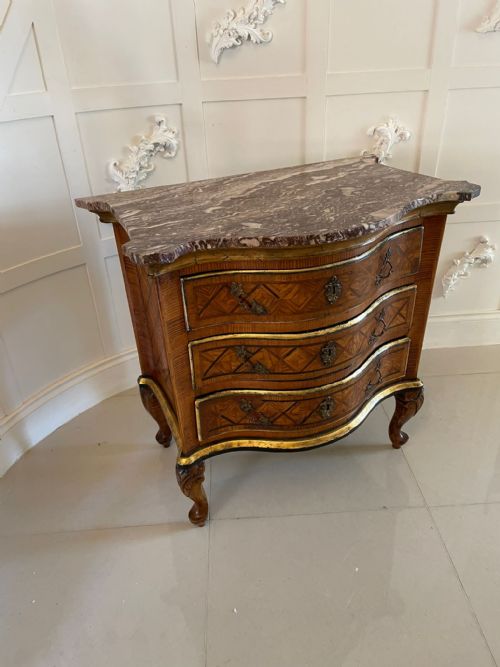
A walnut and kingwood commode is a statement storage piece defined by rich timbers and continental flair, built to anchor a formal room.
Walnut and Kingwood Commode
A walnut and kingwood commode brings together warm grain patterns and contrasting exotic woods in substantial chests of drawers and bedside cabinets. When searching for this specific combination, buyers encounter continental European pieces dating from the eighteenth century through to later revival periods.
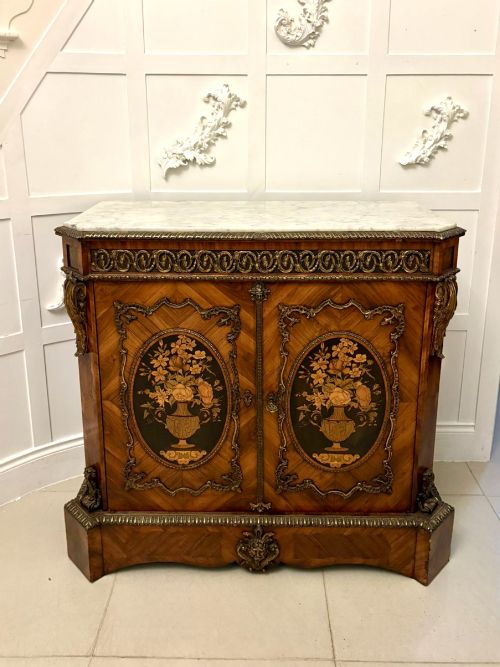
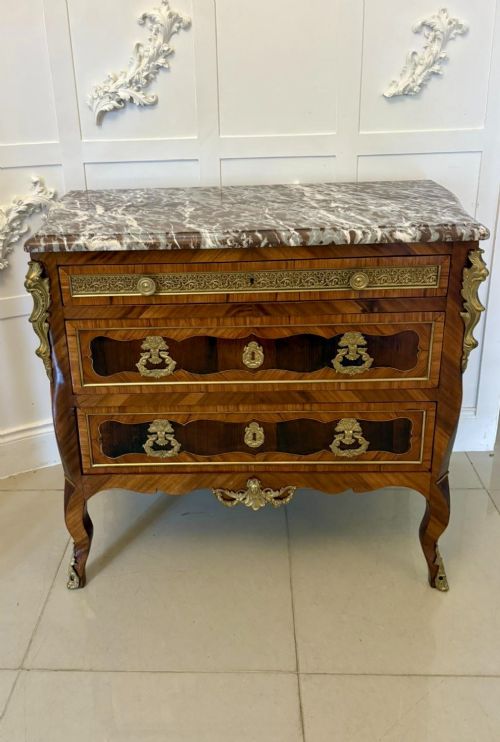
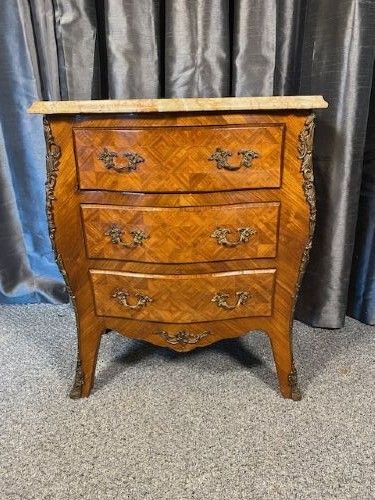
The selections on this page lean heavily towards French design influences, ranging from grand serpentine chests to neat bedside tables. These forms often feature shaped fronts and marble tops supported by cabinets or drawers.
Dating spans from authentic eighteenth-century examples to nineteenth-century interpretations and twentieth-century reproductions. The common thread remains the pairing of walnut and kingwood veneers across commodes and side cabinets.
Materials and construction methods
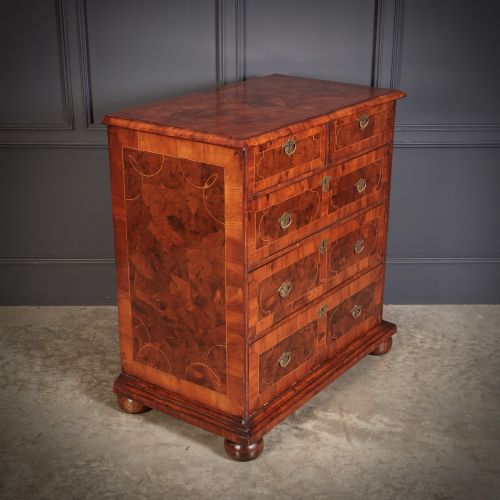
Cabinet makers utilised fine veneers of walnut and kingwood, frequently laid in intricate parquetry or marquetry patterns across carcases of softer woods. These decorative surfaces are paired with heavy slabs of marble fitted to the upper surface.
Gilt bronze, ormolu, and brass mounts accent the corners, handles, and apron centres of many pieces. These metal elements were cast and chased to frame the swelling contours of bombe and serpentine bodies.
Walnut and Kingwood Commode Retail Price Guide 2026
Typical asking prices for walnut and kingwood commode among the pieces listed under this phrase on Sellingantiques today, from the lower quarter to the upper quarter. They describe what is for sale here now, not the wider market.
Apprentice chests give master craftsmen a tiny canvas to show off.
Judging the standard of execution
The refinement of the timber matching and the complexity of the marquetry patterns determine the initial visual impact. Finer items display seamless grain alignment across multiple drawers and curved surfaces.
The crispness of the cast ormolu mounts and the precision with which they fit the wooden contours separate standard workshop output from exceptional commissions. Structural integrity within the drawer linings and carcase joints underpins long-term durability.
The Walnut and Kingwood Commode Glossary
- Commode
- A low chest of drawers or cabinet, originating in France, designed to stand against a wall. They frequently feature marble tops and decorative mounts.
- Kingwood
- A dense, heavy tropical timber with dark violet-brown colouring and distinct golden stripes. It was prized by cabinet makers for contrasting borders and geometric parquetry.
- Marquetry
- The art of applying small pieces of veneer to a structure to form decorative patterns or pictorial scenes. Makers employed various exotic timbers to achieve tonal shading.
- Ormolu
- Gilt bronze mounts applied to furniture edges and handles for ornamentation. The technique involves treating bronze with a gold amalgam.
- Bombe
- A swelling, outward-curved contour characteristic of continental furniture. This rounded shape demands precise veneer work to follow the complex three-dimensional curves.
Walnut and Kingwood Commode: Frequently Asked Questions
Where should I place a commode?
These pieces suit living rooms, hallways, or master bedrooms as focal storage furniture. Ensure the room has stable humidity to protect the underlying veneers and timber carcase.
Keep them away from direct heat sources and strong sunlight to prevent the timber from drying out or fading.
What is the difference between marquetry and parquetry?
Marquetry involves arranging various veneers to create pictorial designs, flowers, or complex scrollwork. It requires high skill in cutting and fitting individual pieces of timber together.
Parquetry uses geometric shapes, such as cubes, diamonds, or stripes, to form repeating patterns across flat or curved surfaces.
How do I distinguish eighteenth-century pieces from later revivals?
Examine the construction methods inside the drawers, including dovetail joints and secondary woods used for the carcase linings. Eighteenth-century examples show hand-cut irregularity compared to more uniform nineteenth-century workshop production.
Stylistic cues and the specific type of hardware fastenings also offer clues to the exact period of manufacture.