

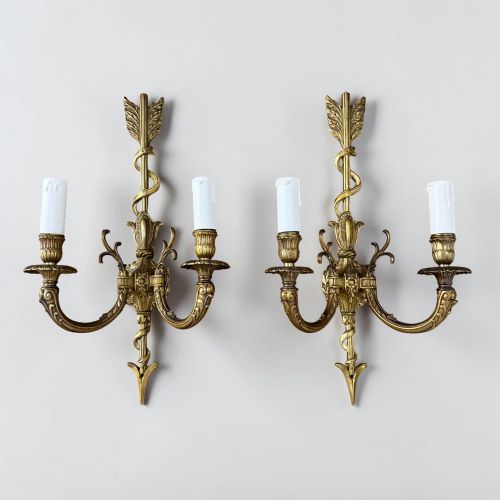
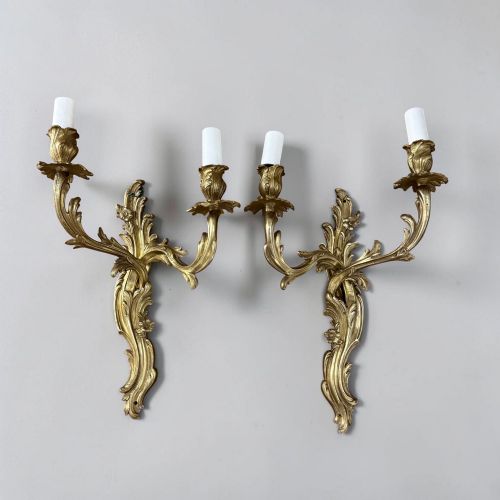
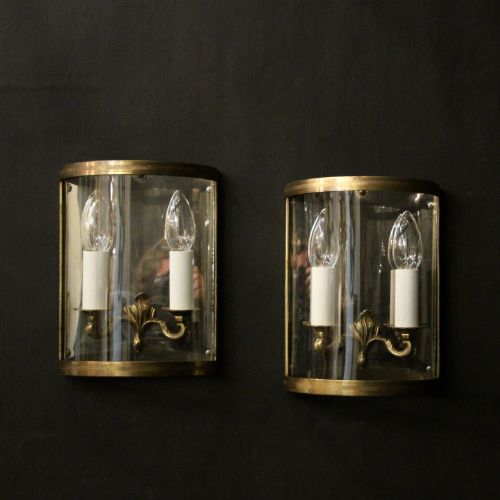
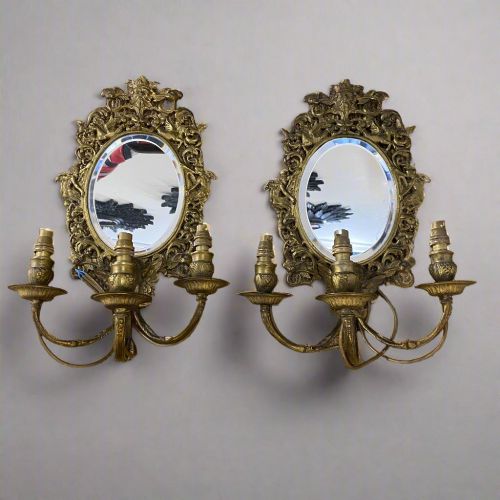
Wall Sconce Lighting
Wall sconce lighting brings illumination directly to the vertical plane, combining practical purpose with sculptural presence.
Wall Sconce Lighting
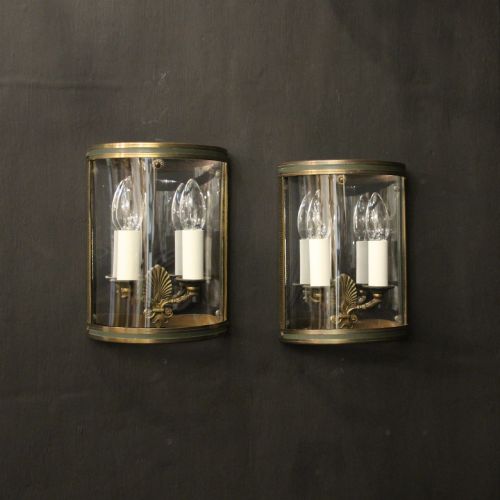
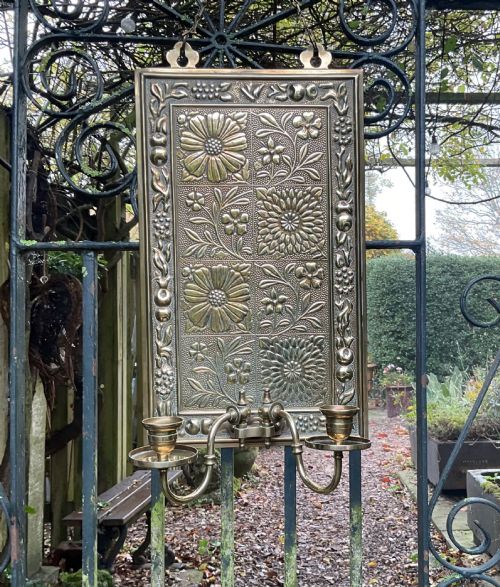
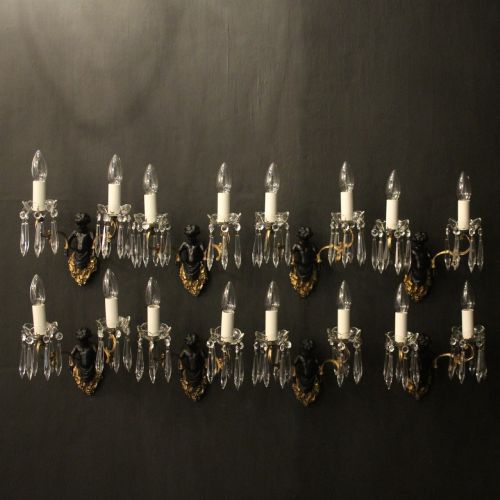
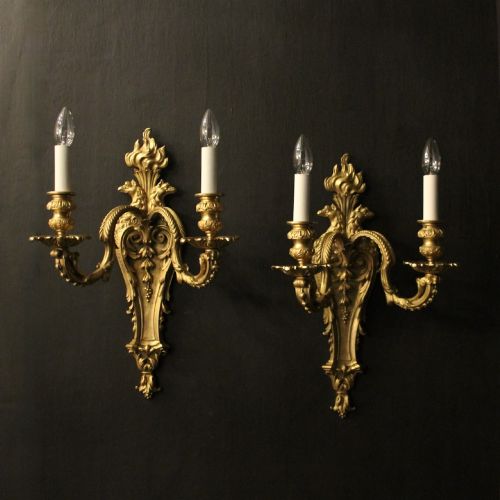
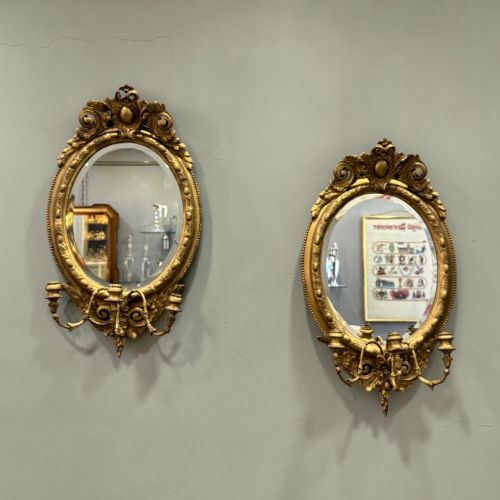
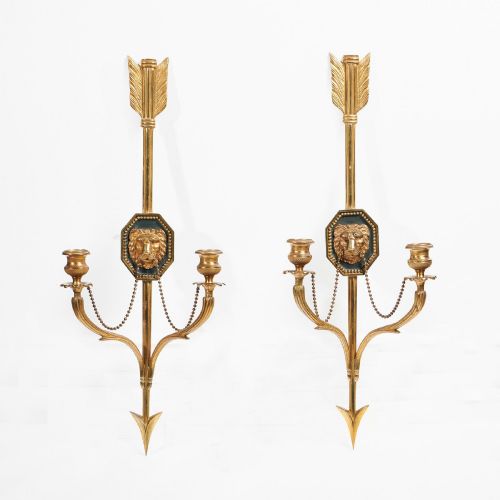
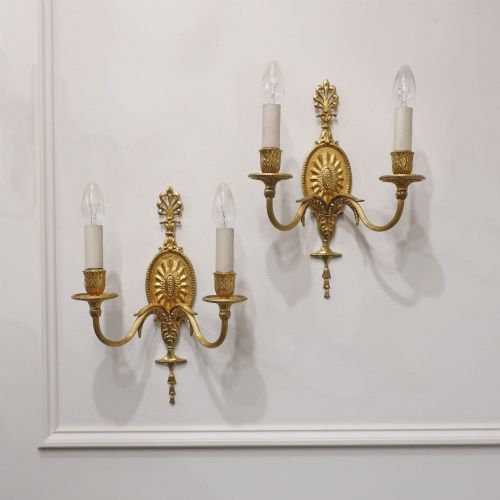
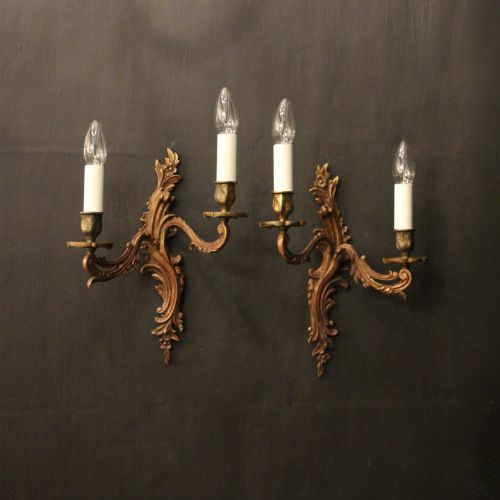
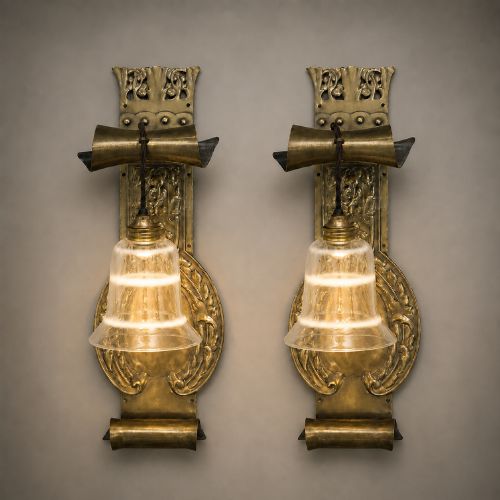
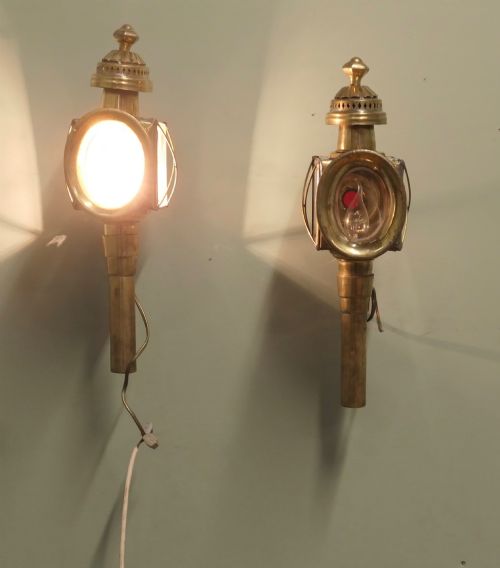
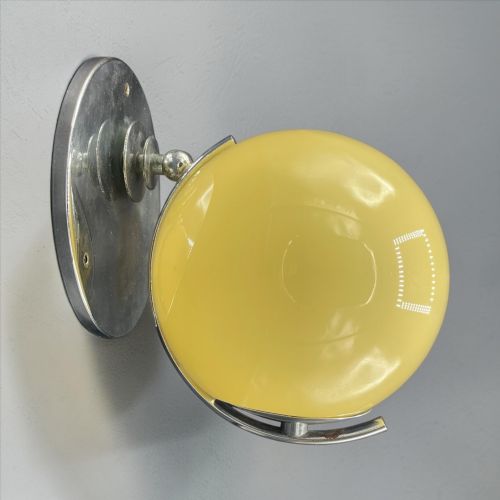
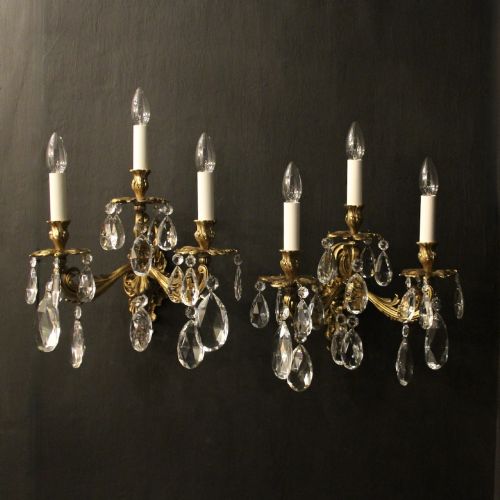
Wall sconce lighting encompasses functional fixtures designed to mount onto vertical surfaces, providing ambient or task illumination within a room. When exploring wall sconce lighting, buyers encounter formats ranging from single candle holders to multi-branch candelabra and electrified wall lights.
The selections span numerous periods, including the eighteenth, nineteenth, and early twentieth centuries, alongside styles such as French Rococo, Neoclassical, Art Deco, and Arts and Crafts. Pieces frequently emerge from French workshops, alongside examples originating from English, Italian, and German makers.
Materials vary widely across the inventory, incorporating brass, gilt bronze, ormolu, copper, wrought iron, porcelain, and carved wood. Many configurations accommodate crystal drops or glass elements, while others utilise pottery and delft components mounted to walls.
Materials and methods of construction
Foundry techniques dominate the metallic examples, utilising cast bronze, brass, and ormolu that are frequently chased and gilt to catch the ambient light. Gilded wood and carved timber form alternative backplates, often paired with iron brackets or copper lanterns.
Ceramic and glass elements integrate into the designs through specialised firing and cutting processes, seen in porcelain figures, delft plaques, and crystal drops. Hand-wrought iron and patinated copper appear in simpler or more robust utility pieces, showing tool marks from the forge.
Wall Sconce Lighting Retail Price Guide 2026
Typical asking prices for wall sconce lighting among the pieces listed under this phrase on Sellingantiques today, from the lower quarter to the upper quarter. They describe what is for sale here now, not the wider market.
Periods represented reach from the eighteenth century through the nineteenth century and into Art Deco and Arts and Crafts twentieth-century designs.
Distinctions in execution and grade
The crispness of the casting and the depth of the chasing separate finer metalwork from simpler commercial production. Castings with sharp detail in the foliate scrolls, cherubs, or classical motifs reflect superior workshop output.
The quality of the gilding or surface finish dictates the visual impact of the piece. Hand-applied ormolu, genuine fire gilding, and finely carved wood retain their character better over time than heavier, less refined surface treatments.
Villeroy and Boch·Meissen·Sevres·Maison Bagues
The Wall Sconce Lighting Glossary
- Ormolu
- Gilded bronze, produced by applying a mercury and gold amalgam to a bronze base and heating it. This technique creates a durable, luminous golden finish characteristic of French decorative arts.
- Girandole
- A branched wall light or sconce featuring reflective surfaces such as mirrors or crystal drops to multiply the illumination. These fixtures were designed to enhance candlelight in darkened rooms.
- Pricket candle holder
- A candlestick featuring a central spike upon which the candle is impaled, rather than sitting inside a socket. This medieval form persists in later ecclesiastical and domestic designs.
- Appliqué
- A French term used interchangeably with wall light or sconce, denoting a decorative fixture mounted directly to a wall. They frequently mimic the configuration of larger candelabra.
Wall Sconce Lighting: Frequently Asked Questions
How were wall sconces used historically?
Historical wall fixtures served primarily to hold candles or tapers, directing light into hallways, parlours, and dining rooms. Placed near mirrors or above furniture, they maximised the spread of flickering flame before the advent of electricity.
Many surviving pieces have since been adapted for electrical wiring while retaining their original brass, bronze, or wooden backplates. This allows them to function as primary or accent lighting in modern interiors.
How do I distinguish between French and English styles?
French designs often lean towards ornate Rococo, Empire, or Neoclassical motifs, featuring elaborate ormolu, gilt bronze, and figural elements such as cherubs or acanthus scrolls. These pieces emphasise sculptural form and decorative exuberance.
English variants tend to show greater restraint, frequently utilising clean brass castings, simpler oak or bronze mounts, and utilitarian copper or iron construction that prioritises structural directness over surface decoration.
Can these antique lights be wired for electricity?
Most metal and wood wall lights can be professionally adapted for modern electrical standards by running internal wiring through the existing arms or backplates. Qualified electricians handle these conversions safely without compromising the historic metalwork or wooden mounts.
Some examples retain candle tubes or retain their original configuration as non-electrified candle holders, offering flexibility depending on how the buyer intends to use them.
What is the difference between gilt bronze and brass?
Gilt bronze, or ormolu, consists of a copper and tin alloy that is subsequently gilded, yielding a warm, deep metallic lustre that accepts fine chiselling and detail work. Bronze was typically chosen for high-end decorative pieces in French chateaux and formal salons.
Brass is an alloy of copper and zinc, generally displaying a brighter, yellower tone when unpolished and appearing more commonly in utilitarian or later domestic British and continental hardware.