



Wall Mounted Oak Barometer
These wall mounted oak barometer pieces combine practical weather forecasting with traditional domestic woodwork.
Wall Mounted Oak Barometer
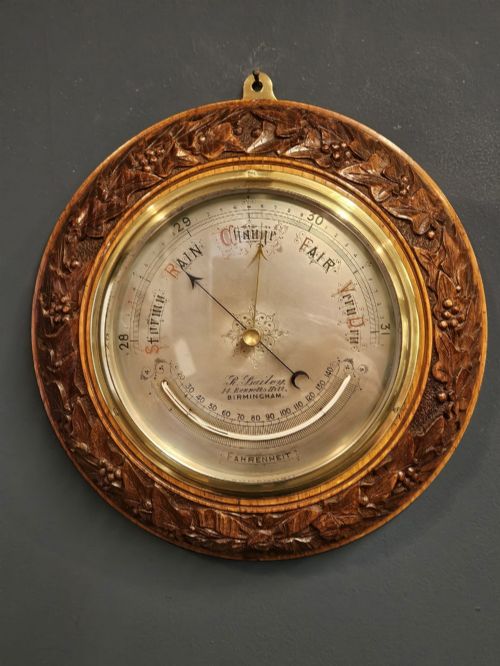
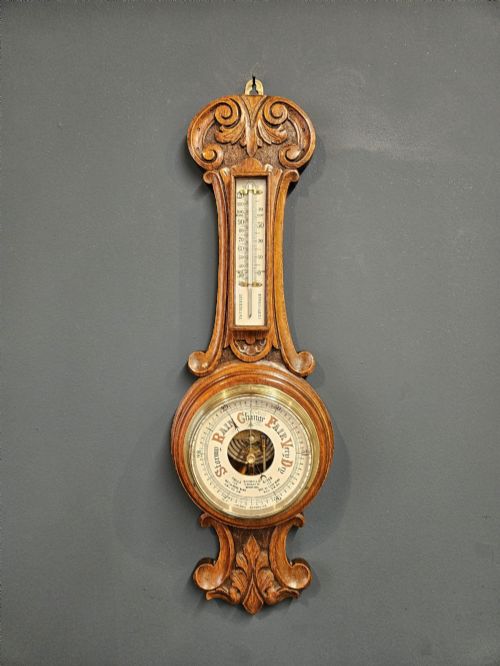
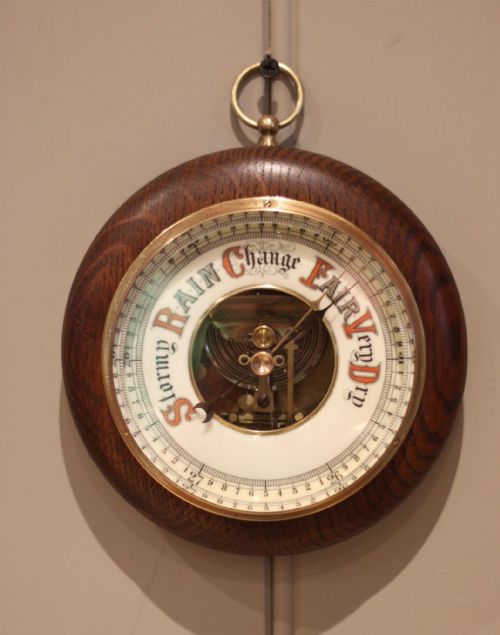
A wall mounted oak barometer is a domestic instrument designed to measure atmospheric pressure, housed in timber cases that hang directly on household walls. Buyers searching this phrase encounter banjo shapes, circular frames, and combined clock or hatstand configurations from periods spanning the Victorian era through the Edwardian years and into the early twentieth century.
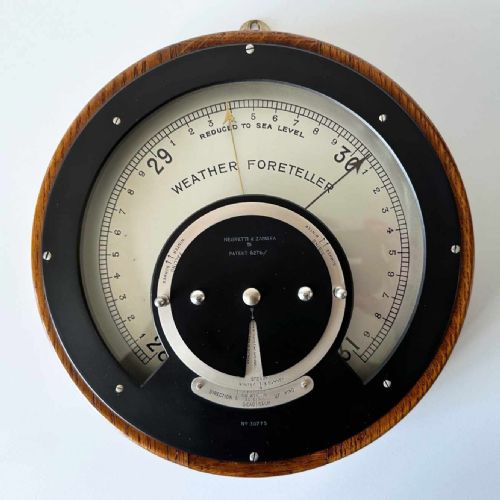
The pieces appearing on this page range from compact carved banjo barometers to large impressive examples and combined weather foretellers. Alongside standard domestic wall barometers, related forms include maritime clocks, hatstands, and multi-instrument boards featuring thermometers.
How wall mounted oak barometer items were constructed
The makers of a wall mounted oak barometer utilised solid timbers, primarily oak alongside walnut, shaping the cases with carved ornamentation typical of Victorian and Edwardian workshops. These wooden housings encase sensitive aneroid movements behind protective glass dials.
Metal components such as brass bezels and chrome fittings frame the dials, while secondary materials like ceramic and mixed metals appear on related maritime clocks and combination weather stations.
Wall Mounted Oak Barometer Retail Price Guide 2026
Typical asking prices for wall mounted oak barometer among the pieces listed under this phrase on Sellingantiques today, from the lower quarter to the upper quarter. They describe what is for sale here now, not the wider market.
What separates fine wall mounted oak barometer pieces
The standard of a wall mounted oak barometer rests upon the crispness of its wood carving and the overall balance of its proportions. Pieces described as having lovely quality or fine carving display superior craftsmanship in the detailing of the timber case compared to simpler, plain circular frames.
Makers such as Negretti & Zambra represent the higher tier of instrument production, where precision engineering of the aneroid movement matches the quality of the exterior woodwork.
Negretti & Zambra
The Wall Mounted Oak Barometer Glossary
- Banjo barometer
- A domestic weather instrument housed in a vertical, curved wooden case resembling the shape of a banjo. This form dominates the Victorian and Edwardian examples.
- Aneroid barometer
- A device that measures air pressure using a small, flexible metal box called an aneroid cell, which expands or contracts with pressure changes without using liquid mercury.
- Black Forest
- A stylistic region in Germany known for deeply carved wooden items, represented here by walnut barometer cases featuring naturalistic foliage and animal motifs.
- Bulkhead
- A heavy-duty, wall-mounted nautical instrument casing designed to be bolted securely onto the interior partitions of a ship.
- Bezel
- The metal ring, often brass or chrome, that holds the protective glass face in position over the barometer dial.
Wall Mounted Oak Barometer: Frequently Asked Questions
What is a wall mounted oak barometer?
A wall mounted oak barometer is a weather-measuring instrument set inside a wooden housing meant to be hung on an interior wall.
These pieces record atmospheric pressure changes to help forecast local weather conditions while serving as decorative domestic furnishings.
How do you date a wall mounted oak barometer?
Dating relies on examining the casework style, carving motifs, and the materials used in the dial construction. Victorian and Edwardian pieces often feature ornate carved oak banjo shapes, whereas later 1930s examples introduce chrome and industrial finishes.
Makers' signatures or specific dial typography also help place the instrument within a precise period between 1890 and the 1930s.
Where were these barometers placed in a home?
These instruments typically hung in hallways, libraries, or entrance areas where residents could check the weather before stepping outside.
Some multi-functional examples incorporated hatstands or combined clocks and thermometers to maximise utility in tight hallway spaces.
How do you maintain the wood on these barometers?
Maintenance involves keeping the timber cases away from direct heat sources and sudden humidity shifts to prevent the oak from splitting.
Light dusting with a dry cloth preserves the finish without harming the historic surface of the carved wood or the glass bezel.