


Wall Mounted Console Shelf
A wall mounted console shelf brings architectural presence to a room, offering a sturdy surface for display without taking up floor space.
Wall Mounted Console Shelf
When you search for a wall mounted console shelf, you encounter items functioning as wall brackets, console tables, and bracket shelves. These pieces project from the wall to support ornaments, clocks, or mirrors, often combining a structural console form with a flat upper surface.
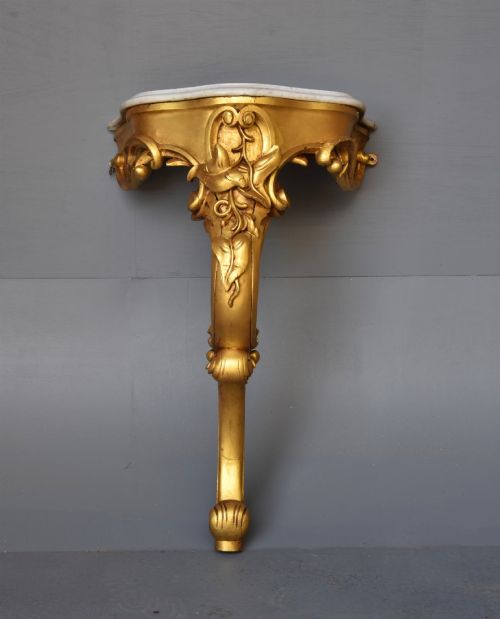
The selections range from compact 19th-century gilt and marble examples to 1930s French hand-carved console tables in antique white finish. You also find Victorian rosewood bracket shelves, oak cloakroom mirrors with shelves, and 18th-century architectural wall brackets.
Stylistic influences span Georgian, Victorian, and Edwardian periods, alongside Italian and French Rococo Revival designs. This variety allows the pieces to serve both functional shelving needs and purely decorative display purposes within an interior.
How they were made
The construction relies heavily on carved timber, gesso, and giltwood, frequently paired with marble tops or mirror glass inserts. Carvers shaped solid woods like oak, walnut, and rosewood, applying hand-carved details that reflect Rococo Revival and George I revival tastes.
Surface treatments include antique white paint finishes, parcel-gilt highlights, and ebonised wood contrasted with ormolu mounts. Parian porcelain and ceramic elements also appear, demonstrating the diverse media utilised by makers of wall brackets and consoles.
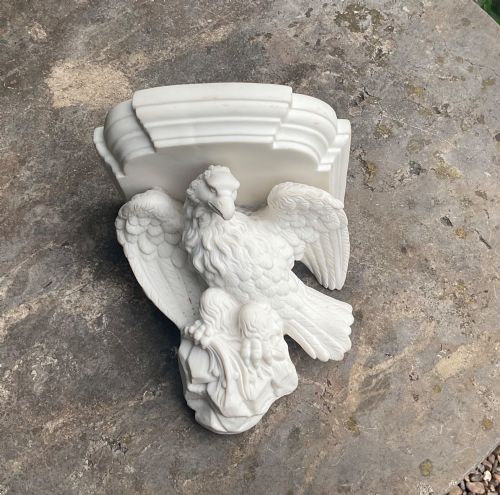
An eagle carved in Parian porcelain once held the weight of someone's finest ornaments.
What varies in quality
Quality separates through the depth and crispness of the hand-carving in the timber or gesso, and the choice of primary materials like solid walnut or marble. Superior examples display precise joinery and well-defined decorative motifs that remain sharp across the scrollwork and foliage.
The integration of secondary elements, such as mercury mirror glass, heavy ormolu mounts, or fitted marble slabs, dictates the upper tier of execution. Pieces attributed to specific makers like Henri Dasson demonstrate an elevated standard of bronze work and cabinetmaking.
Henri Dasson
The Wall Mounted Console Shelf Glossary
- Giltwood
- Timber treated with gold leaf or gilt preparation. This finish creates a reflective, decorative surface common in Rococo revival furniture.
- Ormolu
- Gilt bronze mounted onto furniture or brackets. It provides metallic ornamentation that contrasts with timber or ebonised surfaces.
- Parian Porcelain
- A fine-grained biscuit porcelain resembling white marble. It was frequently utilised for sculptural wall brackets and decorative figures.
- Console Table
- A table designed to be fixed against a wall, often supported by wall brackets or console legs. These pieces save space while providing a display surface.
- Gesso
- A plaster-like mixture applied to wood surfaces as a base for gilding or paint. It allows artisans to carve intricate relief details before finishing.
Wall Mounted Console Shelf: Frequently Asked Questions
What is a wall console shelf?
A wall console shelf is a projecting furniture piece designed to mount directly onto a wall surface. It provides a flat top for displaying decorative objects while remaining unsupported by floor legs.
These items range from compact Victorian rosewood bracket shelves to larger French hand-carved console tables and architectural wall brackets.
How were antique wall shelves used?
Historically, these shelves served to display porcelain, clocks, and ornaments within formal rooms, hallways, or cloakrooms. They maximised vertical wall space for decorative display.
Some designs incorporated mirrors below or above the shelf, combining reflective glass with a surface for small items.
Which materials appear on these pieces?
The listings show a variety of materials including giltwood, carved timber, marble, gesso, and ormolu. Certain pieces combine ebonised wood with bronze mounts or feature ceramic and porcelain elements.
Surfaces often display antique white paint, parcel-gilt accents, or polished rosewood and walnut grains.
How do I identify the period?
Period identification relies on stylistic cues such as Georgian architectural proportions, Victorian rosewood work, or 1930s French hand-carved finishes. Materials like Parian porcelain and ormolu also help date specific pieces to the 19th century.
Revival styles, including George I and Rococo Revival, indicate 19th or early 20th-century interpretations of earlier historical designs.