






Vintage Yorkshire River Painting
A vintage yorkshire river painting brings the damp stone bridges and tree-lined waters of northern dales directly onto your wall.
Vintage Yorkshire River Painting
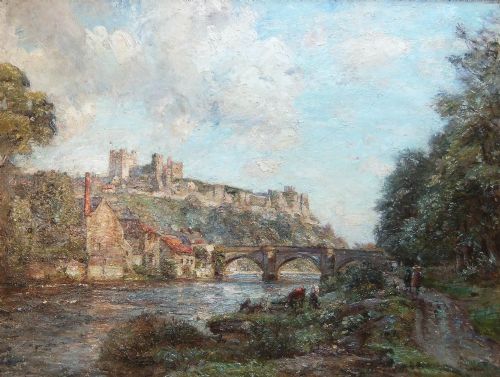
A vintage yorkshire river painting captures waterways like the Wharfe, Swale, and Nidd through the eyes of artists working between the late Victorian era and the mid-twentieth century. These works range from small topographical watercolours on paper to substantial oil paintings on canvas depicting familiar northern landmarks such as Bolton Abbey and Richmond.
Most pieces date from the early decades of the twentieth century, reflecting a strong regional school of British landscape painting. You will regularly encounter depictions of Wharfedale and Swaledale alongside urban river views around York.
The subjects focus firmly on the natural topography of the dales, recording mills, bridges, and turbulent flows of water through changing seasons. Painters often inscribed the specific location directly onto the front or reverse of the work.
Materials and technique
Artists worked primarily in oil paint on canvas or canvas board and watercolour paint on paper, capturing the specific light of northern valleys. Oil works often utilise thick, textured brushstrokes to build the weight of riverbanks and woodland foliage.
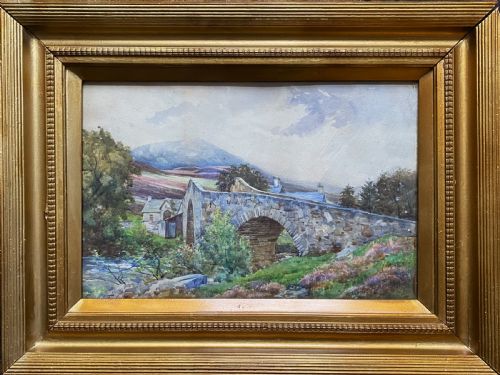
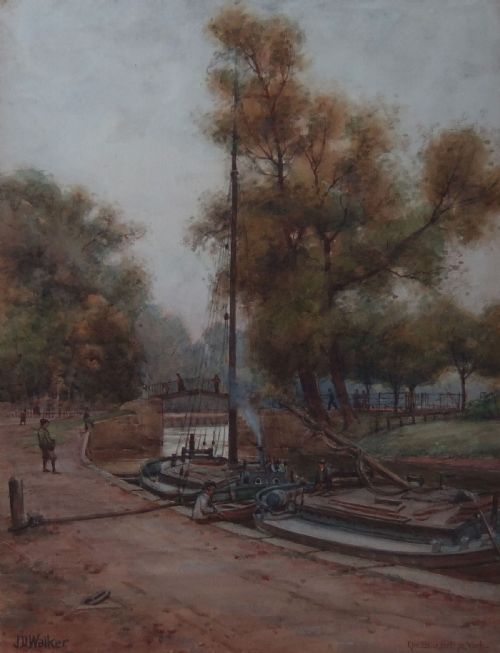
Watercolour pieces rely on fluid washes of pigment to render the transparency of river water and overcast skies. Wooden frames typically house these works, sometimes retaining their original gilded or moulded finishes from the period of creation.
Listings feature works executed in both oil and watercolour across a distinct timeline spanning from the Victorian era into the 1940s.
Assessing quality and execution
Quality rests upon the artist's ability to handle the specific atmospheric conditions of the northern landscape rather than mere finish. Stronger pieces show confident handling of moving water and natural light without resorting to stiff formulaic rendering.
The depth of the artist's engagement with the specific topography dictates the presence of character within the scene. Works by established regional painters demonstrate a superior command of palette and composition compared to anonymous amateur efforts.
Herbert Royle·William Joseph Boyes·William Mellor·Fred Stead·Ernest Higgins Rigg·Fred Lawson·Ernest Moore·John D. Walker·Tom Dudley·Owen Bowen·Walter Meegan·Everett Watson Mellor·Percy Lancaster
The Vintage Yorkshire River Painting Glossary
- Watercolour paint
- A water-based medium using finely ground pigment suspended in a water-soluble binder. It is applied in translucent washes onto paper.
- Oil paint
- A slow-drying medium composed of pigments particles suspended in drying oils such as linseed. This technique allows for rich texture and deep colour saturation.
- Canvas board
- A rigid board surfaced with primed canvas fabric. It provides a stable and portable support favoured by plein-air painters.
- British Impressionism
- An artistic approach focusing on light, fleeting moments, and everyday subjects. It influenced many regional painters working outdoors in the dales.
Vintage Yorkshire River Painting: Frequently Asked Questions
Where were most of these river scenes painted?
The works focus heavily on identified locations across the Yorkshire Dales and surrounding river valleys. Popular spots include Wharfedale, Swaledale, Wensleydale, and the waterways passing through York.
Artists frequently noted the exact village or bridge name on the painting or mount. This geographic specificity connects the viewer directly to real northern landscapes.
How do I care for a watercolour river painting?
Watercolour works on paper require protection from direct sunlight to prevent fading of the delicate pigments. Framing behind conservation glass ensures the paper remains safe from atmospheric moisture and humidity.
Keep these pieces away from damp walls and sudden temperature fluctuations. Proper framing preserves both the paper support and the integrity of the original washes.
What is the difference between oil and watercolour versions?
Oil paintings use heavy, opaque pigments on canvas or board to build rich textures and deep tonal contrasts. They present a robust surface that typically requires only a simple wooden frame without glass.
Watercolour paintings offer a lighter, more luminous quality executed on paper under glass. They rely on the white of the paper shining through translucent washes to create light.
How can I tell a Victorian piece from a 1930s work?
Victorian and late nineteenth-century paintings often lean towards naturalistic detail with tighter brushwork and darker, more sombre palettes. Edwardian and 1930s pieces frequently embrace looser impressionistic brushstrokes and brighter light.
Framing styles and inscribed dates on the reverse also offer clear clues to the exact decade of creation. Examining the canvas preparation or paper type further confirms the period.