


Vintage Wooden Floor Clock
Vintage wooden floor clock examples bring height, brass movement and ticking presence to a room, ranging from grand proportions down to smaller scaled pieces.
Vintage Wooden Floor Clock
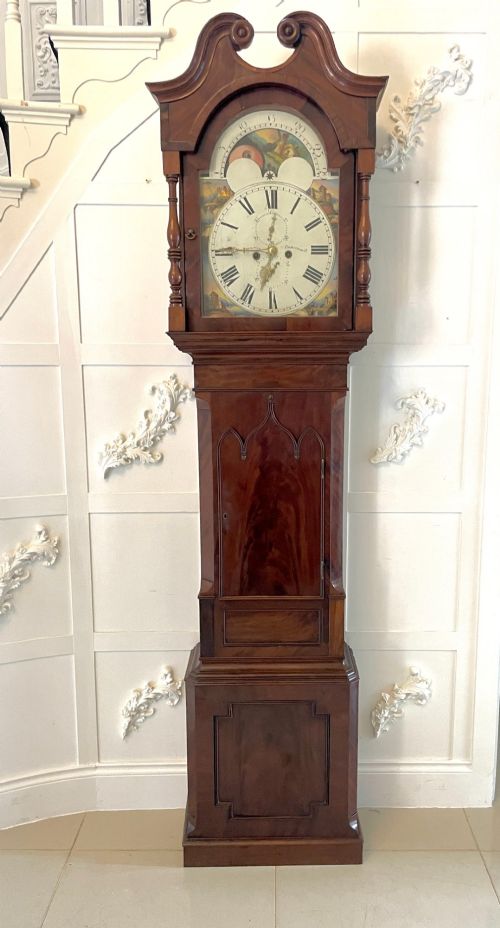
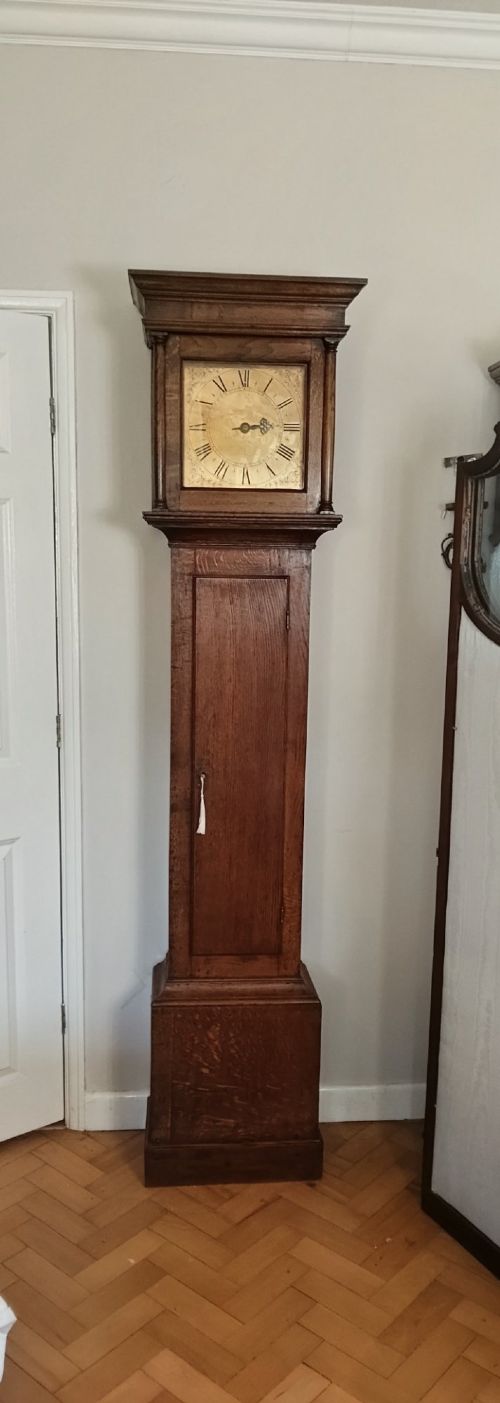
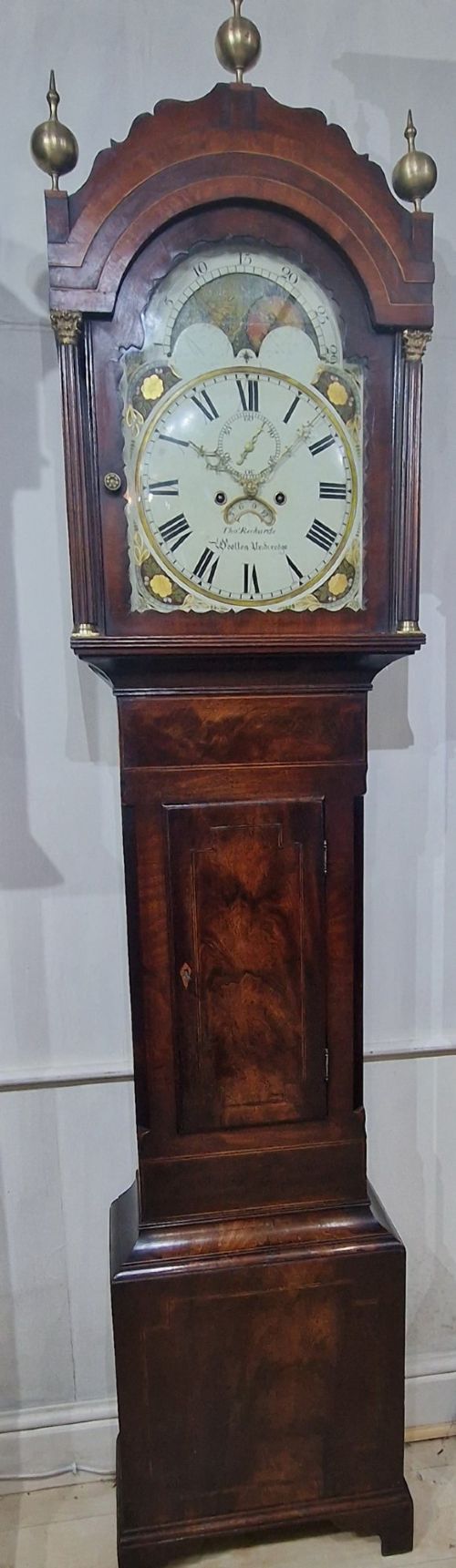
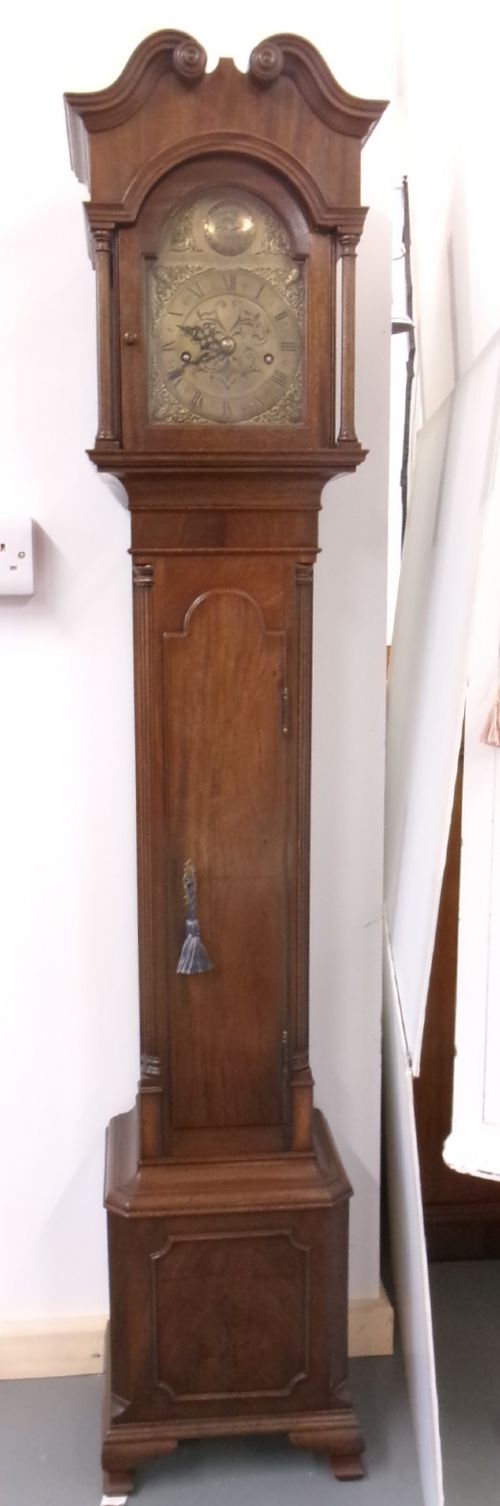
A vintage wooden floor clock typically takes the form of a longcase or grandfather clock, designed to stand upright against a wall. These tall vertical timepieces house a swinging pendulum and weight-driven movement inside a protective wooden case.
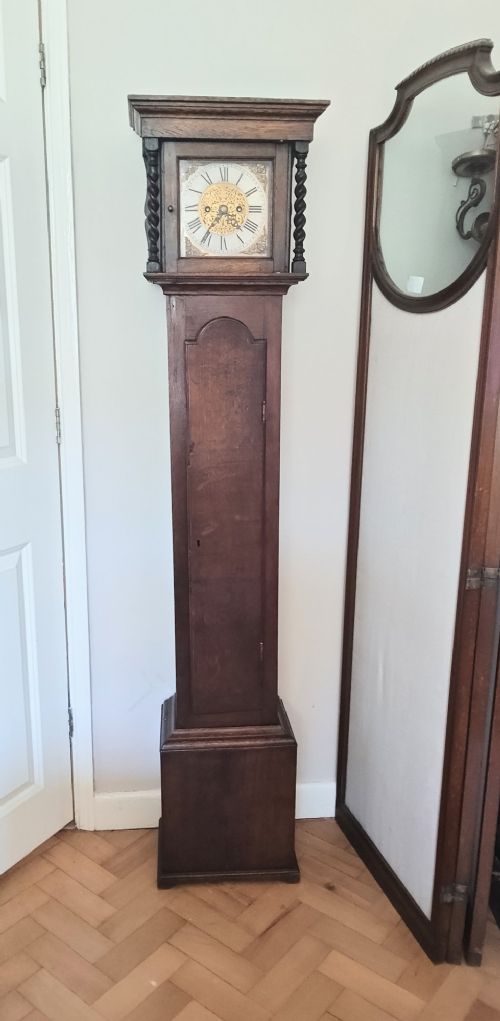
Buyers encounter grandfathers alongside smaller variations termed grandmother and granddaughter clocks. Dating spans from the eighteenth and nineteenth centuries into the twentieth century, taking in Georgian, Victorian and Edwardian periods.
Cases appear in regional British styles, including Scottish and Welsh examples, alongside English regional work. Oak, mahogany and walnut provide the primary timber structures for these vertical floor-standing pieces.
Materials and construction
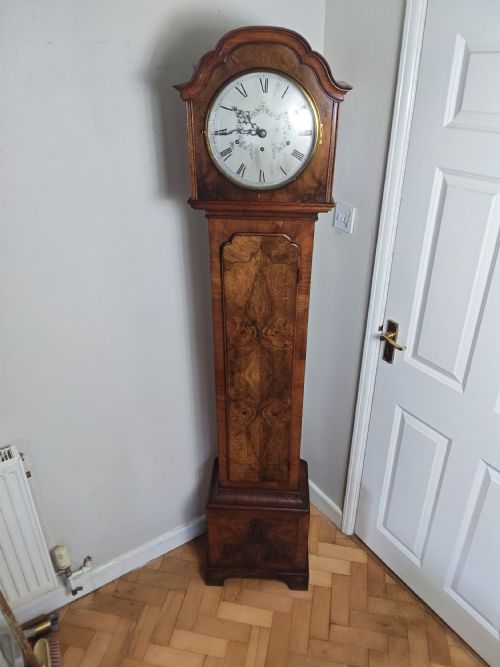
Cabinetmakers utilised solid timbers and veneers, employing oak, mahogany, and walnut to construct the tall wooden cases. Flame mahogany and quarter-veneered walnut surfaces show figured grain patterns across the front doors and hoods.
Metal components form the mechanical hearts and visible dials, combining brass movements with iron weights and glass door panels. Dials feature painted enamel faces, engraved brass chapter rings, and subsidiary moonphase displays.
Joinery techniques secure the long trunks to box plinths and glazed hoods, protecting the hanging weights and swinging pendulums within. Wood inlays, brass spandrels and carved mouldings decorate the exterior housing.
Listings feature oak, mahogany, and walnut woods paired with brass and enamel dials across Georgian, Victorian, and Edwardian periods.
Factors of distinction
Proportion and scale separate smaller domestic floor clocks from standard tall examples, with miniature and grandmother formats requiring precise scaling of movement to case. The presence of musical chiming trains or moonphase mechanisms adds mechanical complexity.
Cabinet execution distinguishes standard production from finer cabinetmaking, visible in the selection of figured timber veneers and inlaid details. Dial artistry, whether finely painted enamel or engraved brass work, marks the hand of the maker.
Edward Upjohn Exon·Edward East·John Banks Oldham·Samuel Young Nantwich·Dent of London·W Prior Skipton·John Harrington London·James Coster of Henley
The Vintage Wooden Floor Clock Glossary
- Longcase clock
- A tall, weight-driven pendulum clock housed in a vertical wooden case standing directly on the floor. These instruments are frequently called grandfather clocks depending on their height.
- Grandmother clock
- A smaller, scaled-down version of the traditional longcase clock, popular in twentieth-century and earlier formats. They occupy less floor space while retaining weight-driven or spring movements.
- Moonphase
- A dial mechanism tracking the phases of the lunar cycle behind a shaped aperture. This complication appears on regional eighteenth and nineteenth century dials.
- Spandrel
- An ornamental corner piece set in the spandrels surrounding the circular dial face. These brass or painted elements define the style period of the clock.
Vintage Wooden Floor Clock: Frequently Asked Questions
What is a grandmother clock?
A grandmother clock is a smaller, shortened version of the traditional longcase clock. These scaled-down floor clocks emerged in various periods to fit rooms with lower ceilings.
They house similar weight-driven or chiming movements to their larger counterparts while maintaining a slender vertical wooden case.
Where were these clocks made?
These floor clocks originated across Britain, with distinct regional styles emerging from Scottish, Welsh, and English workshops. Provincial clockmakers signed dials from towns including Henley, Reading, and Skipton.
London makers also produced sophisticated longcase timepieces featuring brass dials and intricate movements.
How do musical longcase clocks work?
Musical longcase clocks utilise extra gear trains and additional weights or springs to drive a chiming mechanism on the quarter hour. These systems sound tune variations or simple quarter chimes using bells or gongs.
Such movements required precise mechanical setup by the clockmaker to coordinate the strike train with the timekeeping train.