


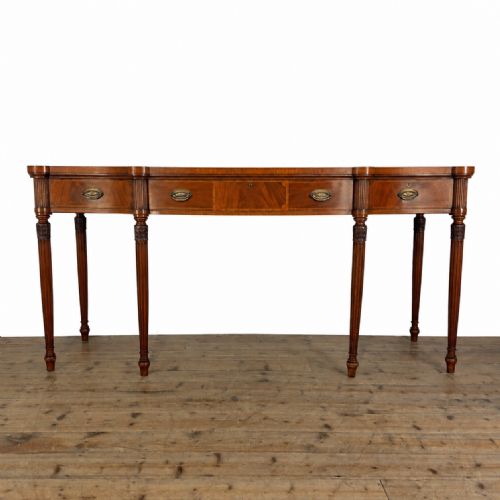
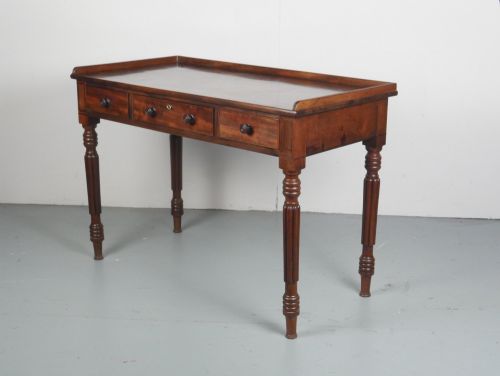
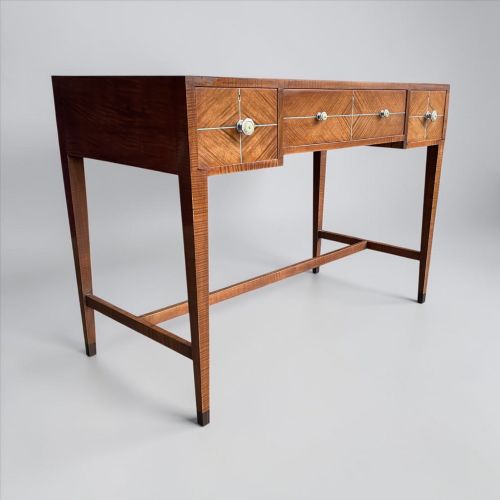
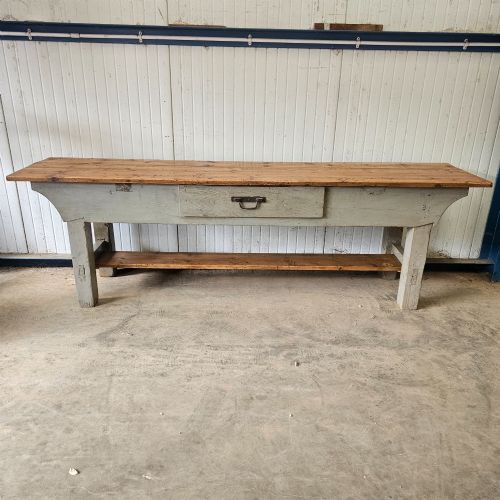
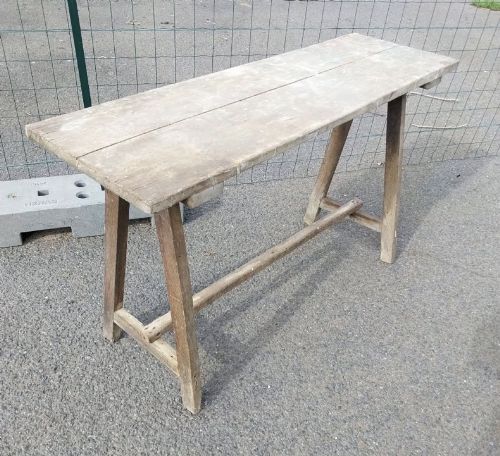
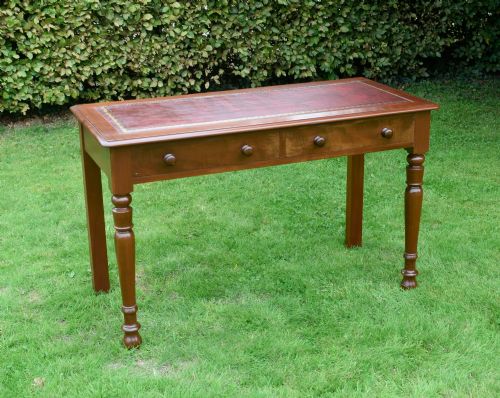
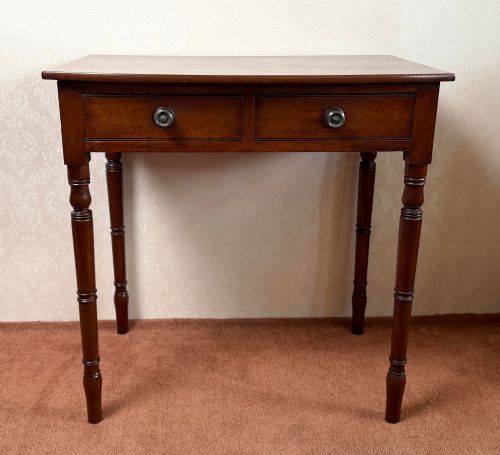
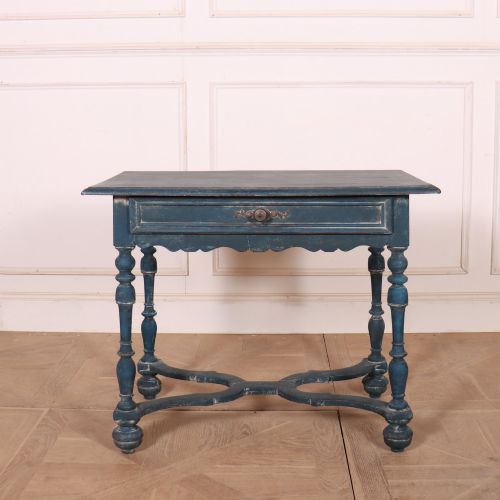
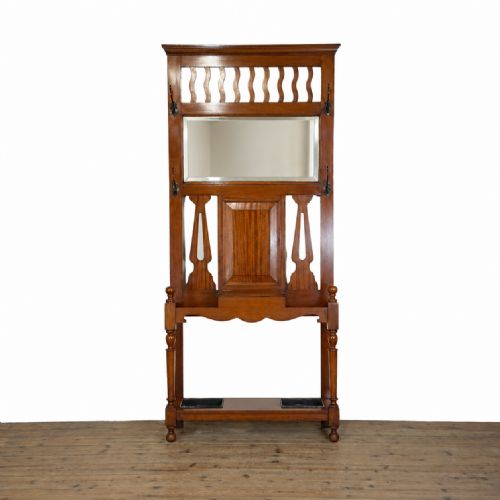

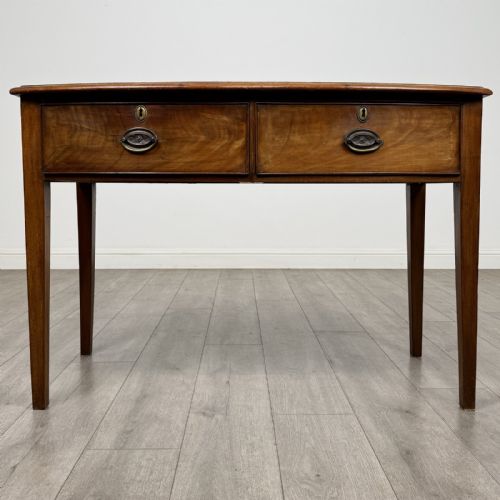
Vintage Wooden Console
A vintage wooden console brings warmth and utility to a hallway or living space, offering a surface for everyday objects.
Vintage Wooden Console
A vintage wooden console encompasses narrow tables, sideboards, hall tables, and worktables suited for circulation spaces or against walls. These pieces emerge from periods spanning the eighteenth century through the twentieth century, including Victorian and Edwardian eras.
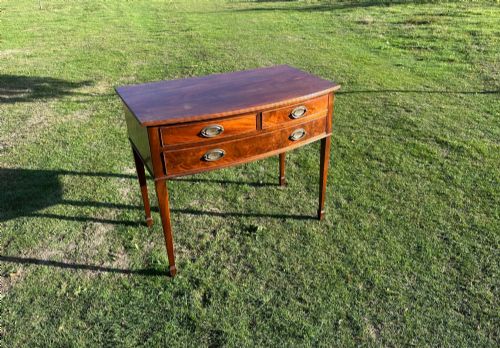
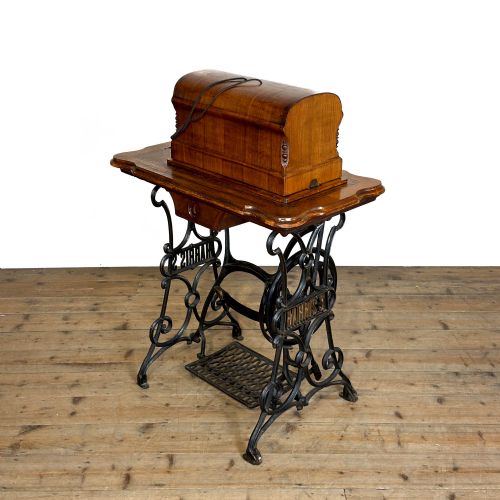
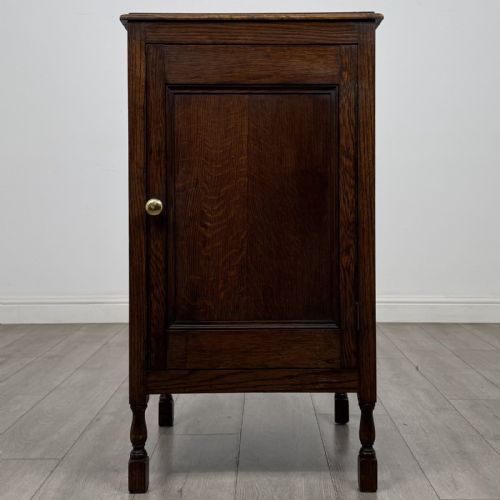
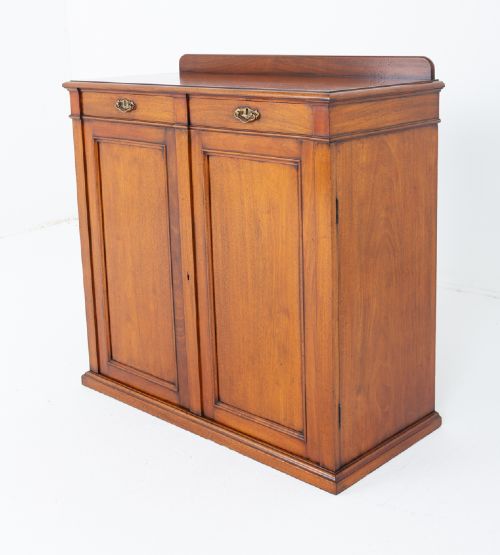
The listings show forms ranging from mahogany writing desks and walnut occasional tables to painted pine worktables and oak servers. Buyers frequently encounter side tables and dressing or washstand variants adapted for modern placement.
Origins vary between English country pieces, French provincial laundry and drapers tables, and occasional exotic items such as Kashmiri walnut tables. Selecting a vintage wooden console depends upon the depth of the room and the desired proportion of timber against a wall.
Materials and construction methods
Timbers dominate the construction, with mahogany, oak, walnut, and pine appearing across the pieces. Cabinet makers utilised solid woods alongside burr veneers for decorative surfaces, while painted finishes feature on rustic pine and country pieces.
Secondary materials provide structural support and functional detail, including brass handles, iron fittings, and marble tops on washstands. Joinery techniques reflect the period, from tapered legs on Georgian styles to drop leaves and carved details on Baroque-style brackets.
Vintage Wooden Console Retail Price Guide 2026
Typical asking prices for vintage wooden console among the pieces listed under this phrase on Sellingantiques today, from the lower quarter to the upper quarter. They describe what is for sale here now, not the wider market.
Markers of quality
Quality rests upon the selection of timber, such as figured mahogany or burr walnut, and the integrity of the original construction. Superior pieces demonstrate crisp carving, well-fitted drawers, and maker stamps or signatures.
Surface preservation distinguishes examples, whether retaining an original scumble paint finish, patinated polished oak, or clean marble inserts. Finer proportions and restrained inlay, particularly in Edwardian pieces, elevate the standing of a console.
Bath Cabinet Makers·Edward Barnsley
The Vintage Wooden Console Glossary
- Console table
- A table designed to stand against a wall, often secured to it or supported by decorative brackets. These pieces provide a narrow surface for display in hallways and reception rooms.
- Dresser base
- The lower section of a traditional kitchen or dining dresser featuring drawers and cupboards. They function effectively as heavy-duty sideboards or serving tables.
- Washstand
- A piece of furniture originally designed to hold a basin and jug for washing, frequently topped with marble. Many survive with lower tiers or drawers for storage.
- Sutherland table
- A narrow drop-leaf table with hinged flaps that fold down steeply on either side. It folds to a compact footprint when not in use.
- Lowboy
- A small eighteenth-century table with drawers, typically used as a dressing table or side table. The form stands on four relatively tall legs.
Vintage Wooden Console: Frequently Asked Questions
What is a vintage wooden console used for?
These pieces serve primarily as narrow display and storage surfaces in hallways, living rooms, and dining spaces. They hold lamps, books, and everyday items without obstructing walkways.
Heavier variants like worktables and dresser bases also function well as sideboards or serving tables in kitchens and dining areas.
How do I choose the right size?
Measure the available wall space and walkway clearance carefully before selecting a piece. Narrow side tables and demi-lune cabinets fit restricted hallways, whilst longer laundry tables and dresser bases suit expansive walls.
Consider the depth of the table to ensure it does not jut too far into a room or impede door swings.
How do I care for wooden surfaces?
Dust timber regularly with a soft, dry cloth to prevent the accumulation of grit. Avoid placing wooden consoles in direct sunlight or near heat sources to protect the polish and prevent wood splitting.
Treat painted and polished surfaces with appropriate waxes or oils sparingly, following the specific requirements of the finish.