

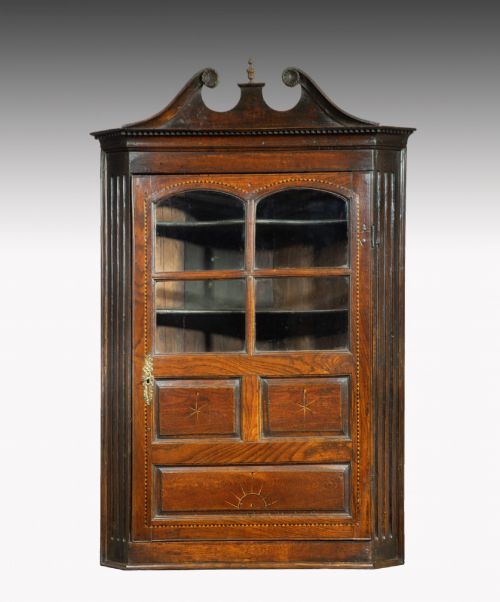
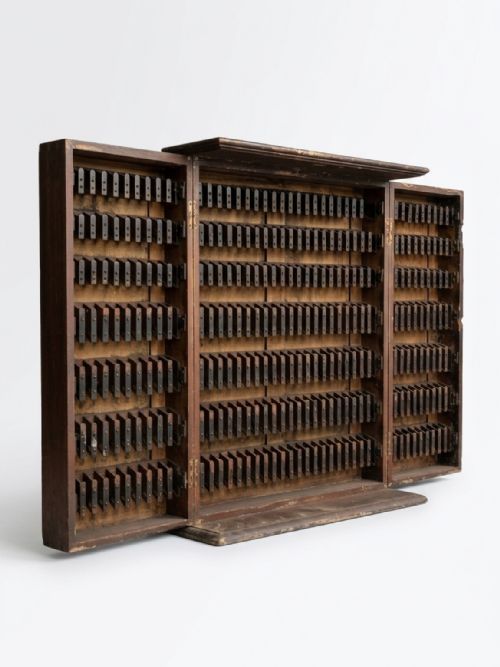
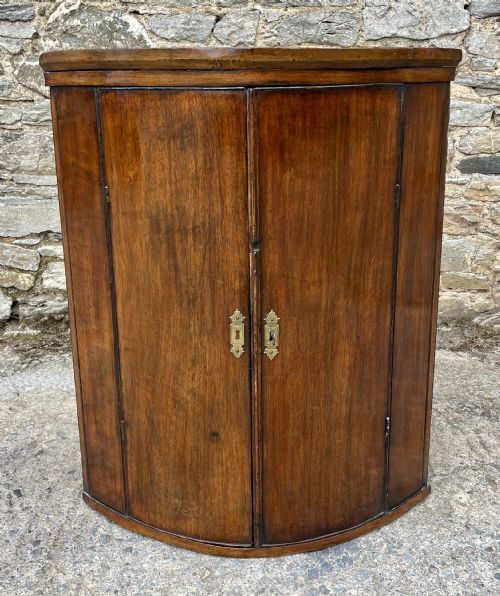
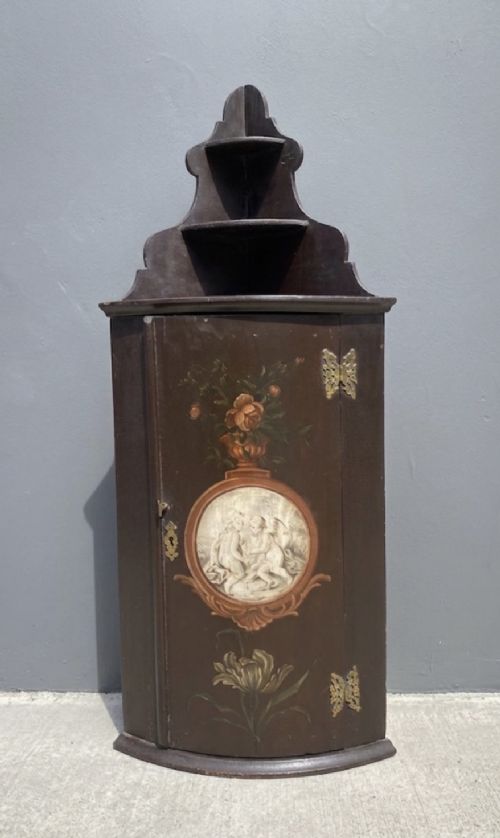



Vintage Wood Wall Cabinet
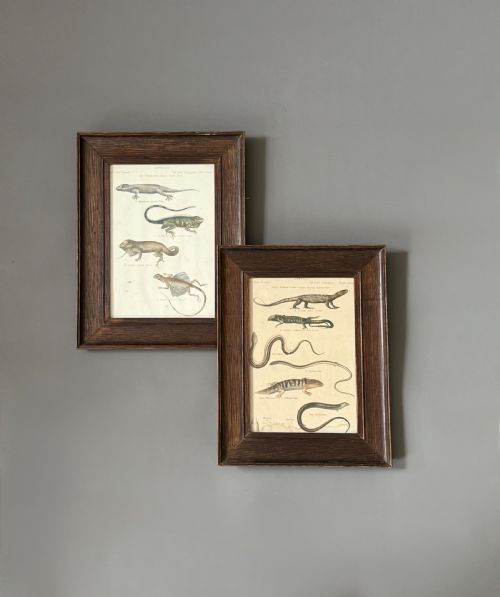
A vintage wood wall cabinet brings timber storage to a room without taking a single inch of valuable floor space.
Vintage Wood Wall Cabinet
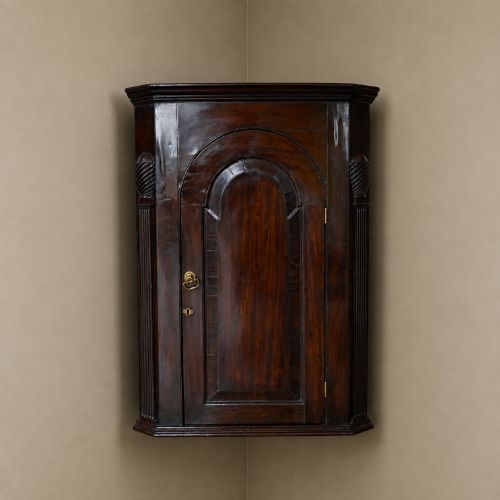
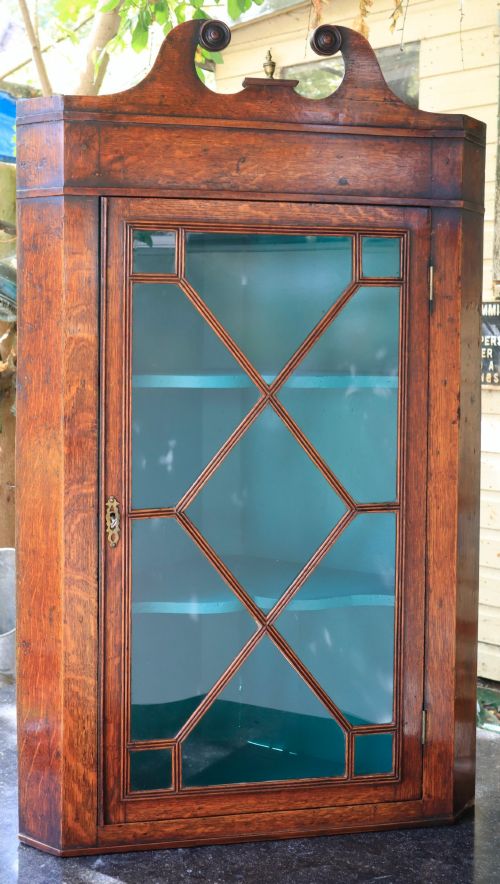
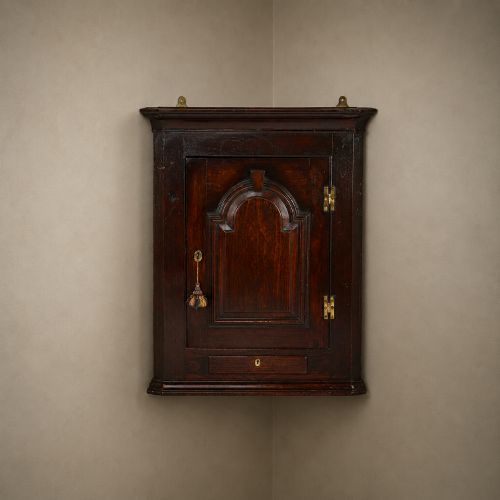
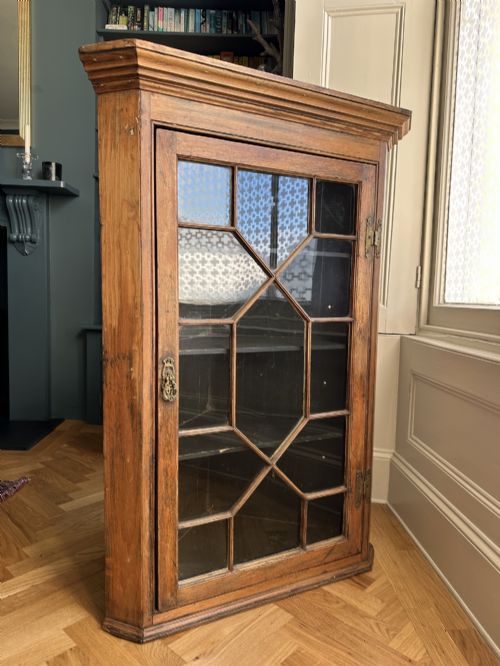
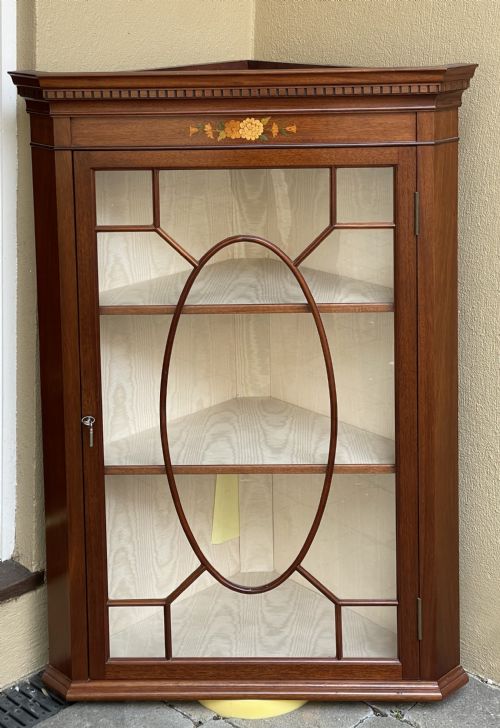
When you search for a vintage wood wall cabinet, you encounter timber hanging cupboards, glazed display vitrines, and corner units designed to utilise overlooked vertical space. The examples on this page span from the eighteenth century through the Edwardian era, showing how domestic storage evolved from heavy freestanding furniture to efficient wall-hung fixtures.
Corner cabinets and cupboards dominate the available forms, constructed to fit neatly into domestic angles and maximise modest rooms. You also find specialised pieces like ticket cupboards, shaving mirror shelves, and hanging display cases that reflect practical historical uses.
The materials reflect traditional cabinet making, with robust timbers like mahogany, oak, walnut, and pine forming the primary structures. Many pieces retain original painted interiors, glazed doors, or brass hardware, keeping their historic character intact for modern homes.
Materials and construction
Cabinet makers relied on dense hardwoods such as mahogany, oak, and walnut for durable frames, alongside softer pine for secondary framing and internal shelving. These timbers were selected for grain pattern and strength, allowing hanging cupboards to support the weight of stored contents securely against a wall.
Joinery techniques included dovetailed joints for drawers and mortise and tenon construction for doors and frames, ensuring structural longevity. Surfaces were finished with wax, polish, or historic paint layers, while brass hinges, locks, and key escutcheons provided functional and decorative hardware.
Vintage Wood Wall Cabinet Retail Price Guide 2026
Typical asking prices for vintage wood wall cabinet among the pieces listed under this phrase on Sellingantiques today, from the lower quarter to the upper quarter. They describe what is for sale here now, not the wider market.
Some nineteenth-century wall cabinets served specifically as night porters' key cupboards, keeping the entire estate's security dangling in neat rows.
Assessing craftsmanship
Quality rests in the selection of timber figures, such as flame mahogany or quarter-sawn oak, which display rich, natural grain patterns. Superior examples feature precise joinery, hand-cut dovetails, and well-fitted doors that hang true on their original brass hinges.
The preservation of original surface finishes, interior paintwork, and working locks with matching keys elevates a piece. Lesser examples suffer from replacement hardware, stripped timber that has lost its patina, or poorly executed later repairs.
William Bird MD FLS
The Vintage Wood Wall Cabinet Glossary
- Hanging cupboard
- A wall-mounted storage unit designed to be secured through its backboards or mounting brackets rather than resting on the floor. These pieces often feature internal shelves for domestic storage.
- Corner cabinet
- A specialised storage form built with a triangular footprint to fit directly into the corner of a room. This design makes efficient use of otherwise dead architectural space.
- Vitrine
- A glazed display cabinet designed to showcase small objects, ceramics, or curiosities behind glass panels. The word derives from the French term for glass.
- Escutcheon
- A flat plate of brass or other metal placed around a keyhole to protect the surrounding wood from wear. Original hardware adds historical integrity to a cabinet.
- Flame mahogany
- A veneer cut from the branch junction of a mahogany tree, creating a distinctive rippled, flame-like pattern. Cabinet makers utilised this technique on prominent door panels for visual impact.
Vintage Wood Wall Cabinet: Frequently Asked Questions
How do I hang an antique wall cabinet safely?
Antique wall cabinets require secure attachment directly into wall studs or masonry using appropriate weight-rated fixings, as their solid timber construction is surprisingly heavy.
Because many vintage pieces were built before standardised wall spacing, professional installation using a hidden french cleat or reinforced internal screw points ensures the historic frame remains undamaged while holding the load.
Were corner cabinets meant for specific rooms?
Georgian and Victorian corner cupboards were primarily built for dining rooms and parlours to store ceramics, glassware, and household provisions close at hand.
Their enclosed shelves kept dust away from delicate tableware, while their elevated wall-mounted design left the floor clear for dining chairs and foot traffic.
How can I tell an eighteenth century cabinet from a later revival piece?
Eighteenth-century pieces display hand-cut joinery, pegged mortise and tenon joints, and subtle irregularities in the timber boards caused by early pit-sawing techniques.
Revival pieces from later periods often feature uniform machine-sawn timber, modern standardised screw types, and standardised internal components that reveal a more industrialized manufacturing process.