






Vintage Wood Vanity Bench
A vintage wood vanity bench brings character to a dressing space, offering a practical seat shaped by traditional cabinet-making and period textile choices.
Vintage Wood Vanity Bench
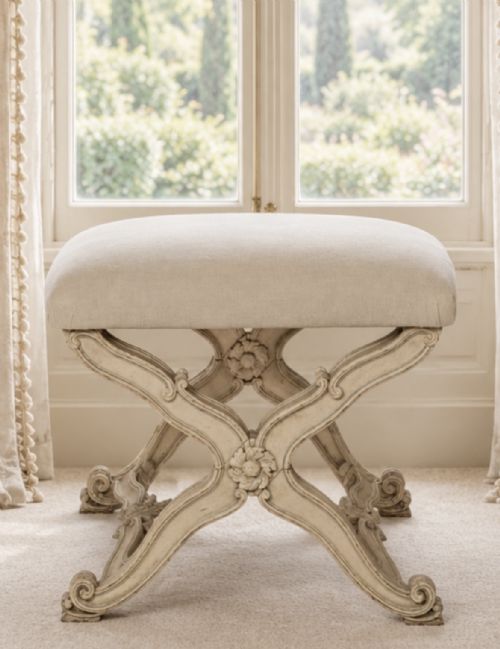
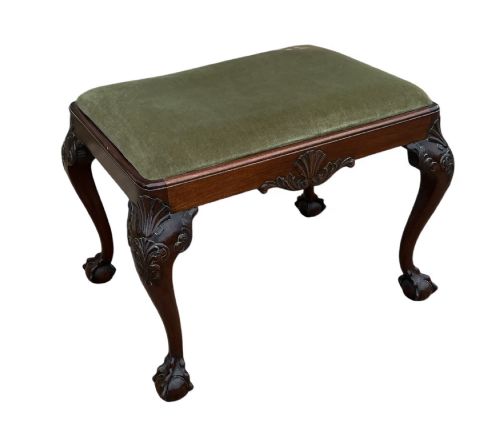
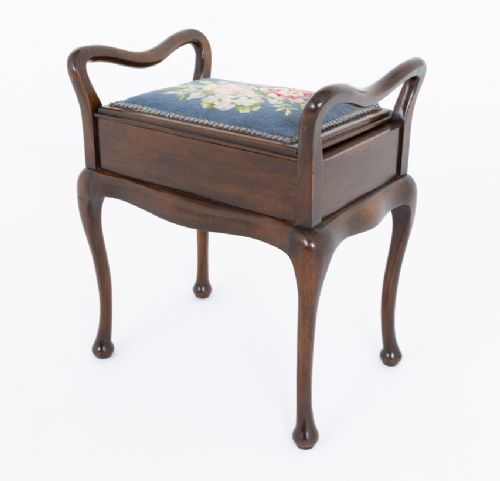
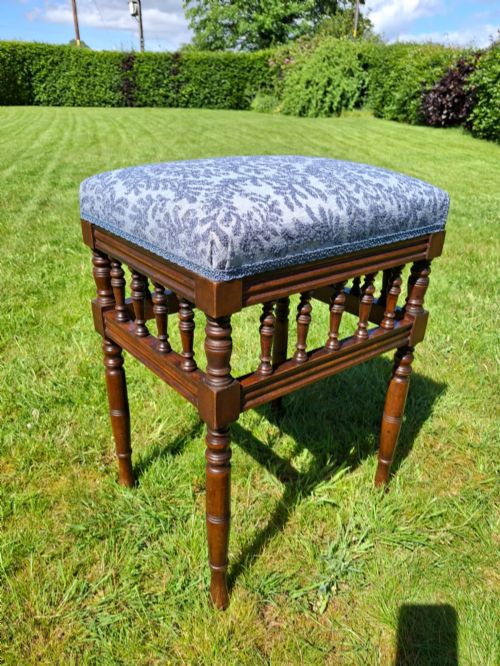
Forms span simple piano stools and footstools to ornate French and Italian painted designs, with mahogany, walnut, and sycamore comprising the primary wooden frames. Buyers frequently encounter upholstered tops covered in tapestry, velvet, linen, or fabric, sometimes paired with new decorative textiles.
Stylistic influences range from Chippendale and Queen Anne revivals to Louis XVI Neoclassical and Gustavian interpretations. These diverse origins mean a buyer can find both restrained English mahogany seating and elaborately carved, gilded, or painted continental frames.
How they were made
Construction relies on traditional timber framing using woods such as mahogany, walnut, and painted or gilded wood. Makers shaped structural components through hand carving and joinery, occasionally incorporating twisted rope legs or inlaid details into the wooden frames.
Upholstery forms an integral part of the construction, utilising textiles like velvet, tapestry, linen, and standard fabric over padded seats. Many pieces combine structural woodwork with decorative surface treatments, including white painted finishes and gilt accents.
Vintage Wood Vanity Bench Retail Price Guide 2026
Typical asking prices for vintage wood vanity bench among the pieces listed under this phrase on Sellingantiques today, from the lower quarter to the upper quarter. They describe what is for sale here now, not the wider market.
Current listings feature pieces spanning the late nineteenth century through to the nineteen-thirties, utilising mahogany, walnut, and painted wood.
What varies in quality
The standard of a piece rests upon the crispness of the timber carving and the integrity of the underlying wooden frame. Finer examples display precise joinery and sophisticated decorative finishes, whereas simpler pieces rely on straightforward turned or painted elements.
Jas Shoolbred
The Vintage Wood Vanity Bench Glossary
- Gilt wood
- Wood coated with a thin layer of gold leaf or gilt paint. This technique creates a luminous decorative surface often found on revival and continental seating.
- Tapestry
- A form of heavy textile art woven on a loom, frequently utilised for historic seat covers. It provides a textured and patterned surface for stools.
- Curule stool
- An ancient Roman chair shape characterised by X-shaped legs. Revival versions adopt this folding or cross-frame silhouette for formal seating.
- Inlaid
- A decorative technique where contrasting materials are inserted into recesses within the wood surface. Edwardian pieces frequently employ this method for subtle ornamentation.
Vintage Wood Vanity Bench: Frequently Asked Questions
What is a vintage wood vanity bench?
A vintage wood vanity bench is a low seat historically used at dressing tables or pianos, constructed from materials like mahogany or walnut.
These pieces reflect diverse periods including the Victorian and Edwardian eras, combining wooden frames with upholstered textile tops.
How were these benches used historically?
They served primarily as functional seating in bedrooms and music rooms, positioned before dressing tables or upright pianos for daily tasks.
Their compact size allowed them to tuck neatly underneath surfaces when not in active use.
How do I date a vanity bench?
Dating relies on identifying stylistic markers, timber choices, and construction methods associated with periods like the Victorian era, Edwardian period, or Art Deco movement.
Specific revival styles, such as Chippendale or Louis XVI, also provide clues to the era of manufacture.
How do I care for antique upholstery?
Care involves gentle dusting and protection from direct sunlight to preserve delicate textiles like tapestry, velvet, and linen.
If the fabric has been recently renewed, standard soft furnishing maintenance keeps the textile top in clean condition.